Showing posts with label Modern Politics. Show all posts

Monday, January 23, 2023

Jabberwocky

Happy New Year! I'm off to a slow writing start in 2023, but I am on it, and editing has begun on my NaNoWriMo manuscript of Lizzy through the Looking-glass, a continuation of Darcy in Wonderland. I am going to be very honest with you. I have tried in the past to keep my works apolitical, unwilling to alienate the large percentage of my readers who possess ideological views in stark contrast to my own. My rapid dismissal from a certain blogging consortium nearly three years ago after actually opening my mouth regarding what I perceived as a pretty obvious miscarriage of justice did, at first, seem to support that stance. But I am a big believer in not overly trusting one's immediate feelings and reactions to a trauma. Time's perception often changes things. Politics don't really have much of a place in most of the stories I choose to write, just as they really don't in Austen's, either, but my eldest child (the inspiration for my version of Alice) came out as non-binary last spring, and I must write about it. At a time when books on such subjects are being censored, it feels urgent to unflinchingly challenge societal prejudice towards people experiencing gender dysphoria. Lizzy through the Looking-glass has presented itself as my medium, so that is what this book is about. 

OK, so that's the overall theme, but my approach to the story is the same as I took with its predecessor: encapsulating Carroll's fantasy within the orderly world the Darcys' inhabit, parodying and blending the contrasting voices of Austen and Carroll into one wacky tale. For the most part, this task comes easily to me. I have been imbibing the works of both authors for practically my entire life. I had only one big stumbling block imposing this treatment on Through the Looking-glass, and its name is Jabberwocky. It's Carroll's most famous and beloved poem, and for good reason. The musicality of this nonsensical poem is unparalleled. The words may have little meaning, but they paint a vivid picture, nonetheless, and have inspired countless adaptions, interpretations, as well as musicians (more than one band has taken the name, and many have set the poem to music), dance crews, and even its own film. This ground feels pretty sacred. How do I meddle with it?

Well, I have a plan, though I have yet to execute it. I jumped over the poem in November, realizing I would never hit my word count if I got bogged-down in it. In preparation for tacking this hurdle, I have been reciting the poem (like Neil Gaiman above, I memorised it as a child), reading the poem, and listening to the poem A LOT. Living and breathing Jabberwocky. Youtube has been of great assistance. I have dotted this post with some of my favorite versions that I have found on the platform. I hope you enjoy them as much as I do. Tschüss!


Monday, September 12, 2022

Simple Gifts Take Two

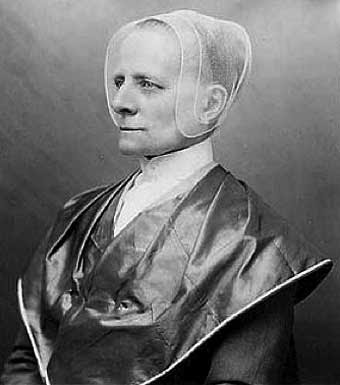
Mother Ann Lee
We did not get to do much sightseeing while visiting the US this summer. After three years away, we were almost entirely focused on just spending time with family. This makes me kind of sad because my children are unfamiliar with so many places I took for granted growing up, especially being from Philadelphia, so seeped in US history. I was pleased we squeezed in a trip to Baltimore Harbor, also an old stomping grounds of mine, and toured the USS Constellation. The other excursion we managed, as mentioned in my last post, was in Kentucky, to Pleasant Hill and the Shaker Village preserved there. It was interesting being back after so many years, and I feel like my memories of this most recent visit represent, in many ways, a microcosm of the overall trip. I'm going to attempt to put that sensation into words.

I must first and foremost note that the visitor experience to Shaker Village has altered greatly since I was first there in 2008. The tours are now almost entirely self-guided, a COVID Era innovation, I assume, with the aid of an app. I always find it a little disconcerting utilising such technology in historic preservation locals, but such is our world. 

There are still live presentations by the staff, and the quality of the two I enjoyed remained excellent. One was a repeat of my favorite "adventure" on my prior visit: Shaker Music in the Meetinghouse. This was led by a different woman than last time, but I was equally impressed with the mighty voices of both, beautifully demonstrating the fabulous acoustics of the room. There were not many attendees on a rainy Tuesday morning (this was the week of this summer's Kentucky floods), only ourselves and two other people. The leader was great, incorporating my restless four year old into a demonstration of a children's dance, and providing a lot of fun facts I did not previously know, like anecdotal evidence that the Shakers could be heard seven miles away, where their stomps sounded like gunshots (to view a reenactment of a Shaker meeting, please see my previous post), and stories of just how disruptive the Shakers were in merry old England before immigrating to the American colonies shortly before the Revolutionary War.

Readers of Austen should have great appreciation for stories of Mother Anne Lee, considered their messiah by members of the United Society of Believers in Christ's Second Appearing, which is the proper name for those now commonly known as Shakers. Imagine a very orderly Church of England Sunday service, the likes of which any of the many clergymen in Austen's novels might have led, being invaded by Mother Anne and her followers, determined to disrupt and shout over the proceedings to their best ability. Can't you just see Mr. Collins' befuddlement and Lady Catherine's outrage? I had to laugh.

These anecdotes aside, what most impressed me was how the speaker, a Black woman, handled a very uncomfortable moment with one of the other attendees. The person had asked how the Shakers handled slavery, a very reasonable question. A cautious but rehearsed reply was provided, detailing the mixed legacy of the Shakers on this subject, who were implicitly anti-slavery but nevertheless participated in the local, slave-owning economy. The community had lots of seasonal visitors, perhaps particularly during the Civil War. Some of these needed food and shelter, but others were contemplating joining the Shakers. This required giving up all your personal possessions to the community, who freed all slaves acquired in this manner. The questioner replied: "Oh, that's a real hardship."

I think my jaw dropped. I was prepared for the atmosphere in the United States to have changed (it was already well on its way) over the course of the pandemic and following the reinvigoration of the Black Lives Matters movement due to the horrifying deaths of Ahmaud Arbery, Breonna Taylor, George Floyd, and way, way too many others. And yes, I grew up in a progressive bubble, but I have rarely in my life heard anyone indulge in such blatant racism, particularly in a public venue. Racist expressions, when I did encounter them, were whispered in low voices, because the speaker knew they were shameful. Not that it really makes it any better, but they weren't voiced loudly, in a room with booming acoustics, nor directly addressed to a person who would obviously feel the sting of the words. I spent many years debating political correctness, rightly calling out that it just hid the harm and didn't address it, but I guess it did at least it provided some standard of decent conduct.

My shock aside, what really hit me was how often the presenter must have heard something just like it. She paused but a moment, presumably choking down the hurt, and proceeded on with her delivery. I followed her lead, and bit down my urge to call the person out. It was surely the pragmatic and safest way to respond. But what does that do to a person to have to live with such normalized, casual wounds? I felt these tensions in smaller, less dramatic ways throughout the trip. I read the political signs throughout the country with both hope and horror. I felt the pain of the attacks on my own non-binary kid, in anti-LGBTQ+ billboards and t-shirts, and pride in displays of inclusivity and acceptance. There is a real fight for human liberties underway, and I have to celebrate that, because I want to live in a world where everyone is treated with the respect and dignity they deserve, but the reaction scares me, as is intended.

Though I laughed at her tactics, Mother Anne was amazingly brave. 

Later that morning, as we sat down for lunch at the village restaurant, featuring food sourced form their own organic farm (another great tour, if hot in summer), I filled my kids' and mother-in-;aw's ears with my repressed anger and indignation. After summarily denouncing the questioner and having a good, indignant rant, I concluded with the thought, "I bet she's sitting right behind me, isn't she?" I turned around, and sure enough, there she was. What can you do but laugh?

'Tis a gift to come down where we ought to be.


Friday, October 5, 2012

The Jane Austen Litmus Test

I usually do not bring up politics on this blog. Jane Austen doesn't discuss such matters in her books, and so my perspective has always been that they have no role to play here. Besides, I would hate to alienate those followers who do not agree with me. Yet ever since watching the US presidential debate last Wednesday, I have been obsessing about what Jane would have to say about it, prompting me to break my previous silence on the subject. I doubt I will ever bring it up again, so if I offend today, please forgive me. A difference of opinion today should have no bearing on our future happy relations.

My goal is not to endorse a candidate; I really have no desire to open that can of worms. But Austen provides rather precise criteria for judging character, and it is those standards that I want to apply to Obama and Romney. Over and over again in her novels, Austen emphasizes the importance of weighing what a person professes against their action to determine trustworthiness. For example, Anne Elliot's mistrust of Mr. Elliot stems from the discrepency between his past and present actions:
Though they had now been acquainted a month, she could not be satisfied that she really knew his character. That he was a sensible man, an agreeable man, that he talked well, professed good opinions, seemed to judge properly and as a man of principle, this was all clear enough. He certainly knew what was right, nor could she fix on any one article of moral duty evidently transgressed; but yet she would have been afraid to answer for his conduct. She distrusted the past, if not the present.
And when Elizabeth Bennet struggles to determine who to believe, Mr. Darcy or Mr. Wickham, it is the latter's inconsistent behavior that determines her against him:
She remembered that he had boasted of having no fear of seeing Mr. Darcy -- that Mr. Darcy might leave the country, but that he should stand his ground; yet he had avoided the Netherfield ball the very next week. She remembered also, that till the Netherfield family had quitted the country, he had told his story to no one but herself; but that after their removal, it had been every where discussed; that he had then no reserves, no scruples in sinking Mr. Darcy's character, though he had assured her that respect for the father would always prevent his exposing the son.
Over and over again, Austen distinguishes bad characters from the good by exposing their hypocrisy. When Isabella Thorpe writes to Catherine Morland, asserting all that her actions negate,  the letter's "inconsistencies, contradictions, and falsehood struck her from the very first." Catherine later says, "She must think me an idiot," a very reasonable conclusion to come to when a person expects you to have no memory of their past statements and actions. Isabella is a perfect example of this phenomenon in Austen, for she is constantly saying one thing before doing the other. Lucy Steele is another such character, always maneuvering through falsehood, as in this scene where she tries to extinguish Elinor Dashwood's interest in Edward Ferrars by saying precisely the opposite of what she feels:
"Indeed you wrong me," replied Lucy, with great solemnity; "I know nobody of whose judgment I think so highly as I do of yours; and I do really believe, that if you was to say to me, 'I advise you by all means to put an end to your engagement with Edward Ferrars, it will be more for the happiness of both of you,' I should resolve upon doing it immediately."

Elinor blushed for the insincerity of Edward's future wife, and replied, "This compliment would effectually frighten me from giving any opinion on the subject had I formed one. It raises my influence much too high; the power of dividing two people so tenderly attached is too much for an indifferent person."

"'Tis because you are an indifferent person," said Lucy, with some pique, and laying a particular stress on those words, "that your judgment might justly have such weight with me. If you could be supposed to be biased in any respect by your own feelings, your opinion would not be worth having."

So when we listen to two men debate, especially when we can so easily look back and see what they have said and done in the past, we should ask ourselves if they pass the Austen test. Are we listening to an Isabella Thorpe, so certain that we will believe anything and everything, no matter how contradictory, or is the speaker more like a Mr. Darcy? Maybe he does not always behave exactly as we would like, but he is true to himself and therefore trustworthy. I like what Emma Woodhouse says of Frank Chruchill, once his deception is revealed: "So unlike what a man should be!--None of that upright integrity, that strict adherence to truth and principle, that disdain of trick and littleness, which a man should display in every transaction of his life."

As I listened to the debate Wednesday night, I heard much to frustrate me from both candidates (they are politicians, after all), but while one emphasized pretty much the same themes and ideas espoused 4 years ago, the other denied several of the main points he has been campaigning on for two years or more. As I watched, I could see Jane Austen in my mind's eye, an amused smirk on her face as she shook her head disapprovingly. Certainly there is no love affair between the two gentlemen, but I think Mr. Obama must have felt something like Marianne Dashwood that night, when she confronts Willoughby in London: "Here is some mistake I am sure--some dreadful mistake. What can be the meaning of it?"

Image:
 http://debatenotes.pbworks.com/w/page/17078976/FrontPage