Showing posts with label History. Show all posts

Monday, September 12, 2022

Simple Gifts Take Two

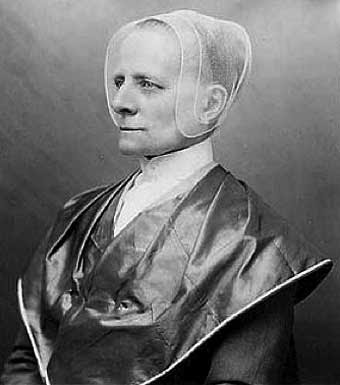
Mother Ann Lee
We did not get to do much sightseeing while visiting the US this summer. After three years away, we were almost entirely focused on just spending time with family. This makes me kind of sad because my children are unfamiliar with so many places I took for granted growing up, especially being from Philadelphia, so seeped in US history. I was pleased we squeezed in a trip to Baltimore Harbor, also an old stomping grounds of mine, and toured the USS Constellation. The other excursion we managed, as mentioned in my last post, was in Kentucky, to Pleasant Hill and the Shaker Village preserved there. It was interesting being back after so many years, and I feel like my memories of this most recent visit represent, in many ways, a microcosm of the overall trip. I'm going to attempt to put that sensation into words.

I must first and foremost note that the visitor experience to Shaker Village has altered greatly since I was first there in 2008. The tours are now almost entirely self-guided, a COVID Era innovation, I assume, with the aid of an app. I always find it a little disconcerting utilising such technology in historic preservation locals, but such is our world. 

There are still live presentations by the staff, and the quality of the two I enjoyed remained excellent. One was a repeat of my favorite "adventure" on my prior visit: Shaker Music in the Meetinghouse. This was led by a different woman than last time, but I was equally impressed with the mighty voices of both, beautifully demonstrating the fabulous acoustics of the room. There were not many attendees on a rainy Tuesday morning (this was the week of this summer's Kentucky floods), only ourselves and two other people. The leader was great, incorporating my restless four year old into a demonstration of a children's dance, and providing a lot of fun facts I did not previously know, like anecdotal evidence that the Shakers could be heard seven miles away, where their stomps sounded like gunshots (to view a reenactment of a Shaker meeting, please see my previous post), and stories of just how disruptive the Shakers were in merry old England before immigrating to the American colonies shortly before the Revolutionary War.

Readers of Austen should have great appreciation for stories of Mother Anne Lee, considered their messiah by members of the United Society of Believers in Christ's Second Appearing, which is the proper name for those now commonly known as Shakers. Imagine a very orderly Church of England Sunday service, the likes of which any of the many clergymen in Austen's novels might have led, being invaded by Mother Anne and her followers, determined to disrupt and shout over the proceedings to their best ability. Can't you just see Mr. Collins' befuddlement and Lady Catherine's outrage? I had to laugh.

These anecdotes aside, what most impressed me was how the speaker, a Black woman, handled a very uncomfortable moment with one of the other attendees. The person had asked how the Shakers handled slavery, a very reasonable question. A cautious but rehearsed reply was provided, detailing the mixed legacy of the Shakers on this subject, who were implicitly anti-slavery but nevertheless participated in the local, slave-owning economy. The community had lots of seasonal visitors, perhaps particularly during the Civil War. Some of these needed food and shelter, but others were contemplating joining the Shakers. This required giving up all your personal possessions to the community, who freed all slaves acquired in this manner. The questioner replied: "Oh, that's a real hardship."

I think my jaw dropped. I was prepared for the atmosphere in the United States to have changed (it was already well on its way) over the course of the pandemic and following the reinvigoration of the Black Lives Matters movement due to the horrifying deaths of Ahmaud Arbery, Breonna Taylor, George Floyd, and way, way too many others. And yes, I grew up in a progressive bubble, but I have rarely in my life heard anyone indulge in such blatant racism, particularly in a public venue. Racist expressions, when I did encounter them, were whispered in low voices, because the speaker knew they were shameful. Not that it really makes it any better, but they weren't voiced loudly, in a room with booming acoustics, nor directly addressed to a person who would obviously feel the sting of the words. I spent many years debating political correctness, rightly calling out that it just hid the harm and didn't address it, but I guess it did at least it provided some standard of decent conduct.

My shock aside, what really hit me was how often the presenter must have heard something just like it. She paused but a moment, presumably choking down the hurt, and proceeded on with her delivery. I followed her lead, and bit down my urge to call the person out. It was surely the pragmatic and safest way to respond. But what does that do to a person to have to live with such normalized, casual wounds? I felt these tensions in smaller, less dramatic ways throughout the trip. I read the political signs throughout the country with both hope and horror. I felt the pain of the attacks on my own non-binary kid, in anti-LGBTQ+ billboards and t-shirts, and pride in displays of inclusivity and acceptance. There is a real fight for human liberties underway, and I have to celebrate that, because I want to live in a world where everyone is treated with the respect and dignity they deserve, but the reaction scares me, as is intended.

Though I laughed at her tactics, Mother Anne was amazingly brave. 

Later that morning, as we sat down for lunch at the village restaurant, featuring food sourced form their own organic farm (another great tour, if hot in summer), I filled my kids' and mother-in-;aw's ears with my repressed anger and indignation. After summarily denouncing the questioner and having a good, indignant rant, I concluded with the thought, "I bet she's sitting right behind me, isn't she?" I turned around, and sure enough, there she was. What can you do but laugh?

'Tis a gift to come down where we ought to be.


Monday, March 21, 2022

Rambling Reflections

Watercollor by C.E. Brock, mollands.net

"Come, Miss Morland, let us leave him to meditate over our faults in the utmost propriety of diction, while we praise Udolpho in whatever terms we like best. It is a most interesting work. You are fond of that kind of reading?"

"To say the truth, I do not much like any other."

"Indeed!"

"That is, I can read poetry and plays, and things of that sort, and do not dislike travels. But history, real solemn history, I cannot be interested in. Can you?"
"Yes, I am fond of history."

"I wish I were too. I read it a little as a duty, but it tells me nothing that does not either vex or weary me. The quarrels of popes and kings, with wars or pestilences, in every page; the men all so good for nothing, and hardly any women at all -- it is very tiresome ..." 

Tiresome, indeed. It is strange that so many of humanity's most beloved stories should be about war, when war makes for such bad narrative. Readers will raise an outcry when a fictional character's behavior is unexplained or erratic, but reality is often unexplainable. The mayhem of war has no carefully sculpted story arc to cling to. It is perfectly senseless - an exercise in stupidity - and utter chaos.

Oh, how I loathed military history as a child.

Northanger Abbey was my first Austen novel, read at an age when I had no ability to appreciate it, but I liked it well enough to seek out more Austen (I had read most of her novels before the age of 13). I don't remember many of my impressions from that first introduction, but I do remember the scene quoted above and feeling in perfect agreement with Catherine's assessment of history. It was precisely how I felt about what I had already taken to differentiating as military history, a quite distinct field of study from the social history with which I was totally enthralled (the very reason I was reading an 18th century novel in the first place). Austen, despite my incomprehension, offered me a window into how people lived in bygone times. I loved her stories of common concerns and daily life. I did not like endless descriptions of battles and tales of the worst things that humans have ever done to each other.

I think I possessed some modicum of real wisdom as a child. The present and the future have enough horrors on offer and in store. Like Catherine Morland, I studied military history "as a duty, but it never revealed anything that didn't either vex or weary me." As a child, I was inundated with it. My grandfather, in whose house my mother and I lived, served in the US Navy in WWII. The room we called "the den," and in which I primarily played, was adorned with period German army helmets, guns, and even a deactivated grenade (it and a bugle I found to be excellent toys - the helmets were too heavy to be fun, and the guns scared me). In Hebrew school, which I attended seven hours a week, my teachers were largely concentration camp survivors. Only a few had those terrifying blue numbers tattooed on their forearms, but they all had stories to tell of childhoods scarred by unthinkable atrocities. Their most prevalent message: this could happen again. This happened to me. This could happen to you. Be vigilant.

I was so fortunate as to be growing up in the United States, largely isolated from the conflicts that my government and those of others waged against each other, across an ocean. I couldn't hear the bombs falling on many of those I now call friends, but I did know they were out there, and I knew that it could just as easily be me, hiding underground, hoping to somehow survive the onslaught. My time to live such history would likely come. Why dwell more than necessary on that aspect of the past?

Not many of my teachers agreed with this perspective. Perhaps it was inevitable, growing up near Philadelphia, that I should spend countless hours wilting away on old battlefields, listening to detailed accounts of each charge and retreat. There is always such an eerie incongruousness between these sunny fields and the blood that once soaked their soil. I hated every moment.

How comparatively peaceful were Austen's drawing rooms and carriage rides! Yet her world was also at the mercy of the "quarrels of popes and kings, with wars or pestilences." Very few of her days were lived in times of so-called peace. Do you think she escaped into the world of her novels, just as much as we, her devoted readers, do now? Pride and Prejudice was an established favorite amongst British troop in the trenches during WWI. It is yet another aspect of Austen's genius: this ability to zero in on the minutiae of daily life and render it thrilling, sweeping the reader out of time and space to a happily ever after ending at Pemberley.

I wish real life were as orderly as a novel. I wish I could analize it in a tidy essay, my conclusions backed up by contextual evidence, but it is impossible. Hubris to try. Instead, I pay attention, try to listen instead of just talk (a lifelong struggle), and concentrate on discovering the same enthusiasm for the minutiae of my daily life as I can in those of Austen's characters. Military history is adding to its gory portfolio nearby. I suppose the time is ripe to dwell on life's simple joys. Maybe I'lll even write about them, and maybe they will then do someone else a little bit of good.

Monday, October 11, 2021

A Muse Named Jane

"At this rate, I shall not pity the writers of history any longer. If people like to read their books, it is all very well, but to be at so much trouble in filling great volumes, which, as I used to think, nobody would willingly ever look into, to be labouring only for the torment of little boys and girls, always struck me as a hard fate; and though I know it is all very right and necessary, I have often wondered at the person's courage that could sit down on purpose to do it." - Northanger Abbey
Dance of Apollo with the Muses by Giulio Romano, 1540.
Fresco in Palazzo Pitti.

Classical mythology tells us of nine Muses: the goddesses of inspiration. There’s Thalia, the muse of comedy. Melpomene’s province is tragedy, one of the most important contributions the Ancient Greeks made to world culture (think Oedipus). Terpsichore is the muse of dance. Clio inspires history, so we have her to thank for the laments of Catherine Moreland on this subject. Astronomers warrant a muse: Urania. Calliope is the muse to the epic poets, like that guy Homer. Euterpe is the muse of lyric poets, which were traditionally accompanied by an instrument and sung, while Erato handles the love poetry. Polyhymnia, appropriately, inspires hymns. Anyone missing? To whom can a poor novelist turn?

The novel really is a modern art form. Prose have existed from time immemorial, they just weren’t considered the venue for great literary works (sorry Plato). The novel as we know it was a relatively recent invention in Jane Austen’s time. In Western literature, Don Quixote, Moll Flanders, and Robinson Crusoe vie for the honor of being the “first” novel, and by that point in time, no one was adding new muses to the lineup.

I feel like I bounce around between these ladies. One moment I’m seeking help from Thalia or Melpomene, the next it’s Clio whose assistance I need. Obviously, I’m being ridiculous. Whose spirit do I really invoke when I hit a wall? Jane Austen’s, of course! A muse for the modern age. In fact, I was rather explicit about this at the beginning of my first novel, First Impressions: A Tale of Less Pride & Prejudice. I give you my highly tongue-in-cheek “Apology” (and yes, it’s a socratic reference):
It is well acknowledged that every author determined to continue, elaborate on, or simply meddle with Jane Austen’s novels must be highly tempted to include a pithy universal truth, in the manner of the lady herself, which establishes the theme of the story. It’s almost like a religious ritual, an epic invocation: we call for the great authoress to inspire (and forgive) the games we play with her texts. After all, this is hallowed ground on which we tread. So may I ask you, Miss Austen, to please excuse what I am about to do to your tale of Elizabeth and Darcy? I offer this story in homage to your sense of playfulness, not in some mistaken belief that my pen could ever duplicate yours. You gave each character his or her original essence and to them I will endeavor to be true. I promise to try to not antagonize your delicate sensibilities with the vulgarity of our modern age though I must assume, in spite of my best intentions, that something here will offend. How can it not? The real question is, Jane, do I have your permission to proceed anyway? If only the dead could speak! Perhaps then I would not commit the following atrocity.

And atrocious it was! I irritated MANY people with First Impressions (this low-angst story is my most controversial), but those who got it laughed. It was a good lesson in how you need to write from your heart without worrying about what others say. No one can please everyone at once, and when a muse calls it is best to follow wherever she may lead. And of course, I had Austen’s permission to tamper! She never would have inspired me to do so otherwise, right?

See the conflict of interest?

Currently, my muse is reasonably active. It's time to write that I lack. Normally, at this time of year, I'm deep into Twisted Austen. I do have an idea (and yes, it's Northanger Abbey based), but I have not written a single word. If I get it done this year, t'will be Twisted Austen miracle.

When I have been writing, I've been plugging away at what I continue to call either A Mixed-up Mashup or Walking in Austenland. Currently, I favor the latter (any thoughts or suggestions on this point are most appreciated). The idea for this most recent atrocity came to me many years ago, when I wrote most of a very rough draft on this blog, and now I am now rewriting it and posting at A Happy Assembly

I never thought I'd revisit this abandoned work, and I completely credit the pandemic with making the world feel topsy turvy enough to continue. It is very strange: probably my most conscious venture into magical realism. The story is largely writing itself, as all of mine do. I am not an author to make notes and outlines. I just start writing and follow the inspiration trail, with only a foggy notion of how it all ends.

Maybe the gods will be good to me, and bestow upon me some precious writing time. In the meantime, here is a taste of the madness I'd like to immerse myself in (literally, as I'm in the book. We can thank Salman Rushdie for inspiring such outrageous narcissism). This is still very rough, and there is no way to easily summarize the events that led up to the following scene, but I think it manages to stand alone, albeit a bit wobbly. Enjoy:

“Hello Miss Price,” Miss Bennet greeted her with an easy smile. “You look very elegant.”

“Miss Woodhouse has been very kind.”

“I think we have been most fortunate in our hostess,” Miss Dashwood said, surveying her own attire. “Not so many ladies are both as willing and able to assist in such matters as she has proven herself.”

“Please, say no more,” called the lady in question, now making her own descent arm and arm with Miss Morland, “lest I accidentally overhear something I should not. So far, I have been a most fortunate eavesdropper, only hearing what flatters me.” She looked with pleasure upon the ladies before her. “You do all look very well. What a credit to this new society, to boast so many beautiful young women!”

“We must hope there are enough deserving young men for all of us,” Miss Bennet said, “for nothing is more likely to cause strife than a shortage of gentlemen.” 

“Having spent the day playing hostess to this new little society in which we find ourselves, I assure you there are gentlemen aplenty. The problem is that they are sharing a finite amount of allure betwixt them, and that resource has been far from equitably divided.”

All the ladies had experience with this predicament, and it was in a companionable spirit that they donned their final accoutrements before walking into the night. Miss Marianne, feeling very comfortable with the present company, smiled saucily and asked, “And who are the lucky few so endowed, Miss Woodhouse?”

She laughed and replied, “Mr. Darcy is rather impressive, no one can deny, and have you met Captain Wentworth? Very dashing, indeed. I understand Mr. Bingley has lately been claimed by your sister, Miss Bennet, and I congratulate her on him. They look very handsome together. So too is Miss Morland’s Mr. Tilney quite charming, and Miss Prices’ Mr. Crawford.”

Miss Price shook her head negatingly, while Miss Morland protested, “He is not my Mr. Tilney.”

“Not yet you mean, but certainly cannot say so. You are right to object to my presumption, Miss Morland. Nevertheless, it can do no harm to hint your amiable competition away from him, my dear.”

“Usually it is the unamiable competition one has to fear,” reflected Miss Dashwood.

“Very true,” agreed Miss Woodhouse, “and I am sorry to say that we have a great deal of that, as well. I can extend my earlier assurances regarding the number of gentlemen to encompass a good quantity of ladies, not all of whom were as fortunate as ourselves in securing a sufficient portion of sense, though several possess more than their fair share of material wealth, or at least maintain the appearance of doing so.”  

“I despise such pretense,” replied Miss Marianne, emboldened by such a free manner of discourse, “though one encounters it all too often. It is an unaccustomed pleasure to find myself amongst so many intelligent ladies, even if we must yet put up with the a good deal of the usual ignorance and graspingness of others. I am glad Mrs. Adams has brought us together,” she concluded, spontaneously taking Miss Price’s arm. Receiving a surprised but welcoming smile from that demure lady in response, she confided, “Mr. Collins is of the opinion the Mrs. Adams is not a proper lady. I hope I shall not shock you, Miss Price, but not only do I find that I do not care at all if she is not, but I rather hope we shall discover that she is entirely the reverse.”

The night concealed Miss Price’s blushes, who certainly was shocked. “Whoever she may be,” she cautiously replied, “and from whatever background, we must hope we are in both good and wise hands. It is uncomfortable being so very much in a stranger’s power.”

A sudden burst of laughter from their companions, from whom they had lagged behind, diverted Miss Price and Miss Marianne from their tete-a-tete, inspired them to increase their gaits, and had them regaining the others in time to hear Miss Bennet admonish, “You must not so tease Miss Morland, Miss Woodhouse. Especially when so many of the same observations might be made of you and Mr. Knightley.”

“Mr. Knightley?” Miss Woodhouse exclaimed, halting where she stood. “Whatever gave you such an idea?”

It was Miss Bennet’s turn to be grateful for the dark. “Excuse me, have I presumed too much? You seem so very natural together. Please forgive me, Miss Woodhouse.”

“Oh, I am not in the least affronted, Miss Bennet,” she reassured her. “I am only astonished the idea should even occur to you.” Though the night was deep enough to conceal changes in complexion, it could not hide the looks of inquiry exchanged between the other ladies, all of whom now stood attentively together. “Did you all believe that there was an attachment between myself and Mr. Knightley?”

“I understand he is closely connected with your family,” Miss Dashwood attempted to explain. “In these extraordinary circumstances, given the ease with which you took command of his household, I am afraid it does somewhat appear as if you have come to an understanding.”

“Does it indeed? I must say, I am taken complete aback. I had not considered that our easy friendship might give rise to such speculation. Everyone in Highbury knows us so well, you see, as well as my intention to remain unmarried.”

Any awkwardness initially attending these revelation had now been well vanquished by Miss Woodhouse’s candid reaction, and Miss Bennet, feeling that levity might once more be her ally, replied with a modicum of deliberate impertinence. “Many women profess such an intention, Miss Woodhouse, but few are ever believed. To be called a wife and mother one day, no matter how much those titles might cost us, is presumed to be the dearest wish of us all.”

“I cannot deny that what you say is true, Miss Bennet, but I have none of the usual incentives to marry, as my independence is quite secure. My father needs me, certainly, but mine is no life of drudgery. Few wives are more mistress of their homes than I am of Hartfield.”

“Yet Mr. Knightley is very handsome,” said Miss Morland, teasingly.

“He is, indeed,” agreed Miss Price. “Very distinguished.”
 
“I should imagine he would make a most comfortable husband,” mentioned Miss Morland.

 “And son-in-law,” appended Miss Bennet.

“Surely, he is far too old for Miss Woodhouse,” protested Miss Marianne.

“There are many successful marriages with even greater age disparities,” countered her sister.

“But it is all nonsense!” laughed Miss Woodhouse. “I assure, I do not think of Mr. Knightley in such a way. You shall make me blush to see him!”

“If you have never thought of Mr. Knightley before, perhaps it would be wise to at least examine the possibility?” asked Miss Bennet. “Few other women would have been so negligent in examining all the options a neighborhood affords. How would you feel if some of our ‘amiable’ competitors were to swoop in upon him?”

“Oh, Mr. Knightley must not marry. It would only disadvantage my nephews!”

“The claims of your nephews cannot weigh so heavily with other women as they do with you.” 

“Has he expressed an intention not to marry?” asked Miss Price

“Not to me, no, but it must be understood. Surely, it is,” Miss Woodhouse said with no great conviction, a spreading unease now filling her breast.

“This is a strange way to repay your kindness, Miss Woodhouse,” said Miss Dashwood. “Let us walk on. Mr. Knightley is clearly relying on you, of that much we can be certain, and we ought not deprive him of your valuable assistance any longer.”

She nodded gratefully, Miss Bennet squeezed her hand comfortingly, and they were soon again on their way, not long in arriving at Donwell. 

Friday, November 6, 2020

Räbeliechtli, Jane Austen Style

As you may have gathered, Halloween is important to me. I love any excuse to dress up, so this is a holiday has always suited me perfectly. Unfortunately, the celebrations were very curtailed this year. We were able to participate in some very limited, socially distanced trick-or-treating, a feat rendered easier by the fact that most people do not celebrate Halloween in Switzerland, although it's catching on.


Even though Halloween is my own, much beloved way to celebrate the autumn, I think I was actually far more disappointed to miss out on our new tradition, adopted only since we relocated, and much more akin to the harvest festivals of millennia ago than the candy-fueled masquerade the English speaking world indulges in today. In a normal year, all the school children would have gathered at the top of the town last night (like so much of Switzerland, we’re built on a hill). All the lights would be turned off, revealing windows filled with the Swiss-German equivalent of jack-o-lanterns: Räbeliechtli (ra-ba-leekt-li). In English, this roughly translates "little turnip light." In my town, the school children build parade floats covered in the things, and each one carves a Räbeliechtli to carry, suspended from a string or mounted on a stick like a torch. They parade through the town (this is called the Räbeliechtliumzug), more children and adults joining in along the way, until we all descend en masse upon the main town square, where there is an award for the best float and free sausages for all the kids. It’s really hard to explain the experience, but take my word for it, it is absolutely magical, perhaps particularly because no one ever catches on fire or burns down the town. The atmosphere is perfectly fairytale. It's a tradition I have come to adore in the past five years. I'm really rather devastated it has been cancelled. I had high hopes, before the latest surge in the virus, that we would would still get to do it.


The videos embedded in this post will have to hold me over until next year (please, oh please may life be more normal by then!). Though they are not from my town’s celebration, I chose them because they begin to capture the experience (for images from the biggest Räbeliechtliumzug in Switzerland, check out these from Richterswil’s Räbeliechtlichilbi, not far from where I live). Enjoy them! Most of the songs you will hear are specific to this celebration and in Swiss German, like Räbelichtli, wo gahsch hii?, with a notable high German exception, Ich gehe mit meiner Lanterne, coopted from the St. Martin's celebrations that take place in Germany on November 11th. Hopefully, the clips work in all countries.


And does this have anything to do with Miss Austen? That picture of the top of the post suggests it does. Admittedly, I’m reaching more than a bit, but I look to the good people at the Jane Austen Centre in Bath for precedence. A few years ago, they published a fun article with instruction for carving your own “Jane-o-lantern,” including some history of Halloween. After providing the common origin story of the holiday, derived from the Celtic harvest festival Samhain, the author explains how these traditions were celebrated in Austen’s time:

During the night of spooks and ghosts, homes would be lit by rustic lanterns carved from turnips (known early on as neeps) beets and rutabagas. Pumpkins would be used later, as they were brought to Europe from the New World in the 17th century. These flickering lights were set out in hopes of welcoming home friendly souls and chasing away the evil spirits who wandered that night.

Jane Austen would have been aware of these celebrations and divination rites; however, as the daughter of an Anglican clergyman, it is doubtful that she would have partaken in such goings on…. She mentions neither these holidays or her feelings towards them. 


There, at least, is the turnip connection. Often the last vegetable of the harvest, turnip lanterns were a natural choice for carving but more labor intensive than pumpkins (trust me on this: they are much less forgiving, you need a lot more of them, and they rot faster). The internet is alive with images of creepy turnips, carved by people harkening back to the past, often in the style of jack-o-lanterns. This is not what the Swiss do. They carve beautiful turnips, often decorated with Christmas images. The Christmas season has already begun here, though it needs a few more weeks to get into full gear (Samichlaus, the Swiss equivalent to Santa, has his big day December 6th, while the Christkind visits on the 24th).

If you’ve never carved a giant turnip before, the inside is solid and takes a bit of work to hollow. The smell is somewhat similar to horseradish, though not as intense. I imagine that if I had been doing this all my life, it would reek of childhood nostalgia. As it is, I need a pumpkin to conjure such sensations. There’s something about the texture of the pulpy seeds slipping between my fingers and that sweet, fresh scent. It’s kind of hard for a humble turnip to compete, but it is going to try, parade or no parade. I have two turnips waiting, one for each child, and we'll carve them tonight to display on the balcony. 


Last year I carved my own Räbeliechtli, instead of just helping my kids with theirs, inspired by the Jane-o-lantern concept. Not sure what to call it (Janeliechtli doesn’t really work), but of the thousands of turnips decorated in my town that week, I feel pretty confidant that I was the only one who opted for an Austen motif. I was pleased enough with the result to write this entire post about it, and it's been an exceedingly nostalgic and bitter sweet experience. My hopes are all for next year. It's such a beautiful tradition. Thanks for reminiscing with me.

Tuesday, August 30, 2016

Marriage, Over the Anvil

It's been a long time! Too long. I am now a year into to my expat life in Switzerland. My daughter has started kindergarten, and suddenly I can find time to blog once more! Yeah! I'm not sure what my frequency will be for a time - I'm trying to finish writing all the books I abandoned a year and a half ago - but I have to start somewhere.

That somewhere is Scotland. I'm off to Edinburgh tomorrow to reunite with dear family and have an all around excellent time. I haven't been there since I was fourteen, an age at which I did not yet see Austen associations everywhere, but my adult self feels the need to mark my journey with a discussion of the infamous Gretna Green marriages over the anvil, which three of Austen's novels utilize as a plot device.
"We were within a few hours of eloping together for Scotland. The treachery, or the folly, of my cousin's maid betrayed us. I was banished to the house of a relation far distant, and she was allowed no liberty, no society, no amusement, till my father's point was gained." - Colonel Brandon, Sense & Sensibility 
"I am going to Gretna Green, and if you cannot guess with who, I shall think you a simpleton, for there is but one man in the world I love, and he is an angel." - Lydia Bennet, Pride & Prejudice
Why Gretna? Anywhere in Scotland might do, and several other border towns were well known for performing runaway marriages. The Marriage Act of 1753, aimed at curtailing underage marriages and those without parental consent, declared that the banns (an official wedding announcement) be read on three Sundays during Sunday services in the home parishes of both bride and groom. This gave anyone objecting to the marriage an opportunity to stop it. Faster marriages could take place by special license, but if the bride or groom were under twenty-one they required parental consent. So what's your Regency Era Romeo and Juliet supposed to do? Make a run for the border, of course.
"You may not have heard of the last blow--Julia's elopement; she is gone to Scotland with Yates." Lady Bertram, Mansfield Park
It was called marriage over the anvil because Scottish wedding ceremonies did not have to be performed by a clergyman, and often the first person available to perform a ceremony would be the blacksmith, stationed in proximity to the coaching inn. Only two witnesses were required to make the marriage legal. The practice continued unabated until 1856, when Scottish law was changed to require a twenty-one day residency before a ceremony could take place.

Gretna remains a popular wedding destination, and tourists flock to the old smithy to touch the historic anvil, which is supposed to convey luck in love. I won't make it there this trip, but it would be delightful to visit someday, perhaps renew some marriage vows. An elopement to Scotland sounds romantic, but as countless Regency heroines have learned the hard way, it really wasn't all it was cracked up to be. Still, the aura of romance persists, and I feel the lure.
  
"... Sophia and I experienced the satisfaction of seeing them depart for Gretna-Green, which they chose for the celebration of their Nuptials, in preference to any other place although it was at a considerable distance from Macdonald-Hall." - Laura, Love and Friendship