Showing posts with label Reviews. Show all posts

Monday, June 28, 2021

Glorious Old BBC Austen Adaptations

I failed to record the date for the original version of this post, but it was several years ago, at least. I've only updated this to reflect the most recent Emma adaptation, upcoming Persuasion adaptations, and to remove links now obsolete. I continue to celebrate these old, very close to canon adaptations. Enjoy!

I have long championed the old BBC Austen adaptations, produced in the 70s and 80s. I was so fortunate as to receive the pictured box set several years ago as a Christmas gift, and since I have watched these films time and time again. Now, if you require beautiful cinematography and have no tolerance for this style of old, made for TV literary adaptation, which admittedly tend to be long, move slowly, and are hampered by unfortunate production quality, then no amount of praise from me will help you find enjoyment in these movies. You will lose your patience. But for me, it is precisely such attributes that make these versions feel a little more true to Austen. There is a quietness to the old adaptations, incompatible with the glossy and dramatic versions made over the last quarter of a century, that better conveys the atmosphere of her books. Not that I don’t adore the newer movies – they’re (mostly) phenomenal – but these are excellent too, and should not be forgotten. In some cases, I have yet to see a version I prefer. So here is a brief intro to each film. When I’ve written them, I’ve included links to full reviews. 

My Review

I believe Sense and Sensibility translates to film particularly well, and all the versions I have ever seen of it are quite good. I’m not sure why this version was included in the box set instead of the 1971 version (it features Joanna David as a wonderful Elinor, familiar to Janeites from her portrayal of Mrs. Gardiner in Pride and Prejudice 1995, and a fabulous performance by British TV icon Patricia Routledge as Mrs. Jennings). Both versions leave out Margaret Dashwood entirely out of the script, which I do find irritating.

The 1981 adaptation stars Irene Richards as Elinor Dashwood (also Charlotte Collins in the 1980 Pride and Prejudice), Marianne is played by Tracey Childs, Bosco Hogan is Edward Ferrars, and Robert Swann is Colonel Brandon. Julia Chambers is fabulous as Lucy Steele, but my favorite performance by far is that of Amanda Boxer, who portrays Fanny Dashwood. Throughout the film, she is odiously smug and collected, and to see her let loose on Anne Steele (Pippa Sparkes) is hysterical. Often film makers forget that Austen is, first and foremost, a comic writer, and I really appreciate it when they pay homage to her love of absurdity and amusement in human folly. 
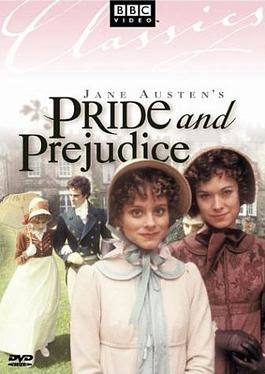
Pride & Prejudice, 1980

My Review

I think it is fair to claim that this is the most beloved film in the collection. Many Janeites continue to prefer this version of Pride and Prejudice to the more acclaimed, recent versions. I think that’s because Elizabeth Garvie is so good as Elizabeth Bennet, and David Rintoul, while a bit stiff, just looks perfect as Darcy. Also, because the story has been less, um, sensationalized (no wet shirts here), it's definitely the cosiest of the Pride and Prejudice adaptations available. Tessa Peake-Jones is my favorite Mary Bennet.

Mansfield Park, 1983

My Review

This is easily my preferred Mansfield Park, and that alone is enough to make it my favorite film in the boxset. There are only three versions of Mansfield Park, and both the more recent films make the fundamental mistake of trying to fix the novel. This is the only one that honestly attempts to capture the true story, and Sylvestra Le Touzal (who also played Mrs. Allen in the excellent 2007 version of Northanger Abbey) is the only actress to have portrayed the real Fanny Price on screen. She is supported by Nicholas Farrell as Edmund Bertram. Bernard Hepton is Sir Thomas (he was also Mr. Woodhouse in Andrew Davies’ 1996 Emma), Anna Massey is a fabulously awful Aunt Norris, and Angela Pleasence is spectacular as Lady Bertram. This one is "must see."


Emma, 1972


I really love this one, despite the fact that I think all four of the more recent versions of Emma are better. For whatever reason, I’ve consistently watched it more often than the other films in the boxset. Part of it, I think, is that like Sense and Sensibility, Emma works very well on film. Highlights of this version include Mollie Sugden (best known as Mrs. Slocombe on Are You Being Served?) as Mrs. Goddard, and my favorite Mr. Woodhouse, Donald Eccles, who is fabulously nervous. Emma is convincingly portrayed by Doran Godwin, and Mr. Knightley is very well captured by John Carson.
Mrs. Elton (Fiona Walker), like every other Mrs. Elton, is awesome. For some reason I do not fully comprehend, Austen's awful ladies translate really well to film.


Persuasion, 1971


This is my favorite Persuasion adaptation. It isn’t perfect, but unlike both more recent versions, it does not rely on Austen’s cancelled chapters of the story for plot. This really bothers me. It pains me there isn’t a better, yet still accurate, film adaptation of my favorite Austen novel, but I am cautiously hopeful that the upcoming Netflix version will not fall into this trap. In the meantime, when I want to watch Persuasion, this is my go to, simply because it causes the least frustration. Anne Elliot is played by Ann Firbanks and Bryan Marshall is Captain Wentworth, though it appears to be Robert Swann – Col. Brandon from Sense & Sensibility – on the DVD cover. Such quirks, I suppose, are part of the experience. 


Northanger Abbey, 1987

My Review

Easily the strangest Austen adaptation ever made, the 1986 version of Northanger Abbey doesn’t really fit with the other films in this boxset. It is by far the shortest (only 78 minutes), and it wildly diverges from the novel, playing up its gothic aspects. A source of both outrage and fascination for fans, it is something you should really see at least once, if for no other reason than to join the debate. Also, Northanger Abbey has only ever been made into a movie twice. For those long horrified by this version, the 2007 film is so magnificent that they might like to forget this one ever existed. I think that’s a mistake. Especially now that we have a much more accurate adaptation to cling to, I can appreciate this film for just being so darn bizarre. Catherine Morland is played by Katharine SchlesingerPeter Firth is Mr. Tilney, but most memorable are the skin crawling duo of Cassie Stuart and Jonathan Coy as Isabella and John Thorpe. If you thought they were bad in the book, they are absolutely revolting here. The 80s-gone-18th century coiffures are marvelously awful. Actually, the whole film might be worth watching for the crazy head gear alone. It's so bad, it's good.

Have you seen and enjoyed (or hated) these films? I’d love to read your thoughts. Do share them.

Monday, May 31, 2021

Emma (2020)

This post contains spoilers and possibly controversial opinions. Proceed at your own risk.

I finally watched the 2020 Emma. Obviously, I’ve been wanting to watch it all year, but lacking buy in from the family (I kind of burned them out on streamed Austen musicals early in the pandemic), it took this long to follow through. My patience did save me five franks, as the cost of the film has reduced since its digital release, but I had to scramble all year to not read about it, that my impressions might remain untainted. 

For the most part, I loved it. It's funny, which I very much appreciate. It's also perfectly gorgeous. I could go on about the clothing for ages. That great coat Knightley wears at the very beginning ... wow! And those scenes where they show the characters dressing: no, they’re not canon, but they are manna for costume geeks. I could write an entire post about the clothing, but Karolina Żebrowska pretty much echoes all my thoughts, while providing a wonderful tutorial on the function of costumes in film:


I thought the cast was extremely strong, though few performances were enough to topple my previous preferences (find them here). Some were reminiscent of previous versions of the characters. Mr. Woodhouse (Bill Nighy) was portrayed with a nervous energy I found very interesting and highly akin to my favorite Mr. Woodhouse, Donald Eccles, from the 1972 version. Similarly, this Miss Bates (Miranda Hart) invoked strong memories of Sophie Thompson in 1996. The Eltons (Josh O'Conner and Tanya Reynolds) were perfectly abominable, as they should be.

Anya Taylor-Joy is a phenomenal actress and definitely makes the character of Emma Woodhouse her own. I personally prefer a more sympathetic portrayal, but that's probably because I take criticism of Miss Woodhouse rather personally, finding her as relatable as I do. I reserve the right to be partial and prejudiced on such subjects.

My prejudices were set against Johnny Flynn as Mr. Knightley, but he soon toppled them. I think his performance is probably my new favorite depiction of the character. Mia Goth also stood out as Harriet Smith (the only better I have seen is Dani Marcus in the streaming musical version, my review for which was sadly lost in the AA purge).


But even when I enjoy an adaptation, it is the things that I don’t like which tend to weigh on my mind. I suppose it is the curse of the Janeite. For example, am I the only one left wondering what happened to poor Mrs. Hughes, and when/how Mr. Knighltey stole Mrs. Reynolds away from Pemberley?

I really disliked the portrayal of John and Isabella Knightley (Oliver Chris and Chloe Pirrie) as so incredibly quarrelsome and unhappy. That is not how I read their relationship in the book, and the fact that none of their closest relatives seem at all concerned by their obvious distress is heartless, reflecting poorly on all of them. As indicated above, I think Emma is mostly portrayed pretty harshly until the very end of the film, when some quick work is done to redeem her. Prior to that, we only see only fleeting glimpses of her humanity. I don’t think this was necessary or appropriate. I need to back up a bit to explain why.

Knightley’s realization that he loves Emma the night of the ball at the Crown is amply supported by the text. I even rather enjoyed his romantic struggle being more developed, but I strongly feel Emma needs to remain oblivious to her own feelings for a while longer. If she already knows she loves him and has even that vaguest reason to suspect that Mr. Knightley returns that love, then she is in the position of once again manipulating Harriet. She is supposed to have already learned this lesson. Under such circumstances, Harriet’s anger upon discovering the "mixup" is justified, but it's out of keeping with the behavior the character. This assertive transformation feels more like Tai (Britney Murphy) from Clueless than either the cannon Harriet or the one portrayed thus far in the film. More importantly, her accusations rob Emma of the opportunity for the self-realization so detrimental to her development. Instead, our heroine is sent to pay penance to Mr. Martin (playing matchmaker still!) in order to redeem herself. Why bother with all of this? As said above, it feels unnecessary. The only explanation seems to be hatred for the character. Just because Austen predicted that most people wouldn't like Emma Woodhouse, that does not justify this endless butchering of her character. Austen herself very much liked Miss Woodhouse. I wish fans would make more of an attempt to see her virtues.

And while we're altering the storyline anyway, how about updating Austen's one blatantly racist scene? We don't often dwell in the Janeite community on how offensive her portrayal of a menacing Romani presence in the neighbourhood is, but considering the current atmosphere, oughtn't we? I believe the scene could be portrayed on film quite in keeping with cannon, without whitewashing Austen's legacy, and yet free from incessant repetitions of a discriminatory word (they use it more frequently in the film than in the novel) and the perpetuation of uncontextualized racism. I think it's important to call the filmmakers out on this point. Badly done!


Back on lighter ground, I think Johnny Flynn delivered the “I cannot make speeches” speech to perfection. That he then, instead of a reply, got a nosebleed was a bit bewildering. I burst out laughing. Yes, it was cinematically beautiful, and yes, I have now read a bevy of explanations for both the planned and spontaneous aspects of the moment, but it kind of ruined what should have been an amazingly romantic moment for me. First of all, it was jarring, but it also strikes me as strange that Mr. Knightley, the one who claims to not be able to summon the correct words, has complete agency over the entire love declaration while Emma is left wordless on the subject, her blood sufficient confirmation of her feelings. Oy. It's not exactly a liberating portrayal. When a film is written and directed by women, one hopes that the resulting product will be free from such stuff. Instead, this adaptation has in it a current of female v female vindictiveness running through it, a force which always undermines our struggle. One imagines the writer saw her school bully in the heroine. The resemblance might be striking, but I still don't think Austen would approve. It strikes me as a transgression of "the duty of woman by woman" (Emma, Ch. 27).

Like all Austen adaptations, I will watch this one many times, my feelings about it will develop and grow, and the experience will add a new layer to my reading of the novel. This is why all the adaptations are worthwhile watching, even those that make me have a tantrum (looking at you, MP ‘99). Gotta relish comparative literature! It’s always broadening. I'm aching with anticipation for not one but TWO upcoming Persuasion adaptations. Surely one will finally get it right? I won't hold my breath, but still, there is hope!

Thursday, October 15, 2020

Streaming the Pride and Prejudice Musical


During the hard lockdown I only had very few, very precious hours to myself. I managed to luck into a couple when the Pride and Prejudice musical flopped hard with my husband and daughter, and I was abandoned to relish it alone. I didn't really mind. 

Justin Mortellitit and Mary Mattison as
Mr. Darcy and Elizabeth Bennet.


A product of Tony nominee Paul Gordon and directed by Robert Kelley of TheatreWorks, I thought the 20 euros I spent to buy the production (you can rent it for 5) a great bargain. I’m thankful for the opportunity to see it at all, as I suffer from a dearth of english language theater here in Switzerland. Furthermore, this is a pretty well filmed play. Not all of them are. It takes a lot to overcome the limitations of the lense and replicate a theatrical experience. I was pleased by the result. Check out this gorgeous promo video:


I really liked the show, but as indicated, I’m the only one in my family who did. My daughter proclaimed it unbearable and abandoned me within ten minutes. My husband thought that sufficient justification to also bow out. So I got to watch the bulk of it from my bathtub (can’t do that during a live performance!), and while I thought the beginning was a bit weak, it grew on me as the story progressed. The music was good, if not particularly memorable. It very much reminded me of something else, and I couldn’t decide if it was more Joseph and the Amazing Technicolor Dreamcoat or Disney’s Descendants, oddly enough. I very much enjoyed the lyrics, and the dialogue, of course, was at its best when pure Austen. There are a few historical inaccuracies, but they are not the sort that would bother most viewers. I imagine a British audience might find the accents challenging, but from an American perspective, they are believable. The set also seems well-done, but I’m afraid this is one of the aspects of the theater that really suffers on film. It’s nearly impossible for the sets to achieve their full effect.

Mary Mattison as Elizabeth 
Bennet, in funny hoody thing 
(is that a zipper?!?!)

Regency lady or college student?


Before delving a bit into the individual performances, I must comment on the costuming. While I love everything about the theater (and have been known to force my family to sit through truly awful productions, just so I can soak in the atmosphere), my particular interest has always been costuming. It can make or break a show for me, and maybe the best part of streaming a production is being able to see the details in the garments all the better (why I usually spring for premium seats and bring opera glasses). I thought this production, in many ways, did a lovely job. With a period piece, costuming is pretty straightforward, or at least it should be. A thoughtful designer will either opt for historical accuracy or stylization. For the most part, costume director Jill Bowers and designer Fumiko Bielefeldt, adhere to the former aesthetic. Some of the designs are quite stunning, and bodices, sashes, and spencers are effectively utilized to alter looks between scenes. However, I did not like how they dressed Elizabeth (Mary Mattison). Her performance was great, and the costuming undermined it. It’s my biggest complaint about the show. I understand the desire for a designer to try and highlight their main character by using distinct colors and lines, thereby making them stand out from the rest of the cast, but the effect here, for me as a Janeite, was jarring. While everyone else is clothed in proper period prints and fabrics, Elizabeth’s two gowns both feature geometric designs, far more Art Deco than Georgian. The cut of her gowns is also strange, particularly the one from the first act, which has these very modern, unsupported panniers built into the sides. Oh, they bother me (you can see them much better in the video above than in my cruddy screenshots). I like the gown from act two much better, in no small part because it resembles a dress I have long owned and loved (not a costume, mind you – wouldn’t be caught dead trying to pass it off as period piece). I also adore the “cloak” she wears when walking to Neatherfield. It’s some kind of a cross between a redingote and a hoodie sweatshirt, and it’s AWESOME, just not on Lizzy Bennet. I attribute some of the responsibility to the 2005 film, which (in my opinion) made similar mistakes.

Mrs. Bennet and her daughters, from left to right:
Sharon Rietkerk, Mary Mattison, Melissa WolfKlain,
Chanel Tilghman, Tara Kostmayer, and Heather Orth.

Most of the characters, particularly Elizabeth, are modernized, again in a manor somewhat resembling the 2005 film. I have mixed feelings about it, even as I understand the choice. The goal is to make the character more relatable, but for me, it’s just a ruder version of Austen’s original. Like her costumes, I found these interludes distracting from Mattison’s excellent performance. I also did not like the first solo song she sings, in which she repeatedly celebrates “I’m headstrong!” It’s better later in the show, reprised after Elizabeth learns that it’s not always such a great quality. Jane is also mouthier than her original, but I still thought Sharon Rietkerk captured the spirit of the character beautifully.

Mary Mattison and Sharon Rietkerk
as Elizabeth and Jane Bennet.

Mr. Darcy (Justin Mortellitit) is more at ease than one might expect, and we hear his internal narrative, which is probably the play’s biggest deviation from the novel. Although his early revelations regarding his feelings for Elizabeth changes the story quite a bit, I must suppose most of the audience is familiar with the story, so it doesn’t prove much a spoiler. It also makes the character warmer, particularly in contrast to Wickham (Taylor Crousore), who is very handsome but not so charming or charismatic as the character in the book. While I thought Mortellitit an effective if not canonical Darcy (and much more my type than Crousore), I think a more boyishly roguish casting of Wickham would have made this dynamic work better. I even wonder if it might have been better with the casting reversed, at least visually. As it is, I was left wondering what Elizabeth ever saw in Wickham.

Justin Mortellitit as Mr. Darcy.

I get the impression that Paul Gordon has a pretty personal connection to Darcy. This is where his voice, rather than Austen’s, breaks through. Darcy’s role is much larger in this production than it is in the book, and Gordon clearly has a strong notion of who and what Mr. Darcy should be, all of which I find believable and supported by Austen’s text. This interpretive characterization is probably the most interesting part of the play.

Monique Hafen Adams and Travis Leland as Caroline
and Charles Bingley. My favorite gown in the show!

Mr. Bingley is very well captured by Travis Leland. He is portrayed as tongue-tied and shy, which threw me off at first, but it comes together in the end, setting up his proposal scene to be one of the best moments in the play (as it should be). I also thought that Monique Hafen Adams as quite convincing as Caroline Bingley (as is so often the case, poor Mrs. Hurst and her husband were cut from the tale). Of the Bennet sister’s, I especially liked Mary (Melissa WolfKlain), who helped maintain a comic atmosphere, which was much needed, as I thought all the humor entirely sapped from Mr. Collins (Brian Herndon) and Lady Catherine’s (Lucinda Hitchcock Cone) characters. The former came off as predatory (maybe this is another nod to the contemporary world?), and the latter rather like Cruella De Vil. Maybe it was the jazzy song she sang. She did nail the imperiousness, but the comedy was missing from the script.

Melissa WolfKlain as Mary Bennet,
in fabulous day dress.

I think the very last line of the play, spoken by Elizabeth, reveals a lot about the spirit of this adaptation: “It is a truth universally acknowledged, that a single man in possession of a good fortune, must be in want of a wife. Still not true!”

Hmmmmmm.

Overall, I really enjoyed escaping into this version of Pride and PrejudiceStreamingmusicals.com also has the company’s earlier production of Gordon’s Emma. They are staging his new Sense and Sensibility in December. I could get hooked.

Here is a clip featuring some of the songs from the show and a few more screenshots (with commentary). Enjoy!


And from the back. Sorry for the blur.
I adore Miss Bingley’s gown.
My feelings about Miss Bennet’s
I won’t repeat.


Taylor Crousore and Mary Mattison

Gotta swoon for a great coat.

Lucinda Hitchcock Cone as Lady Catherine and company.

Brian Herndon, Lucinda Hitchcock Cone, and Christopher
Vettel as Mr. and Mrs. Gardiner and Mrs. Reynolds, apparently


Friday, March 31, 2017

The Particular Charm of Miss Jane Austen by Ada Bright and Cass Grafton

My deeper relationship with Austen began when I was in college. We were reading Persuasion in a Romantic Literature class (the first and only time I encountered Austen on a syllabus), and I began to imagine Anne Elliot walking beside me across campus or sitting in a lecture hall, and what she might have to say about our modern world. This was long before I knew anything of fan fiction, other than that it existed. These memories came back to me with sharp clarity when I read this scene:

They continued in silence for some distance, though both of them cast a meaningful stare at No 4 Sydney Place as they passed, but as they reached the Beckford Road and began the ascent, Rose turned to Jane again. 

"Does the noise bother you? The road? This is a main route to Warminster and beyond and has such heavy traffic." 

Jane smiled. "Much is altered." She looked around and gestured with her arm. "Naught but open fields bordered the Gardens." Her expression sobered. "My disinclination for our removal to Bath was much compensated for by our pleasing situation in Sydney Place. One does not feel - did not - feel so confined be the city on its outer edges." 

"Then shall we walk along the canal?" Rose pointed to the gap through which the towpath could be seen, winding its way towards Bathampton. It was a route she had often trod in the summer months when still living at home. 

"As you wish." 

They fell into step again, continuing to walk side by side at first for the width of the path permitted it. 

"I did not answer your question." Jane glanced at her, and Rose frowned. "Noise emanating from these modern conveyances does not trouble me, for it is merely different. The constant rumble of wheels over cobbles, the clatter of hooves is not so much lower in volume than your modern conveyances. 'Tis why I prefer the country; the disturbance of silence has a more natural source: birdsong, flowing water over stones, the bray of a lamb... these things I miss more than any other." 

Rose glances around. It was peaceful by modern-day standards on the towpath, with a few ducks swimming in the canal and very few people about, but just then a light aircraft came overhead, it's engine chugging away, and she glanced at Jane as they walked. 
"And what do you make of our 'modern conveyances'? You must have seen the trains passing through Sydney Gardens, too, if you've been here a while, and noticed the planes flying overhead?" 

Jane looked up as the small plane sailed out of view. "If I may fly through time, why should man not have discovered how to fly though the air?"

A few months later, I myself was wandering over the streets and paths so meticulously detailed in The Particular Charm of Miss Jane Austen by Ada Bright and Cass Grafton (visit them at TabbyCow.com), at the 2016 Jane Austen Festival in Bath. I sighed just now as I wrote those words. They are a vivid reminder of how much blogging I have neglected. I never got passed the National Portrait Gallery (got a bit bogged down there, I know, but it was so awesome!), and failed to share anything of my fabulous stay in Bath here. Nor did I ever write this book review. I am a big believer in better late than never. Good thing, too.

Anyway, when I was in Bath last fall, this book was like a mental guidebook: its scenes reenacting themselves before my mind's eye. It was my first time in Bath, and when I got lost a few times, this ability was quite useful! If you have long yearned to make the pilgrimage to the Festival, as I did, than this book is honestly the next best thing. It takes place during the festival. The main character, Rose, walks in the promenade. How eerie was it for me, following in her footsteps, and knowing that one of the authors, Cass Grafton, was somewhere in the crowd! I have had the pleasure of getting to know Ms. Grafton over the past two years, as she lives not far from me in Switzerland. Her presence was just another layer adding to my glee in being where I was, when I was. The only thing missing was the fair weather Rose and her friend Morgan enjoyed during their promenade (fortunately, like Captain Wentworth, I had "equipped myself for Bath" and purchased an umbrella).

The story is one of time travel, friendship, and not taking anything for granted. Thematically, it reminds me in many ways of my own Being Mrs. Bennet, the second draft of which I was completing when reading this novel, though on the surface they are wildly different stories. Rose Wallace has always lived in Bath or its environs. Her future is there, even if a few demons from her past still haunt the ancient city. Her encounter with a time traveling Jane Austen, in whose adventure she becomes totally enmeshed, teaches her many of the same lessons hard-learned by an Austen heroine (or two).

The Particular Charm of Miss Jane Austen is such a great title for this particularly charming novel. It has such a mix of things going on: an homage not just to Jane Austen, but also to the fantasy genre. Other reviews I have read of this book compare it to a wild variety of other stories, and that's because there are so many influences informing the action. It's apparently clear that, just like Jane Austen, Ms. Bright and Ms. Grafton share a passionate love for books of all sorts. This novel is not fan fiction, but I think it is no less a book for fans. The enthusiasm of fan culture permeates it. To me it felt like the authoresses had taken Hermione Granger's time turner and transmuted it into an amber cross (there is an awesome moment in the book when Rose gives Jane a copy of The Philosopher's Stone to read). Such fun! I do hope there will be a sequel. The end leaves an opening for one. I feel like the adventure has only just begun, and I definitely want to be on board when it continues. Highly recommended!

Thursday, October 27, 2016

Giveaway! Darcy By Any Other Name

A bit of excitement: upon reading my review yesterday, author Laura Hile generously offered my readers a giveaway! One ebook edition of Darcy By Any Other Name is up for grabs. Giveaway will run for a week. Just leave a comment below including your email address. Good luck, and thanks Laura!

Wednesday, October 26, 2016

Darcy By Any Other Name by Laura Hile

I can think of few authors who do justice to Jane Austen's fine appreciation for the absurd, but Laura Hile is certainly one of them. Her Mercy's Embrace trilogy (read my reviews) has long been amongst my very favorite Austenesque stories, and it was with impatience that I waited for the day last summer when I finally got to greedily devour a new book by Ms. Hile. I admit to feeling some trepidation regrading the premise of Darcy By Any Other NameMr. Darcy is struck by lightening and changes bodies with Mr. Collins. The very notion left me uncomfortable. Darcy as Collins? It gave me that feeling I get when an actor on film does something so ridiculous I can barely stand to watch, usually Will Farrell. There may even have been a moment of hesitation before I cracked the cover, but I knew I could trust the writer who redeemed Elizabeth Elliot, and in I plunged.

What a ride.

If there were cringe worthy moments, they effectively conveyed Darcy's own extreme discomfort with his predicament. Who am I to be skeeved out when it's poor Mr. Darcy who has to endure it? Upon first awakening from the accident, he find himself a virtually prisoner at Longbourn, studiously guarded by the well-meaning Mrs. Hill.

Darcy's eyes studied Hill as she moved about the room. In order to escape he might have to climb out a window and slide down the drain pipe. Not that he hadn't done this before, but how would Collins' flabby body respond? He'd caught glimpses of Collins' thighs, each one plump and rounded like the body of a seal. Could he climb with such legs? Could he manage to ride?

Darcy watched Hill stir the coals and add wood to the fire. How many stones was Collins? Did the Bennets have a horse that would bear his weight?

Presently Hill went out, and at once Darcy sat up, wincing a little at the way his head hurt. Steeling himself against pain, he swung his legs over the edge of the bed. Secretly he had practiced standing to gain strength and balance. Now it was time to venture farther.

Darcy took a sliding step in the direction of the wardrobe. He found that by holding on to the bedstead and then bracing himself against the nearby wall, he could reach the wardrobe door. Hanging inside were a black frock coat and a single pressed shirt. The shelves held smallclothes, stockings, and a cravat, clean and nicely folded. Darcy gathered these and made his way back to the bed.

With a weather eye in the unlocked door, he managed to dress himself. The effort left him weary and winded. He glanced at the clock. No wonder, it was almost time for the midday meal--more bone broth. Wonderful.

One of the things he'd noticed about Collins' body was how hungry he was. Continually he was craving food, especially sweets. This, Darcy decided, was something that would have to change. He would not be a slave to a voracious appetite.

The pages flew by as I anxiously sought resolution, desperate to learn how such an extraordinary occurrence might be undone, little suspecting that more than a body stood in our hero's way. Of course Elizabeth might learn to love Mr. Collins despite his person, were he Mr. Darcy inside, but how to rectify such a predicament proved just as complex as reclaiming a body. The novel is action packed, just like Mercy's Embrace, but Darcy By Any Other Name is a longer and more linear story, allowing the reader to linger and smell the roses. I think I might like it better. Rereads will tell. Brava, Laura!

And now we have a giveaway! Win a free ebook of Darcy By Any Other Name here: http://alexaadams.blogspot.ch/2016/10/a-bit-of-excitement-upon-reading-my.html.

Wednesday, October 5, 2016

Jane Austen Lives Again by Jane Odiwe

It's been forever since I wrote a review! And I read a bunch of great Austenesque novels over the summer, so I have a lot of backtracking and sharing to do. I believe my best reviews are written when when I have just finished a novel, so I fear I won't really be doing these books justice. However, a late and short review is better than no review at all. Believe me, I know.

I had the very great pleasure of meeting the author of this first book after many years of corresponding (and even of more admiring her work) at this year's Jane Austen Festival in Bath. Jane Odiwe was just as lovely as I always knew she would be. In fact, all the Austenesque authors I met while in Bath seem exceptional people to know. Must be something about those of us who have Austen as a muse.

Ms. Odiwe, also a painter, seems to live a life inspired by Austen. No wonder she should be compelled to bring our dear authoress to life in her novels. Jane Austen Lives Again feels like the culmination of the journey Ms. Odiwe has been leading us on through her last few novels. In Searching for Captain Wentworth (read my review here) she took us through a portal to Regency Bath, where our heroine meets Jane Austen. In Project Darcy the heroine encounters the ghost of Tom Lefroy while staying at the Ashe Rectory near Steventon, triggering episodes in which she finds herself inhabiting Austen's body. Perhaps it was inevitable that Ms. Odiwe would next make Austen her heroine instead of a using a modern surrogate.

Jane Austen Lives Again is not really a time travel story. It's more of a Frankenstein story, though far less gothic. The time is 1925. Dr. Lyford, descendent of Jane's doctor during the illness that proceeded her death, has reanimated her, cured her, and taken quite a few years off her age at time of death in the process. Now determined to make her way in a new world, she gets a position as governess to Sir Albert and Lady Milton's five daughters, each of whom bears a resemblance to one of Austen's heroines. They live a rather bohemian lifestyle in their crumbing ancestral castle. Jane takes them in charge, of course. There is so much more to the story - romance, health complications, makeovers, wild motorcycle rides - but what stand out to me most of all is Ms. Odiwe's ability to write like she's painting. I've spoken of this is in probably all my reviews of her work, but it is fascinating to watch her capture this post-WWI world, which is so very different from the one she usually describes and so very incongruous from the one with which we usually associate Austen. I love this super vivid introduction of Lady Milton:

Lady Milton dragged on her cigarette holder and blew ring of smoke into the air. Her ankles were crossed, and as the scarlet Louis heeled slippers with pom-poms of swansdown tapped against the other in agitation, the kimono fell away from her knees to reveal pale shapely legs. Jane thought she must have been very beautiful once, and stared with fascination at her heavily made up face, powdered and rouged, with kohl-black eyes lined with paint.  

We're in a whole new world! I can see Lady Milton liked she stepped off an old New Yorker cover.
Jane Austen Lives Again is perhaps my favorite of all the novels Ms. Odiwe has written to date. What a joy to view a different time and place through Austen's eyes, so skillfully rendered! Writing this review, I want to start rereading it and relive the adventures of Jane, along with her most interesting charges, Mae and Alice Milton, once more.

Thursday, February 26, 2015

Bride and Prejudice (2004)

Emergency review! I was so certain I had already written a review for Bride & Prejudice, until I started looking for the darn thing to use in my next Austen Authors post, due out in less than 12 hours. What else to do but hurry up and rewatch this delightful take of Austen's most beloved novel? I think this is the forth time I have seen it, and I like better each time. It really is a well done adaptation. That being said, it's not a great Bollywood film, and I do love my Bollywood. Maybe that's because it isn't really a proper Bollywood film but a Hollywood take on one, packed with some of the most recognizable Indian faces for a western audience. It is ironic (or perhaps self-aware) that the film puts a post-imperialist message at it's core, providing the barriers to romance that socio-economics play in the novel.

Lalita: You said yourself you are used to the best. I'm sure you think India is beneath you.

Darcy: If I really thought that, then why would I be thinking of buying this place.

Lalita: You think this is India? (indicates her surroundings, a luxury hotel swimming pool)

Darcy: Don't you want to see more investment? More jobs?

Lalita: Yes, but who does it really benefit? You want people to come to India without having to deal with Indians.

Darcy: Oh, that's good. Remind me to add that to the tourism brochure.

Lalita: Isn't that what all tourists want here? Five star comfort with a bit of culture thrown in? Well I don't want you turning India into a theme park. I thought we got rid of Imperialists like you.

Darcy: I'm not British. I'm American.

Lalita: Exactly.

The choice of Aishwarya Rai to play Austen heroines continues to astound me. This is, after all, one of the most beautiful women on the planet, let alone Bollywood royalty. Yet you forget that she is far too pretty to be an Austen heroine as she makes each role entirely her own, proving her acting ability well surpasses even her startling beauty. Let's think about this from a western perspective: how do you cast Angelina Jolie to play anyone's less attractive younger sister? Crazy, right? But Aishwarya is awesome as both Lalita Bakshi (and let's face, who else has such fine eyes?) and as the Marianne Dashwood character, Meenakshi, in 2000's Kondukondain Kondukondain (read my review here), Meenakshi.


The film is mostly really well cast. Anupam Kher has made a career out of portraying fathers, and his Mr. Bennet/Chaman Bakshi is thoroughly lovable (sorry, but I can't mention him without noting he played Shah Ruck Kahn's father in Dilwale Dulhania Le Jayenga, one of the most beloved Bollywood films ever and a personal favorite). More in keeping with Austen's original characters is Nadira Babbar as Mrs. Bennet, or Manorama Bakshi. Maybe one of my favorite characterization, however, is Caroline Bingley, or Kiran, played by Indira Varma (who might be more immediately recognizable to readers as Ellaria Sand in Game of Thrones). Kiran is a much gentler Miss. Bingley. As she does not suffer the same social insecurity as the original, she is not desperate to trap Darcy in marriage. Jealousy for Lalita does not dominate (or even define) her character. Rather she comes off as a extremely spoiled party girl. Yes, she's an ice queen, but she is actually rather fun at a party. I enjoyed this less catty interpretation, despite the departure from canon.

There are only four Bakshi sisters (poor Kitty was once again overlooked). One of the funniest scenes is the Mary figure's performance of "the cobra dance" (played by Meghna Kothari), and one of the most uncomfortable scenes is a song and dance number performed by the sisters called No Life Without Wife, a weird cross between a 60's dance fad and Matchmaker Matchmaker Make me a Match. It is the worst of many bad songs in the film, but it immediately precedes a fun dream sequence that helps Lalita begin to understand her feelings for Darcy.

Now let's speak about William Darcy, an american hotel tycoon, played by Martin Henderson. I have heard other Janeites proclaim him their very favorite Darcy (even better than Mr. Firth!), but I am afraid I do not quite buy it. First of all, he is blond. A blond Darcy. It just doesn't work for me. Further, his portrayal comes off as pretty passive. The Wickham figure is actually staying in Lalita's house, and he doesn't have the gumption to warn her about him. He finally cuts the cord from his overbearing mummy and does the right thing, but it isn't enough for me. I want to like him better in the role, but I just can't. It's too awkward.


One more word on the music. I listen to a lot of Indian music, both from films and also kirtan music, and while I love it all, I have found it much more enjoyable when I do not know the translation. Perhaps it is then not unexpected that the English lyrics to the score of Bride and Prejudice are embarrassingly insipid. The numbers in Hindi are far more enjoyable, letting the audience get lost in the massive choreography and fabulous costumes, but oh! the pain of the English songs! So very, very bad.

All and all, Bride and Prejudice has a lot to offer the Janeite but maybe not so much for the Bollywood fan. A fun and silly adaptation. Take it for what it is and enjoy the absence of subtitles.

Tuesday, January 20, 2015

Vagabondia by Frances Hodgson Burnett

Last week I posted a short story of Burnett's, Racketty-Packetty House, in its entirety because: a) I find it delightful, b) it is out of copyright, and c) because it seemed a perfect introduction to today's review of Vagabondia, a romance novel. Both stories pit the bohemian against bourgeois. In Rackety-Packety House, the old fashioned, run down dolls make the best of their lot, even when their dear little old house is threatened to be disintegrated in flames. They dance and sing and have pretend feasts to buoy their spirits, in a manner much resembling the residents of "Vagabondia," which is what the Crewe family (apparently a favorite name of Burnett's) entitle their place in the world, living on the outskirts of society in impoverished gentility. Their parents being dead and the oldest son, Philip, being a struggling artist with a young family as well as his three sisters to support, the family maintains a carefree existence in their crumbling town home in an unfashionable area of London. At the center of the struggling vagabonds is our heroine, Dolly: an indomitable force of good cheer and industriousness, always up for a good fight with the "Philistines." Unfortunately, Dolly depends on one of this disapproving camp for her small salary, for she works as a governess for a distant relation. Lady Augusta thinks it inappropriate for Dolly to be so collected in her fallen circumstances, a sensation which costs the poor girl her job, early in the novel. No big deal for Dolly. She will have more time at home for her family and more time for Griffith Donne, her long time fiancee.

I adore Dolly, who has a great deal of an Elizabeth Bennet about her, as in this description:
It was a very fortunate thing for Dolly that she was not easily discomposed. Most girls entering a room full of people, evidently unemployed, and in consequence naturally prone to not too charitable criticism of new-comers, might have lost self-possession. Not so Dolly Crewe. Being announced, she came in neither with unnecessary hurry nor timidly, and with not the least atom of shrinking from the eyes turned toward her; and, simple and unassuming a young person as she appeared on first sight, more than one pair of eyes in question found themselves attracted by the white merino, the white shoulders, the elaborate tresses, and the serene, innocent-looking orbs.
Burnett introduces her in all her faults and glories, acknowledging her over indulgence of the vanity of the youngest sister, Molly, and her heartless flirtation with other men. This last vice is held accountable for Griffith's insecurities as he drudges his life in a thankless job, dreaming of the day he might afford to marry his love. My impression was that he was just a pea goose. I do not think Dolly's devotion to the man deserved or warranted. It becomes a flaw in her otherwise fascinating character. Unfortunately, the main romance is the worst part of this romance novel.

Much more fascinating are Dolly's attempts to maneuver her vulnerable family through a sometimes heartless world, particularly the adventures of the devastatingly beautiful and dangerously naive Molly and and middle sister Aimee, the only pragmatist is the family. I was hooked, turning page after page, hoping to see how the two older sisters would save Molly from what almost seems her inevitable fate. Vagabondia is an excellent exploration of class structure and character strength. I recommend reading it for Dolly's sake. She is a creature deserving of a better fate than that which her authoress subjects her, though the book does have a happy ending. It provided me with a similar sensation to that which I experience reading either Mansfield Park or Sense and Sesnisibility. The hero is unworthy of the heroine.

Wednesday, January 7, 2015

Fitzwilliam Darcy: An Honourable Man by Brenda J. Webb

My then Facebook friend and now also fellow Austen Author Brenda J. Webb asked if I would like to read one of her books last year, and I eagerly accepted a copy. According to the guidelines I imposed on myself in 2014, I let her know I would only post a review if I could write a glowing one, and I am very pleased to be able to do so today.

It was really rather ironic reading this book while still gathering reactions to The Madness of Mr. Darcy. I imagine if I got on Amazon and looked through Ms. Webb's reviews that I would find a lot of comments akin to those I have received. Like my book, Fitzwilliam Darcy: An Honourable Man has a very difficult beginning. We come upon an Elizabeth horrifically traumatized: mute and unresponsive. So hard to read! Our beloved heroine, reduced to such state by the machinations of a vile mother (Mrs. Bennet is a true villain in this story) and an unscrupulous husband (an Italian count, no less, right out of Radcliffe), is a nauseating spectacle. It's painful, which it should be, for it allows you to fully enter into Darcy's feelings when he returns to Netherfield, two years after being rejected at Hunsford, to learn the woman he thought he had expunged from his heart was dead (a lie spread by the Binlgeys to protect Elizabeth from her mother), yet to then come upon her in her disordered state! It is a heart wrenching moment as we learn the full sordid details of what happened to Elizabeth through Jane and Charles, but it also the beginning of the healing process, for though apart Darcy and Elizabeth prove so vulnerable, together they will overcome all that stands in their path to happiness.

One of my favorite aspects of this variation was that it positioned our meek and mild Jane to become a protective lioness in regards to her sister, even when that means cutting ties with her mother. I was very proud of this Mr. and Mrs. Bingley as I read the book. I really wanted to quote the passage in which it happened, or the one when Jane and Bingley first tell Darcy about Elizabeth, but all the passages considered seem to give too much away. The story holds so many surprises, and I would hate to reveal them. Rest assured Ms. Webbs prose are clear and artistically crafted.

The story ends very happily, but the road there is filled with machinations and impediments. There is a lot going on in this book with multiple layers of villains, all pursuing their own vicious ends, making things difficult for our beloved couple. Further, there are vivid portraits of the Darcy and Fitzwilliam families, complete with complex family skeletons, emotional trauma, and romance. I was impressed by Ms. Webb's ability to weave such a complicated tale while maintaining the personal, emotional connection between the main characters and the readers. Fitzwilliam Darcy is a rich and captivating story. A hard read for the feint hearted, but worth the effort. I look forward to reading more of Ms. Webb's work.

Friday, January 2, 2015

Happy New Year!

Where did the last several weeks go? 2014 was a wild ride for my family and I, and it went out par for the course when we buried my beloved grandfather. I started the year with a full contingent of grandparents and now I have one. Sad as that is, it was also an amazing year in many ways, and first and foremost in my mind stands the writing, publishing, and warm reception of The Madness of Mr. Darcy. It was book so unlike anything else I have ever even attempted to write. It demanded so much of me emotionally. It was a remarkable experience, but I am looking forward to concentrating on more lighthearted subjects in 2015 with my first children's book, The Prodigal Husband, Being Mrs. Bennet, and The Importance of Being Darcy. More on all these projects to come.

Some of the great treats of my holiday season came in the form of recognition for my writing. It is with pride and excitement I am announcing my inclusion in the new, re-born AustenAuthors.net. My next post will be on that subject. I was delighted to find myself the recipient of a wonderful review of Holidays at Pemberley by Jody at A Spoonful of Happy Endings (read it here). I was even more than delighted to then find myself included in her "Top 10 New To Me Authors" list for 2014. What an honor! Next, Becoming Mrs. Norris was voted one of the top five completed stories on A Happy Assembly in the month of November at jaffrecs.com! So cool, especially as it is Mrs. Norris we are talking about and reader nominated. Last but not least, I received a long coveted place on Meredith at Austenesque Reviews best of 2014 list, when The Madness of Mr. Darcy tied with KaraLynne Mackrory's Haunting Mr. Darcy for favorite Pride and Prejudice variation. Thank you, Meredith! It's absolutely thrilling.

As I look forward to a fresh new year, I have a ton of writing I plan on doing, but I also want to start doing more reviews again. One of the best things about 2014 is a started reading at my regular pace again for the first time since becoming a mother. I hope to now figure out how to balance reading, writing about, and writing books all at the same time. If I can master that by 2016, it will be time for another kid.

I hope everyone had wonderful holidays and happy New Years celebrations. Here's to 2015!

Monday, December 8, 2014

Mr. Darcy's Christmas Calendar by Jane Odiwe

After that day, time at Chawton cottage, and the calendar, which had seemed to work so magically together, began to alter. When Lizzy woke the next morning and attempted to open the door she found it was stuck and resisted being opened at first. There was no glow of light behind the perforations of door number eight, as there had been previously, and it simply wouldn't open. She didn't want to force it; the calendar was such a beautiful and precious object that she hadn't the heart to tear it. If she thought about what had happened to her over the last week or so, dwelling too much on trying to reason out exactly what was going on, she concluded that therein lay the road to madness. The only way she could keep her sanity and make sense of the whole experience was to tell herself that she'd fallen into a parallel universe, one that she'd often dreamt of visiting. She was fairly certain that it wasn't just that she was dreaming - never before had she been able to sustain so much action when sleeping, but trying to analyse it all was getting her nowhere. That magic of some kind, the sort she'd believed in as a child, held some enchantment over the whole episode was an unshaken conviction, and she was glad, that even though she was twenty-one and well past childhood days, that such a powerful spell had charmed her. She resolved to think no more on it, and accept it for what it seemed - an extraordinary Christmas gift. It came as almost no surprise that as soon as she'd accepted this, the little door of number eight flew open of its own accord, and Lizzy saw a magician's hat. At least, she thought it might have been, but on reflection she decided it could just as well belong to a gentleman like Mr Bingley, as there wasn't a rabbit in sight.

Tis the eight day of December, and what better way to begin a review of a book entitled Mr. Darcy's Christmas Calendar than with the scene in which the heroine, Lizzy Benson, opens the door of her very special advent calendar, purchased at the gift shop at Chawton. Before I proceed any further, I must confess that until I met my husband, I had no notion what an Advent calendar was. Yes, I grew up watching National Lampoon's Christmas Vacation, but I really had no idea those little doors might contain chocolate or other treats inside. Then my mother-in-law presented me with the calendar she made my husband when he was born. This framed piece of embroidery features a large Christmas tree with twenty-five ornaments, each with a corresponding hook, to which scraps of paper are attached. Part of the Christmas magic in my husband's house was waking up each morning in December to see what instructions or treats the elves had left overnight, usually a Christmas story, craft, or game. For ten years now I have been in charge of making sure this bit of Christmas magic keeps happening. From having no notion what one was, an Advent calendar has become one of the most important parts of our holiday.

That being said, when I learned one of my favorite Austenesque authors, Jane Odiwe, was writing a Christmas story about an Advent calendar, I made immediate plans to read the book December first, before a fire, and with a cup of hot cider in hand. Unfortunately, these plans were waylaid when my grandfather died on November 30th. When I finally did get to the book, it proved the perfect balm to my heartache. The opportunity to escape the modern world for a fantastic Regency one, in which Jane Austen lives side by side with her characters from Pride and Prejudice, slowly tweaking the story until it takes the form we all know and love, is, as the heroine notes in the quote above, an extraordinary Christmas gift. I've enjoyed all three of Ms. Odiwe's time-travel tales (be sure to read my reviews of Searching for Captain Wentworth and Project Darcy), but I think this latest is my favorite. I say that taking into to account the brilliantly portrayed romance between Jane Austen and Tom Lefroy in Project Darcy, but I did not find the modern day romance nearly as satisfying. In contrast, the hero of Mr. Darcy's Christmas Calendar, a Mr. Williams, is the perfect Darcy stand-in: even more Darcy than Darcy in this book. Another strength of the novel is how the modern events parallel those of the past, which I greatly enjoyed. Further, Christmas magic totally penetrates the story, and as odd as traveling through time via an advent calendar might seem, I found it a lot more believable than the machinations used int he previous stories, probably due to the holiday atmosphere. Yet I think my favorite thing about this particular book had less to do with a swoon-worthy hero and the joys of the season than the commentary on the writing process the book provides.

Bear with me for a moment, but this is a book written by an author about another author who is writing a book. And not just any book. When the story begins, Austen is still calling her tale First Impressions, and it bears little resemblance to the final novel, most particularly in that there is no Darcy and Wickham seems set to play the hero. There are not many scenes in which Lizzy gets to speak directly with Jane Austen, but when she does, great truths about the writing process are revealed. I don't know if this aspect of the book would be as fascinating to a reader who does not write fiction, but I found myself laughing again and again over the writing truths Austen shares, making her feel relatable as a fellow writer, not just a distant, mythologized idol. A few examples:

"I've lost my way a little with the plot, and I'm not sure how to get it back."

"My characters are always springing out of nowhere; believe me, I have little control over them, but sometimes they are reticent to show themselves."

In the past, I have often lauded Ms. Odiwe's ability to encapsulate her painter's eye into her writing. While that eye is still definitely on display in Mr. Darcy's Christmas Calendar, I feel like she is showing us her writer-self, as channeled through Austen, in a manner not accessible in her previous work. I throughly enjoyed this book. I will return to it at future Christmases. It was a lovely way to get into the holiday spirit.

And do go check out the online Advent Calendar Ms. Odiwe has available on her blog. Better than chocolate: http://janeaustensequels.blogspot.com/2014/12/a-happy-mr-darcy-advent-calendar.html.