Showing posts with label Pride and Prejudice. Show all posts

Monday, October 10, 2022

That will do extremely well, Mary. You have delighted us long enough.

I am still catching up on processing and sharing thoughts and impressions from our visit to the United States last summer. One episode I was anxious to share involved an activity I have very rarely engaged in: going to church.

I am far more familiar with synagogues, having been raised jewish, but I have occasionally attended church services, and not just for funerals and weddings. I like observing ritual and find organised religion, even as I don't believe in such institutions, endlessly fascinating. My eldest shares this interest, so it seemed a very natural thing to ask if they wanted to attend a Sunday service and hear their grandmother sing in the choir. They were willing, if not enthusiastic, so we woke up early and went.

It was the funniest service of any denomination I have ever attended.

Now, I don't think the rest of the congregation shared my amusement, but it was all I could do not to laugh my head off. As said, our motivation in attending the was to hear my mother-in-law sing. She's the only regular church goer in the family, and we knew our show of support would be much appreciated. What we didn't account for were the idiosyncrasies of the other choir members. Their numbers were thinned over the course of the pandemic, and several of the remaining choristers were sick that day. Only two members and the director were there to sing. That's ok. Then the "music" began.

Instantly, I found myself transported to the Netherfield Ball. Mary Bennet, in all her glory, was at her instrument. The choir director, who I understand to be a very dear woman, is the only one with a microphone, which sits before the piano, and she sings and plays both loudly and horribly. I never heard a note out of my mother-in-law's mouth. The resemblance to the 1995 version of Pride and Prejudice, in which Lucy Briers captures Mary Bennet so perfectly, was remarkable:


I'm sitting there, a bit of a stranger in a strange land, itching to share the joke with someone, anyone. My child has fully and totally rejected Austen, and I knew they would only scoff at me if I whispered the source of my mirth. So I sat, grinned, and bore it, trying to control myself. The service lasted an hour, and I was about to applaud myself for not being abominably rude, when they began the hymn "Let all Things now Living," which I had never heard before, but the tune I totally recognized: the old Welsh folk song "The Ash Grove." This is the song that Elizabeth Garvie as Elizabeth Bennet plays at the Lucas' in the 1980 version of Pride and Prejudice. I thought I would die of laughter. Fortunately, I had a handkerchief with me, and smothered the noise. I know not what the people behind me thought. Perhaps they assumed I was having some religiously ecstatic fit.

As soon as we got back to the house, I made everyone watch the following clip. Garvie made an excellent Elizabeth, and David Rintoul, I have always felt, looks more like my image of Mr. Darcy than any of the other actors who have taken on the role (read my review of the film here). Enjoy, and please laugh with me. 


Monday, January 31, 2022

Random Reflections on the Bigg-Wither's Affair

I must not allow this blog to fall back into neglect. It will not do. I cannot have struggled in vein to bring it back to some semblance of life. The thought is intolerable.

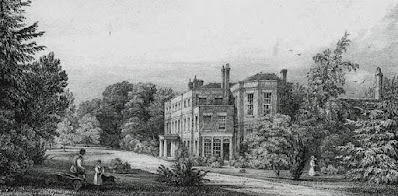
How often I imagine how very different Austen's life (and, subsequently, my own) would have been if she had maintained her very short engagement to Harris Bigg-Wither. Could she have found a way to maintain a household and family and still write her masterpieces? It seems very doubtful, especially when I can't seem to find the time to write with only two children and all the modern appliances, to say nothing of the godsend that is takeout/delivery to the modern parent in a pinch. Running a household in the early 19th century was so enormously more complicated (though at least the Regency homemaker was relieved the burden of calculating their carbon footprint). I don't see how Jane could have done it, even in a comfortable and well-staffed house such as Manydown Park must have been.

I am immensely grateful that she chose not to marry, though it must have been an awful decision to make. I am also relieved to know that my neglected writing is not so detrimental to literary culture. Such genius is a burden I'm rather happy not to bear.

Manydown Park, 1833
Was it her writing that influenced Austen's rejection of Mr. Bigg-Wither? Or was it romantic notions? Or something else? We will never know, but the thing I feel fairly confident asserting is that when Jane and Cassandra landed unexpectedly at the Stevenson rectory and poured the entire adventure into James Austen's ears is that they were very likely told off. Think Sir Thomas when Fanny rejects Mr. Crawford:

And I should have been very much surprised had either of my daughters, on receiving a proposal of marriage at any time which might carry with it only half the eligibility of this, immediately and peremptorily, and without paying my opinion or my regard the compliment of any consultation, put a decided negative on it. I should have been much surprised and much hurt by such a proceeding. I should have thought it a gross violation of duty and respect. You are not to be judged by the same rule. You do not owe me the duty of a child. - Sir Thomas Bertram, Mansfield Park
Such a decision would, according to the morality of the day, be seen as incredibly selfish, hindering the entire family's prospects. More parents of the era would relate to Mrs. Bennet's opinion of Elizabeth's rejection of Mr. Collins, ridiculous as she is, than that of Mr. Bennet. The brother of her friends and heir to his estate, located in Austen's native neighbourhood, amongst her closest friends and relations: James, who always struck me as the family curmudgeon, must have given her an earful.
She is a very headstrong foolish girl, and does not know her own interest; but I will make her know it. - Mrs. Bennet, Pride and Prejudice

These are the thoughts that occupy me as I continue to try and get life back into something like a routine rhythm. There is always solace and useful distraction to be found in Jane. What would we do without her?

Monday, September 27, 2021

Swissing Pride and Prejudice

The following was part of the very first blog post I wrote upon arrival in Switzerland, in August of 2015. I had not reread it until today and was astonished to find it absolutely hilarious! My mind was in such chaos at the time (the post went live the same day our furniture arrived from overseas), and other than remembering writing something of the sort, I had no recollection of the details. I feared I would be embarrassed by my ignorance of the culture, but instead I'm proud of this piece. That's so nice. There is also a good bit of Austen's youthful, absurdist tone incorporated into my vision for three Pride & Prejudice mashups with classic Swiss tales. Perhaps I took inspiration from her own Plan of a Novel. I really don't remember. The first is based on the tale of William Tell, the second on Heidi, and the third on The Swiss Family Robinson. Enjoy! 


Fitzwilliam Darcy-Tell: Folk Hero of Hunsford


In this Austenesque twist on the famous Swiss legend, Darcy forsakes his top boots for a bow, leaving readers all aquiver. When the domineering Lady Catherine insists all residents of her domain bow to her marital arrangements, our hero stands defiant, declaring his love for the comparatively lowly Elizabeth Bennet. He may marry her, his incensed Aunt cruelly declares, if he can shoot an apple off the “obstinate” girl’s strong head, never believing it possible. But Darcy easily splices the offending piece of fruit in two and is forced to flee with Elizabeth on foot, the evil tyrant trailing them all the way. Finally, they reach the free kingdom of Pemberley, and as Darcy crosses the gates, he turns and unleashes a last arrow into Lady Catherine’s wicked heart, felling the villainess. As news of his triumph spreads, subservient relations all over England rise up and overthrow the domination of their most officious kin, bringing forth an age of peace and prosperity.

Lizzy of the Mountain


Overwhelmed with an excessive number of daughters, a young Lizzy Bennet moves with her disillusioned father to live in an isolated cabin upon Oakham Mount. There the two find peace and happiness in their bucolic seclusion until Aunt Philips, having learned of a wealthy young lady in need of youthful companionship, takes Lizzy away to live in London. Overwhelmed by the metropolis and missing her long walks through the wilderness, Lizzy’s own health flounders, even as she finds solace in Georgiana Darcy’s friendship. The heiress was victim of a nefarious plot on her fortune and heart, but Lizzy’s purity begins to restore her faith in humanity. Her loving brother sees the improvement and duly credits Lizzy, whose frank and open manner have also touched his own heart. However, Madame de Bourgh, the Darcy’s rigid housekeeper, blames the rustic girl for a series of mishaps and disruptions to the household, subjecting her accordingly to increasingly severe punishments. When worrisome sightings of a ghostly apparition prove to be Lizzy herself, sleepwalking due to the stress of homesickness, Madame is not slow in packing the girl off to her woodland abode. There Mr. Darcy pursues her and declares his love for the now mature Elizabeth. He moves the entire cabin from Oakham Mount to within the confines of Pemberley’s library, where Mr. Bennet happily spends the remainder of his days.

Swiss Family Gardiner

Traveling north for a pleasure holiday with their niece, Mr. and Mrs. Gardiner’s carriage breaks down. Abandoned by their servants and lost in the wild county of Derbyshire, they must learn to survive on what they can scavenge from the wreck and what Mother Nature provides. They build a rustic shelter and begin to cultivate the land. One day, Elizabeth find herself upon the edge of a murky lake. Seating herself upon its shores, she ponders whether she will ever be reunited with her family and the wider world. Imagine her surprise when a half-dressed gentleman emerges from the watery depths! She recognizes him as Fitzwilliam Darcy, the suitor whom she harshly rejected but a few months before. Both stammer in discomfort and embarrassment, but Elizabeth, seeing an opportunity for rescue, manages to express her plight. He follows her back to her family’s encampment, which proves to be on his own estate of Pemberley. Rather than arresting the Gardiners for poaching, he demonstrates his worthiness by welcoming the family warmly, catering to their needs, and gracefully navigating them all through an exceedingly awkward situation. After being ensconced in one of Pemberley’s best guest rooms and luxuriating in a delightful bath, Elizabeth learns she can return his love, after all.

Monday, June 7, 2021

Touring Austen's Country Houses

This post was originally composed in September of 2017.

Touring Pemberley’s Interior (Sudbury Hall, Pride & Prejudice 1995)


The housekeeper came; a respectable-looking, elderly woman, much less fine, and more civil, than she had any notion of finding her. They followed her into the dining-parlour. It was a large, well-proportioned room, handsomely fitted up. Elizabeth, after slightly surveying it, went to a window to enjoy its prospect. The hill, crowned with wood, from which they had descended, receiving increased abruptness from the distance, was a beautiful object. Every disposition of the ground was good; and she looked on the whole scene — the river, the trees scattered on its banks, and the winding of the valley, as far as she could trace it — with delight. As they passed into other rooms, these objects were taking different positions; but from every window there were beauties to be seen. The rooms were lofty and handsome, and their furniture suitable to the fortune of their proprietor; but Elizabeth saw, with admiration of his taste, that it was neither gaudy nor uselessly fine; with less of splendor, and more real elegance, than the furniture of Rosings. - Pride and Prejudice

In Jane Austen’s time, it was an established matter of hospitality that great country houses could be petitioned by the public for access to their grounds and public rooms. Such tours served as a means of additional income for the housekeeper and groundsmen, who one can assume were inclined to accept or reject such requests not only in deference to the family’s convenience, but also based on the seeming affluence (and likelihood of tipping) of the applicant. Obviously, Elizabeth Bennet and the fashionable Gardiners are welcomed kindly to Pemberley, the same manner in which they were presumably greeted at the many other houses they are said to visit during their time in Derbyshire. It is during the tour that Elizabeth’s feelings towards Mr. Darcy begin to undergo a radical change. His good taste and the testimony of Mrs. Reynolds in his favor all act to increase her opinion of his character. Throughout Austen, a man’s home reflects who he is and what he values. She conducts us through three complete house tours in her six main novels: at Pemberley, Sotherton Court, and Northanger Abbey. Each illuminates the strengths and failures of their owners.

Pemberley's exterior (Lyme Park, 1995)
Pemberley is perhaps such an idealized place because Mr. Darcy, despite his crusty introduction, proves tobe such an ideal man. In his late-father’s favorite room, we see that Mr. Darcy has preserved it in his honor, even thought this means keeping a miniature of George Wickham, distressing to both him and his sister, on display. We also observe his affection for his sister, both in the new pianoforte he has purchased for her, and in the care taken in having the room she favors redecorated:
On reaching the spacious lobby above, they were shewn into a very pretty sitting-room, lately fitted up with greater elegance and lightness than the apartments below; and were informed that it was but just done to give pleasure to Miss Darcy, who had taken a liking to the room when last at Pemberley.
Upon the tour’s conclusion, Elizabeth has an entirely new notion of Mr. Darcy, as revealed when she seeks out and studies his portrait:
Colin Firth as Mr. Darcy
(Pride & Prejudice, 1995)
There was certainly at this moment, in Elizabeth’s mind, a more gentle sensation towards the original than she had ever felt in the height of their acquaintance. The commendation bestowed on him by Mrs. Reynolds was of no trifling nature. What praise is more valuable than the praise of an intelligent servant? As a brother, a landlord, a master, she considered how many people’s happiness were in his guardianship! — How much of pleasure or pain it was in his power to bestow! — How much of good or evil must be done by him! Every idea that had been brought forward by the housekeeper was favourable to his character, and as she stood before the canvas, on which he was represented, and fixed his eyes upon herself, she thought of his regard with a deeper sentiment of gratitude than it had ever raised before; she remembered its warmth, and softened its impropriety of expression.
What a very different notion we receive of Mr. Rushworth, when his mother conducts the guests from Mansfield Park about Sotherton Court! We already know him to be rather trifling. As Edmund Bertram succinctly puts it, “If this man had not twelve thousand a year, he would be a very stupid fellow.” We also can judge him by the fact that he is happy, maybe even relieved, to entirely turn over the task of improving his estate to a near stranger, Mr. Crawford. Certainly, Mr. Darcy would never treat the grounds of Pemberley in so cavalier a manner. It further diminishes Mr. Rushworth’s dignity that the man in whom he confides this trust is a rival for his betrothed’s hand, but these damning facts aside, let’s just examine what actually happens on the tour and how it reflects the man:
The whole party rose accordingly, and under Mrs. Rushworth’s guidance were shewn through a number of rooms, all lofty, and many large, and amply furnished in the taste of fifty years back, with shining floors, solid mahogany, rich damask, marble, gilding, and carving, each handsome in its way. Of pictures there were abundance, and some few good, but the larger part were family portraits, no longer anything to anybody but Mrs. Rushworth, who had been at great pains to learn all that the housekeeper could teach, and was now almost equally well qualified to shew the house. 
Two major points are here revealed. The first is that Mr. Rushworth entirely concedes the tour to hismother’s direction, much in the same way he does his life. As mistress of the house, it is fitting that Mrs. Rushworth lead the tour, but a more engaged landowner would surely have something substantive to contribute. Secondly, we learn that the house and furnishings were once the property of another family, who presumably sold it off lock, stock, and barrel after falling upon hard times. That the Rushworths have added no portraits of their own to the collection suggests they have no familial history of which to brag, suggesting humble origins, which further suggests their wealth was gained through trade. Austen is not so terribly elitist that a made fortune renders a family unworthy (Mr. Bingley and Mr. Weston are both prime examples of her egalitarianism), and Mr. Rushworth is obviously at least a few generations removed from the “taint” of trade, but within her contemporary context it does, nevertheless, further tarnish an already flawed character. The man and house are also diminished by its low situation, devoid of the fine prospects to be commanded from each of Pemberley’s windows:
Hugh Bonneville as Mr. Rushworth
(
Mansfield Park 1999)
The situation of the house excluded the possibility of much prospect from any of the rooms; and while Fanny and some of the others were attending Mrs. Rushworth, Henry Crawford was looking grave and shaking his head at the windows. Every room on the west front looked across a lawn to the beginning of the avenue immediately beyond tall iron palisades and gates.

Even Fanny price, who barely dares offer criticism elsewhere, can speak confidently about Sotherton's deficiencies 

Having visited many more rooms than could be supposed to be of any other use than to contribute to the window-tax, and find employment for housemaids, “Now,” said Mrs. Rushworth, “we are coming to the chapel, which properly we ought to enter from above, and look down upon; but as we are quite among friends, I will take you in this way, if you will excuse me.”

They entered. Fanny’s imagination had prepared her for something grander than a mere spacious, oblong room, fitted up for the purpose of devotion: with nothing more striking or more solemn than the profusion of mahogany, and the crimson velvet cushions appearing over the ledge of the family gallery above. “I am disappointed,” said she, in a low voice, to Edmund. “This is not my idea of a chapel.”
Like it's master, Sotherton is as opposite Pemberley’s perfections as it could be, both “gaudy” and “uselessly fine,” as made clear by the abundance of windows. Those are the adjectives used to juxtapose Pemberley’s “real elegance” to that of Rosings Park (see the complete quote at the top of this post), which, interestingly, is the only other house in all of Austen whose description invokes a reference to the window tax, a property tax determined by how many windows a house possessed. In Mansfield Park, Austen dismisses Sotherton’s many and prospectless windows as superfluous. In Pride and Prejudice, Mr. Collins displays an absurd pride in Rosings “by his enumeration of the windows in front of the house, and his relation of what the glazing altogether had originally cost Sir Lewis De Bourgh.” Like Mr. Collins and his benefactress, the Rushworths are superficial, frivolous characters.

 Stoneleigh Abbey, possibly the inspiration for Sotherton Court

Such pretentiousness seems the perfect introduction to Austen’s third house tour: Northanger Abbey, home of the insidious General Tilney. This is the most complete and detailed of the tours (and appropriately so, as the novel takes its name from the place), revealing loads about the General’s character. As Mrs. Rushworth’s dominant presence during the Sotherton tour reflects her relationship to her son, so does General Tilney’s usurpation of his daughter’s right to conduct her guest about the house and grounds demonstrates the total authority he seeks to yield over his children:
Something had been said the evening before of her being shewn over the house, and he now offered himself as her conductor; and though Catherine had hoped to explore it accompanied only by his daughter, it was a proposal of too much happiness in itself, under any circumstances, not to be gladly accepted.
Yet even Catherine Morland’s enthusiasm for an abbey is totally overwhelmed by the General’s determination to show off his possessions, and indeed, it is he who provides all the desired admiration he intends to excite:
They set forward; and, with a grandeur of air, a dignified step, which caught the eye, but could not shake the doubts of the well-read Catherine, he led the way across the hall, through the common drawing-room and one useless antechamber, into a room magnificent both in size and furniture — the real drawing-room, used only with company of consequence. — It was very noble — very grand — very charming! — was all that Catherine had to say, for her indiscriminating eye scarcely discerned the colour of the satin; and all minuteness of praise, all praise that had much meaning, was supplied by the General: the costliness or elegance of any room’s fitting-up could be nothing to her; she cared for no furniture of a more modern date than the fifteenth century. When the General had satisfied his own curiosity, in a close examination of every well-known ornament, they proceeded into the library, an apartment, in its way, of equal magnificence, exhibiting a collection of books, on which an humble man might have looked with pride.
Liam Cunningham as General Tilney
(
Northanger Abbey 2007)
As the tour proceeds, we see that unlike Mr. Rushworth, General Tilney has taken a managing hand in everything pertaining to his home. His pride in his work is so acute that he cannot perceive how little such details matter to his audience, and he is determined, with military precision, to account for every dimension and each improvement:
From the dining-room, of which, though already seen, and always to be seen at five o’clock, the General could not forgo the pleasure of pacing out the length, for the more certain information of Miss Morland, as to what she neither doubted nor cared for, they proceeded by quick communication to the kitchen — the ancient kitchen of the convent, rich in the massy walls and smoke of former days, and in the stoves and hot closets of the present. The General’s improving hand had not loitered here: every modern invention to facilitate the labour of the cooks had been adopted within this, their spacious theatre; and, when the genius of others had failed, his own had often produced the perfection wanted. His endowments of this spot alone might at any time have placed him high among the benefactors of the convent.
His persistence in flouting his family’s prosperity is so complete that General Tilney totally misses the fact that modern conveniences mean absolutely nothing to Catherine, who would far prefer it were the Abbey in some half-ruinous state, more in keeping with her notions of Gothic grandeur.
With the walls of the kitchen ended all the antiquity of the abbey; the fourth side of the quadrangle having, on account of its decaying state, been removed by the General’s father, and the present erected in its place. All that was venerable ceased here. The new building was not only new, but declared itself to be so; intended only for offices, and enclosed behind by stable-yards, no uniformity of architecture had been thought necessary. Catherine could have raved at the hand which had swept away what must have been beyond the value of all the rest, for the purposes of mere domestic economy; and would willingly have been spared the mortification of a walk through scenes so fallen, had the General allowed it; but if he had a vanity, it was in the arrangement of his offices; and as he was convinced that, to a mind like Miss Morland’s, a view of the accommodations and comforts, by which the labours of her inferiors were softened, must always be gratifying, he should make no apology for leading her on.
Image of a kitchen from 
The Housekeeper’s Instructor, 1791

As they entirely mistake the others' motivations in the broader plot of the novel, General Tilney and Catherine are equally as uncomprehending in the other's tastes. The former not only has no notion of what might please the latter, but has also formed an entirely faulty conceptions of what she values. Surely, after it’s suggested, Catherine can acknowledge that modern conveniences in the kitchen and offices greatly benefit the staff that must toil within them, but it does not decrease her sense of loss for what was swept away to make room for such accommodations:

The purposes for which a few shapeless pantries and a comfortless scullery were deemed sufficient at Fullerton, were here carried on in appropriate divisions, commodious and roomy. The number of servants continually appearing did not strike her less than the number of their offices. Wherever they went, some pattened girl stopped to curtsy, or some footman in dishabille sneaked off. Yet this was an Abbey! — How inexpressibly different in these domestic arrangements from such as she had read about — from abbeys and castles, in which, though certainly larger than Northanger, all the dirty work of the house was to be done by two pair of female hands at the utmost.
Let us stop to note what Catherine misses in her chagrin with the General’s improvements: the rather suspicious activities of the many maidservants and inappropriately attired footmen. The General may pay scrupulous attention to the accoutrements of his house, so much of which he claims is for the benefit of his servants, but the morality of his staff seems beyond his notice. It is in keeping with the way he presents a false picture to the world, concealing his true character: domineering, materialistic, and rapacious.
They returned to the hall, that the chief stair-case might be ascended, and the beauty of its wood, and ornaments of rich carving might be pointed out: having gained the top, they turned in an opposite direction from the gallery in which her room lay, and shortly entered one on the same plan, but superior in length and breadth. She was here shewn successively into three large bed-chambers, with their dressing-rooms, most completely and handsomely fitted up; everything that money and taste could do, to give comfort and elegance to apartments, had been bestowed on these; and, being furnished within the last five years, they were perfect in all that would be generally pleasing, and wanting in all that could give pleasure to Catherine. As they were surveying the last, the General, after slightly naming a few of the distinguished characters by whom they had at times been honoured, turned with a smiling countenance to Catherine, and ventured to hope that henceforward some of their earliest tenants might be “our friends from Fullerton.” She felt the unexpected compliment, and deeply regretted the impossibility of thinking well of a man so kindly disposed towards herself, and so full of civility to all her family.

The gallery was terminated by folding doors, which Miss Tilney, advancing, had thrown open, and passed through, and seemed on the point of doing the same by the first door to the left, in another long reach of gallery, when the General, coming forwards, called her hastily, and, as Catherine thought, rather angrily back, demanding whether she were going? — And what was there more to be seen? — Had not Miss Morland already seen all that could be worth her notice? — And did she not suppose her friend might be glad of some refreshment after so much exercise? Miss Tilney drew back directly, and the heavy doors were closed upon the mortified Catherine, who, having seen, in a momentary glance beyond them, a narrower passage, more numerous openings, and symptoms of a winding stair-case, believed herself at last within the reach of something worth her notice; and felt, as she unwillingly paced back the gallery, that she would rather be allowed to examine that end of the house than see all the finery of all the rest.
 
Northanger Abbey
(Lismore Castle, 
Northanger Abbey 2007)
Excessively gracious one moment and cold and forbidding the next, the General’s tour of the Abbey portends much of what we learn of him (and his eldest son) as the novel progresses. Like his home, he has gilded his exterior to hide the decay beneath. Even the innocent Catherine can see there is falsity behind such display, though she imagines him guilty of even worse than his real and rather commonplace sins. Her instincts were not wrong.

Many other country houses feature prominently in Austen’s novels and most provide an accurate reflection of their owners’ personalities. Prosperous Donwell Abbey is the embodiment of Mr. Knightley, the cold and proper atmosphere at Mansfield mirrors Sir Thomas' parenting style, and the forsaken Kellynch Hall symbolizes Sir Walter Elliot’s failures as a father and landowner. Yet it is in her three house tours that Austen really draws concise correlations between estates and their masters, capitalizing upon these scenes to provide complete character sketches of the gentlemen in question. It is a brilliant use of narrative, but I admit I am rather relieved the authoress can’t knock on my door and request to inspect the premises. One can only imagine what devastating conclusions she would draw! And on that note, I think I’ll go clean my bathrooms.

Thanks for reading!

Monday, April 19, 2021

On the Character of Clergymen

Following a series of hot debates last week about clergymen in Austen, particularly the problematic behavior of both Mr. Collins and Mr. Elton, I decided to repost this piece I wrote in 2016, before the Me Too movement. I think my feelings about both characters have hardened since then (dismissing Collins as a buffoon lets him off the hook for some of his more egregious transgressions), but the piece is still quite valuable in understanding Austen's representations of the clergy within her contemporary context and familial circumstances. Enjoy!


David Bamber as Mr. Collins, 1995.
“My dear Miss Elizabeth, I have the highest opinion in the world of your excellent judgment in all matters within the scope of your understanding, but permit me to say that there must be a wide difference between the established forms of ceremony amongst the laity, and those which regulate the clergy; for give me leave to observe that I consider the clerical office as equal in point of dignity with the highest rank in the kingdom — provided that a proper humility of behaviour is at the same time maintained. You must therefore allow me to follow the dictates of my conscience on this occasion, which leads me to perform what I look on as a point of duty. Pardon me for neglecting to profit by your advice, which on every other subject shall be my constant guide, though in the case before us I consider myself more fitted by education and habitual study to decide on what is right than a young lady like yourself.” - Pride and Prejudice
Ah, Mr. Collins: Austen’s biggest buffoon. Her most famous clergyman does not reflect well on his profession. Based on Pride and Prejudice alone, it would be easy to conclude Austen thought rather poorly of churchmen. After all, the only other character who even considers entering the church is Mr. Wickham. Yet in her other novels she provides several examples of excellence in the calling. Nearly half her heroes are clergymen, and Henry Tilney, Edward Ferrars, and Edmund Bertram are all precisely what one would wish for in a spiritual guide: sincere, compassionate, and capable. In them Austen shows us what a good parish rector ought to be. In contrast, Mr. Collins and Mr. Elton are revealed as thoroughly undeserving of their preferment, a situation that was all too common in her time.

Dan Stevens as Edward Ferrars, 2008.

A man of genteel birth but not enough income to support himself had three options in the Regency world: he could join the military, study law, or take orders. It also happened to be a time in which the duties of the parish rector were being hotly debated. At issue was the custom of pluralism, or the holding of more than one living at a time. A living was the assignment (usually gifted) of a parish to a rector, which included a house and annual salary. There was a shortage of livings, which were typically held for life or until retirement, and the salaries attached to them were often not enough to live upon. About 1/5th of gentlemen in orders would spend their lives as poorly paid curates, while those that held livings often had more than one and still struggled to support their families.* As the daughter of a clergyman and the sister to two more, it is no wonder that Austen voiced her opinion on the subject in her novels.

From left to right: George Austen, his eldest son James,
and his 4th son Henry. All artists unknown.

Jane Austen’s father held two livings, as did her eldest brother upon inheriting them. So do Mr. Morland in Northanger Abbey and Edmund Bertram in Mansfield Park. While offering no criticism of pluralism, she also clearly sympathizes with the plight of the curate, as illustrated in the struggles of Charles Hayter in Persuasion and, potentially, Edward Ferrars in Sense and Sensibility. However, it is only in Mansfield Park that she explicitly develops the subject. Here Edmund acts as defender of the clergy, while Mary Crawford makes her case against it.
At length, after a short pause, Miss Crawford began with, “So you are to be a clergyman, Mr. Bertram. This is rather a surprise to me.”

“Why should it surprise you? You must suppose me designed for some profession, and might perceive that I am neither a lawyer, nor a soldier, nor a sailor.”

“Very true; but, in short, it had not occurred to me. And you know there is generally an uncle or a grandfather to leave a fortune to the second son.”
Blake Ritson as Edmund Bertram, 2007.
“A very praiseworthy practice,” said Edmund, “but not quite universal. I am one of the exceptions, and being one, must do something for myself.”

“But why are you to be a clergyman? I thought that was always the lot of the youngest, where there were many to chuse before him.”

“Do you think the church itself never chosen, then?”

“Never is a black word. But yes, in the never of conversation, which means not very often, I do think it. For what is to be done in the church? Men love to distinguish themselves, and in either of the other lines distinction may be gained, but not in the church. A clergyman is nothing.”

“The nothing of conversation has its gradations, I hope, as well as the never. A clergyman cannot be high in state or fashion. He must not head mobs, or set the ton in dress. But I cannot call that situation nothing which has the charge of all that is of the first importance to mankind, individually or collectively considered, temporally and eternally, which has the guardianship of religion and morals, and consequently of the manners which result from their influence. No one here can call the office nothing. If the man who holds it is so, it is by the neglect of his duty, by foregoing its just importance, and stepping out of his place to appear what he ought not to appear.”

“You assign greater consequence to the clergyman than one has been used to hear given, or than I can quite comprehend. One does not see much of this influence and importance in society, and how can it be acquired where they are so seldom seen themselves? How can two sermons a week, even supposing them worth hearing, supposing the preacher to have the sense to prefer Blair’s to his own, do all that you speak of? govern the conduct and fashion the manners of a large congregation for the rest of the week? One scarcely sees a clergyman out of his pulpit.” - Mansfield Park
J.J. Field as Henry Tilney, 2007.

Interestingly, the worldly Mary is only restating the very criticisms that the bishops of the English church had been leveling at their underlings for years. If a rector held a plurality of livings and did not live in a parish, he might only see its members on Sundays, and then only on those when the curate wasn’t performing the honors. How can a clergyman be a shepherd to his flock if he never sees it? Concerns for clerical non-residence led to the Residency Act of 1803, which required clergymen to obtain a license in order to hold the living of a parish in which they did not live. The act was amended in 1809 and 1810 to assist bishops in keeping track of resident and non-resident clergy and further distinguishing between those who performed Sunday services and those who did not. Acceptable explanations for holding a plurality of livings included the parsonage being unlivable, the salary of a parish being inadequate to live upon, or the ill-health of the clergyman.* Sense and Sensibility provides examples of the first two cases: the parsonage at Delaford is uninhabitable until Colonel Brandon institutes repairs upon it, and the salary, at only 200 pounds a year, is not enough to support a family. Thus the Colonel estimates how the living might be improved, and promises further patronage (like using his influence to procure Edward an additional living). It is only Mrs. Ferrars’ grudging gift of 10,000 pounds that provides Edward the means to marry Elinor Dashwood.

In Persuasion we have an example in Dr. Shirley, Rector of Uppercross, of how ill-health might permit non-residency. Hopes for the marriage of Charles Hayter and Henrietta Musgrove depend upon the former’s attainment of a living, and the young couple rest their best hopes on Dr. Shirley being so infirm that he will hire Charles as his curate and pay him unusually well. Henrietta even hopes he will be accommodating enough to retire to Lyme, leaving the parsonage available for their occupation. In the end, a better solution arises. Hayter is given the holding of a living until the young man for whom it is intended reaches an age to take orders. By that time, Dr. Shirley will presumably be conveniently dead and the living at Uppercross available.

Blake Ritson as Mr. Elton, 2009.

Two of Austen’s heroes, Edmund Bertram and Henry Tilney of Northanger Abbey, enter the clergy because their families hold livings for which they are destined. Despite this lack of a calling, both are well-suited to the profession and can be expected to prove model clergymen. Edward Ferrars’ decision to enter the church without any expectation of patronage, on the other hand, is extremely risky, perhaps even foolish. Edward is the only character in Austen who appears truly called to serve, and it is only Colonel Brandon’s generosity that saves him from being one of many hungry curates in need of a living. Other clergymen in Austen get lucky, too. We are not told through what means Emma’s Mr. Elton ascends to the living at Highbury (his lack of connection to the area suggests he was appointed by a bishop), but along with his additional “independent property” he is situated well enough to both marry and provide him with an inflated sense of his own importance. Certainly his callous behavior towards Harriet Smith proves he is ill-suited for the clerical life: his ego so in command that he wounds a parishioner to assuage it. Mr. Collins is even worse and even luckier, for at least Mr. Elton shows a degree of competence that can account for his preferment. Mr. Collins, on the other hand, receives ordination with no prospects on his horizon, yet just so happens to come almost immediately to Lady Catherine’s attention and rise to all the glories belonging to the rector of Hunsford, all without doing anything to merit such fortune. That patrons like Lady Catherine had the disposal of livings in their power and would choose to bestow them on sycophants like Mr. Collins was a serious problem. It is no coincidence that the same book gives us an example in Mr. Darcy of the conscientious patron: one who will not leave the moral guidance and care of his tenants to wastrel like Wickham. That Wickham even attempts to secure a living – merely a means to an annual income, with no concern whatsoever for the welfare of the parishioners – illustrates the dangers of the system. I think it safe to assert that Austen thought the appointment of undeserving clergymen to parishes a bigger concern than pluralism.

Mr. Collins makes an impromptu speech at the Netherfield Ball, elucidating for both the readers and all the guests of the house the duties and obligations of a rector, as he understands them:
“The rector of a parish has much to do. — In the first place, he must make such an agreement for tithes as may be beneficial to himself and not offensive to his patron. He must write his own sermons; and the time that remains will not be too much for his parish duties, and the care and improvement of his dwelling, which he cannot be excused from making as comfortable as possible.” - Pride and Prejudice
Clearly, he does not belong to that category of clergymen receiving that iota of Mary Crawford’s approval for having the sense to not write their own sermons, instead utilizing those widely published by Hugh Blair. The parishioners of Hunsford have my heartfelt sympathy.

Hugh Blair by David Martin, 1775. The famous sermon writer
is portrayed wearing the same style of clerical collar sported
by Henry Austen and Mr. Elton above.

*For more on this subject please read Celia Easton’s essay “‘The Probability of Some Negligence’: Avoiding the Horror of the Absent Clergyman,” published in 2010 in Persuasions: No. 32. It largely inspired this blog post.

Monday, April 5, 2021

Easter at Rosings

Happy Easter Monday! My family is on day seven of a ten day quarantine (exposure at school - none of us are sick), so my days are kind of indistinct. I really ought to have posted this yesterday, but hopefully tardiness will not diminish the laughter. Besides, a great benefit of quarantine is not having to spend the day with the Lady Catherine's of the world. 

I wrote the following foolishness a few years ago and am very glad to make it available again. It's inspired by chapter VIII volume II of Pride and Prejudice, which takes place on Easter Sunday, and the English accumulative rhyme This is the House that Jack Built. Somehow, this little piece ended up with a listing on Goodreads. It even has two reviews! My apologies to Anne de Bourgh, Mrs. Jenkins, and Maria Lucas, who are here neglected. May all who celebrated have enjoyed their holiday more than Lizzy!

Easter at Rosings


This is the drawing room at Rosings.


Image from the Belton House Hondecoeter Room,
which was used as Lady Catherine’s reception room
in the 1995 BBC production of Pride & Prejudice.
You can’t actually see the fireplace in the film.

This is the fireplace

That warms the drawing room at Rosings.


This is the Rector who admires the fireplace

That warms the drawing room at Rosings.


This is the Lady who hired the Rector

Who admires the fireplace

That warms the drawing room at Rosings.


This is the wife approved by the Lady

Who hired the Rector

Who admires the fireplace

That warms the drawing room at Rosings.


This is Elizabeth with eyes so fine

Who is friends with the wife

Approved by the Lady

Who hired the Rector

Who admires the fireplace

That warms the drawing room at Rosings.


This is the piano made in Lichtenstein

That was played by Elizabeth with the eyes so fine

Who is friends with the wife

Approved by the Lady

Who hired the Rector

Who admires the fireplace

That warms the drawing room at Rosings.


This is the music a song sublime

Performed on the piano made in Lichtenstein

By Elizabeth with the eyes so fine

Who is friends with the wife

Approved by the Lady

Who hired the Rector

Who admires the fireplace

That warms the drawing room at Rosings.


This is the Colonel loyal and genuine

Who turned the music so sublime

Performed on the piano made in Lichtenstein

By Elizabeth with the eyes so fine

Who is friends with the wife

Approved by the Lady

Who hired the Rector

Who admires the fireplace

That warms the drawing room at Rosings.


This is the hero whose heart repines

To see the Colonel, though loyal and genuine,

Turn the music so sublime

Performed on the piano made in Lichtenstein

By Elizabeth with the eyes so fine

Who is friends with the wife

Approved by the Lady

Who hired the Rector

Who admires the fireplace

That warms the drawing room at Rosings.


This is set down well designed

Delivered to the hero whose heart repines

To see the Colonel loyal and genuine

Turn the music so sublime

Performed on the piano made in Lichtenstein

By Elizabeth with the eyes so fine

Who is friends with the wife

Approved by the Lady

Who hired the Rector

Who admires the fireplace

That warms the drawing room at Rosings:
“Shall we ask him why a man of sense and education, and who has lived in the world, is ill qualified to recommend himself to strangers?”

Thursday, October 15, 2020

Streaming the Pride and Prejudice Musical


During the hard lockdown I only had very few, very precious hours to myself. I managed to luck into a couple when the Pride and Prejudice musical flopped hard with my husband and daughter, and I was abandoned to relish it alone. I didn't really mind. 

Justin Mortellitit and Mary Mattison as
Mr. Darcy and Elizabeth Bennet.


A product of Tony nominee Paul Gordon and directed by Robert Kelley of TheatreWorks, I thought the 20 euros I spent to buy the production (you can rent it for 5) a great bargain. I’m thankful for the opportunity to see it at all, as I suffer from a dearth of english language theater here in Switzerland. Furthermore, this is a pretty well filmed play. Not all of them are. It takes a lot to overcome the limitations of the lense and replicate a theatrical experience. I was pleased by the result. Check out this gorgeous promo video:


I really liked the show, but as indicated, I’m the only one in my family who did. My daughter proclaimed it unbearable and abandoned me within ten minutes. My husband thought that sufficient justification to also bow out. So I got to watch the bulk of it from my bathtub (can’t do that during a live performance!), and while I thought the beginning was a bit weak, it grew on me as the story progressed. The music was good, if not particularly memorable. It very much reminded me of something else, and I couldn’t decide if it was more Joseph and the Amazing Technicolor Dreamcoat or Disney’s Descendants, oddly enough. I very much enjoyed the lyrics, and the dialogue, of course, was at its best when pure Austen. There are a few historical inaccuracies, but they are not the sort that would bother most viewers. I imagine a British audience might find the accents challenging, but from an American perspective, they are believable. The set also seems well-done, but I’m afraid this is one of the aspects of the theater that really suffers on film. It’s nearly impossible for the sets to achieve their full effect.

Mary Mattison as Elizabeth 
Bennet, in funny hoody thing 
(is that a zipper?!?!)

Regency lady or college student?


Before delving a bit into the individual performances, I must comment on the costuming. While I love everything about the theater (and have been known to force my family to sit through truly awful productions, just so I can soak in the atmosphere), my particular interest has always been costuming. It can make or break a show for me, and maybe the best part of streaming a production is being able to see the details in the garments all the better (why I usually spring for premium seats and bring opera glasses). I thought this production, in many ways, did a lovely job. With a period piece, costuming is pretty straightforward, or at least it should be. A thoughtful designer will either opt for historical accuracy or stylization. For the most part, costume director Jill Bowers and designer Fumiko Bielefeldt, adhere to the former aesthetic. Some of the designs are quite stunning, and bodices, sashes, and spencers are effectively utilized to alter looks between scenes. However, I did not like how they dressed Elizabeth (Mary Mattison). Her performance was great, and the costuming undermined it. It’s my biggest complaint about the show. I understand the desire for a designer to try and highlight their main character by using distinct colors and lines, thereby making them stand out from the rest of the cast, but the effect here, for me as a Janeite, was jarring. While everyone else is clothed in proper period prints and fabrics, Elizabeth’s two gowns both feature geometric designs, far more Art Deco than Georgian. The cut of her gowns is also strange, particularly the one from the first act, which has these very modern, unsupported panniers built into the sides. Oh, they bother me (you can see them much better in the video above than in my cruddy screenshots). I like the gown from act two much better, in no small part because it resembles a dress I have long owned and loved (not a costume, mind you – wouldn’t be caught dead trying to pass it off as period piece). I also adore the “cloak” she wears when walking to Neatherfield. It’s some kind of a cross between a redingote and a hoodie sweatshirt, and it’s AWESOME, just not on Lizzy Bennet. I attribute some of the responsibility to the 2005 film, which (in my opinion) made similar mistakes.

Mrs. Bennet and her daughters, from left to right:
Sharon Rietkerk, Mary Mattison, Melissa WolfKlain,
Chanel Tilghman, Tara Kostmayer, and Heather Orth.

Most of the characters, particularly Elizabeth, are modernized, again in a manor somewhat resembling the 2005 film. I have mixed feelings about it, even as I understand the choice. The goal is to make the character more relatable, but for me, it’s just a ruder version of Austen’s original. Like her costumes, I found these interludes distracting from Mattison’s excellent performance. I also did not like the first solo song she sings, in which she repeatedly celebrates “I’m headstrong!” It’s better later in the show, reprised after Elizabeth learns that it’s not always such a great quality. Jane is also mouthier than her original, but I still thought Sharon Rietkerk captured the spirit of the character beautifully.

Mary Mattison and Sharon Rietkerk
as Elizabeth and Jane Bennet.

Mr. Darcy (Justin Mortellitit) is more at ease than one might expect, and we hear his internal narrative, which is probably the play’s biggest deviation from the novel. Although his early revelations regarding his feelings for Elizabeth changes the story quite a bit, I must suppose most of the audience is familiar with the story, so it doesn’t prove much a spoiler. It also makes the character warmer, particularly in contrast to Wickham (Taylor Crousore), who is very handsome but not so charming or charismatic as the character in the book. While I thought Mortellitit an effective if not canonical Darcy (and much more my type than Crousore), I think a more boyishly roguish casting of Wickham would have made this dynamic work better. I even wonder if it might have been better with the casting reversed, at least visually. As it is, I was left wondering what Elizabeth ever saw in Wickham.

Justin Mortellitit as Mr. Darcy.

I get the impression that Paul Gordon has a pretty personal connection to Darcy. This is where his voice, rather than Austen’s, breaks through. Darcy’s role is much larger in this production than it is in the book, and Gordon clearly has a strong notion of who and what Mr. Darcy should be, all of which I find believable and supported by Austen’s text. This interpretive characterization is probably the most interesting part of the play.

Monique Hafen Adams and Travis Leland as Caroline
and Charles Bingley. My favorite gown in the show!

Mr. Bingley is very well captured by Travis Leland. He is portrayed as tongue-tied and shy, which threw me off at first, but it comes together in the end, setting up his proposal scene to be one of the best moments in the play (as it should be). I also thought that Monique Hafen Adams as quite convincing as Caroline Bingley (as is so often the case, poor Mrs. Hurst and her husband were cut from the tale). Of the Bennet sister’s, I especially liked Mary (Melissa WolfKlain), who helped maintain a comic atmosphere, which was much needed, as I thought all the humor entirely sapped from Mr. Collins (Brian Herndon) and Lady Catherine’s (Lucinda Hitchcock Cone) characters. The former came off as predatory (maybe this is another nod to the contemporary world?), and the latter rather like Cruella De Vil. Maybe it was the jazzy song she sang. She did nail the imperiousness, but the comedy was missing from the script.

Melissa WolfKlain as Mary Bennet,
in fabulous day dress.

I think the very last line of the play, spoken by Elizabeth, reveals a lot about the spirit of this adaptation: “It is a truth universally acknowledged, that a single man in possession of a good fortune, must be in want of a wife. Still not true!”

Hmmmmmm.

Overall, I really enjoyed escaping into this version of Pride and PrejudiceStreamingmusicals.com also has the company’s earlier production of Gordon’s Emma. They are staging his new Sense and Sensibility in December. I could get hooked.

Here is a clip featuring some of the songs from the show and a few more screenshots (with commentary). Enjoy!


And from the back. Sorry for the blur.
I adore Miss Bingley’s gown.
My feelings about Miss Bennet’s
I won’t repeat.


Taylor Crousore and Mary Mattison

Gotta swoon for a great coat.

Lucinda Hitchcock Cone as Lady Catherine and company.

Brian Herndon, Lucinda Hitchcock Cone, and Christopher
Vettel as Mr. and Mrs. Gardiner and Mrs. Reynolds, apparently