Showing posts with label Movies. Show all posts

Monday, October 10, 2022

That will do extremely well, Mary. You have delighted us long enough.

I am still catching up on processing and sharing thoughts and impressions from our visit to the United States last summer. One episode I was anxious to share involved an activity I have very rarely engaged in: going to church.

I am far more familiar with synagogues, having been raised jewish, but I have occasionally attended church services, and not just for funerals and weddings. I like observing ritual and find organised religion, even as I don't believe in such institutions, endlessly fascinating. My eldest shares this interest, so it seemed a very natural thing to ask if they wanted to attend a Sunday service and hear their grandmother sing in the choir. They were willing, if not enthusiastic, so we woke up early and went.

It was the funniest service of any denomination I have ever attended.

Now, I don't think the rest of the congregation shared my amusement, but it was all I could do not to laugh my head off. As said, our motivation in attending the was to hear my mother-in-law sing. She's the only regular church goer in the family, and we knew our show of support would be much appreciated. What we didn't account for were the idiosyncrasies of the other choir members. Their numbers were thinned over the course of the pandemic, and several of the remaining choristers were sick that day. Only two members and the director were there to sing. That's ok. Then the "music" began.

Instantly, I found myself transported to the Netherfield Ball. Mary Bennet, in all her glory, was at her instrument. The choir director, who I understand to be a very dear woman, is the only one with a microphone, which sits before the piano, and she sings and plays both loudly and horribly. I never heard a note out of my mother-in-law's mouth. The resemblance to the 1995 version of Pride and Prejudice, in which Lucy Briers captures Mary Bennet so perfectly, was remarkable:


I'm sitting there, a bit of a stranger in a strange land, itching to share the joke with someone, anyone. My child has fully and totally rejected Austen, and I knew they would only scoff at me if I whispered the source of my mirth. So I sat, grinned, and bore it, trying to control myself. The service lasted an hour, and I was about to applaud myself for not being abominably rude, when they began the hymn "Let all Things now Living," which I had never heard before, but the tune I totally recognized: the old Welsh folk song "The Ash Grove." This is the song that Elizabeth Garvie as Elizabeth Bennet plays at the Lucas' in the 1980 version of Pride and Prejudice. I thought I would die of laughter. Fortunately, I had a handkerchief with me, and smothered the noise. I know not what the people behind me thought. Perhaps they assumed I was having some religiously ecstatic fit.

As soon as we got back to the house, I made everyone watch the following clip. Garvie made an excellent Elizabeth, and David Rintoul, I have always felt, looks more like my image of Mr. Darcy than any of the other actors who have taken on the role (read my review of the film here). Enjoy, and please laugh with me. 


Monday, June 28, 2021

Glorious Old BBC Austen Adaptations

I failed to record the date for the original version of this post, but it was several years ago, at least. I've only updated this to reflect the most recent Emma adaptation, upcoming Persuasion adaptations, and to remove links now obsolete. I continue to celebrate these old, very close to canon adaptations. Enjoy!

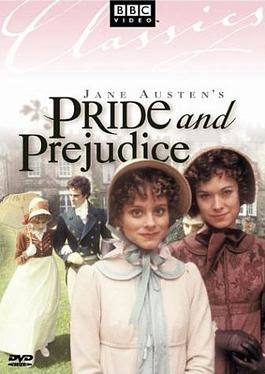
I have long championed the old BBC Austen adaptations, produced in the 70s and 80s. I was so fortunate as to receive the pictured box set several years ago as a Christmas gift, and since I have watched these films time and time again. Now, if you require beautiful cinematography and have no tolerance for this style of old, made for TV literary adaptation, which admittedly tend to be long, move slowly, and are hampered by unfortunate production quality, then no amount of praise from me will help you find enjoyment in these movies. You will lose your patience. But for me, it is precisely such attributes that make these versions feel a little more true to Austen. There is a quietness to the old adaptations, incompatible with the glossy and dramatic versions made over the last quarter of a century, that better conveys the atmosphere of her books. Not that I don’t adore the newer movies – they’re (mostly) phenomenal – but these are excellent too, and should not be forgotten. In some cases, I have yet to see a version I prefer. So here is a brief intro to each film. When I’ve written them, I’ve included links to full reviews. 

My Review

I believe Sense and Sensibility translates to film particularly well, and all the versions I have ever seen of it are quite good. I’m not sure why this version was included in the box set instead of the 1971 version (it features Joanna David as a wonderful Elinor, familiar to Janeites from her portrayal of Mrs. Gardiner in Pride and Prejudice 1995, and a fabulous performance by British TV icon Patricia Routledge as Mrs. Jennings). Both versions leave out Margaret Dashwood entirely out of the script, which I do find irritating.

The 1981 adaptation stars Irene Richards as Elinor Dashwood (also Charlotte Collins in the 1980 Pride and Prejudice), Marianne is played by Tracey Childs, Bosco Hogan is Edward Ferrars, and Robert Swann is Colonel Brandon. Julia Chambers is fabulous as Lucy Steele, but my favorite performance by far is that of Amanda Boxer, who portrays Fanny Dashwood. Throughout the film, she is odiously smug and collected, and to see her let loose on Anne Steele (Pippa Sparkes) is hysterical. Often film makers forget that Austen is, first and foremost, a comic writer, and I really appreciate it when they pay homage to her love of absurdity and amusement in human folly. 

Pride & Prejudice, 1980

My Review

I think it is fair to claim that this is the most beloved film in the collection. Many Janeites continue to prefer this version of Pride and Prejudice to the more acclaimed, recent versions. I think that’s because Elizabeth Garvie is so good as Elizabeth Bennet, and David Rintoul, while a bit stiff, just looks perfect as Darcy. Also, because the story has been less, um, sensationalized (no wet shirts here), it's definitely the cosiest of the Pride and Prejudice adaptations available. Tessa Peake-Jones is my favorite Mary Bennet.

Mansfield Park, 1983

My Review

This is easily my preferred Mansfield Park, and that alone is enough to make it my favorite film in the boxset. There are only three versions of Mansfield Park, and both the more recent films make the fundamental mistake of trying to fix the novel. This is the only one that honestly attempts to capture the true story, and Sylvestra Le Touzal (who also played Mrs. Allen in the excellent 2007 version of Northanger Abbey) is the only actress to have portrayed the real Fanny Price on screen. She is supported by Nicholas Farrell as Edmund Bertram. Bernard Hepton is Sir Thomas (he was also Mr. Woodhouse in Andrew Davies’ 1996 Emma), Anna Massey is a fabulously awful Aunt Norris, and Angela Pleasence is spectacular as Lady Bertram. This one is "must see."


Emma, 1972


I really love this one, despite the fact that I think all four of the more recent versions of Emma are better. For whatever reason, I’ve consistently watched it more often than the other films in the boxset. Part of it, I think, is that like Sense and Sensibility, Emma works very well on film. Highlights of this version include Mollie Sugden (best known as Mrs. Slocombe on Are You Being Served?) as Mrs. Goddard, and my favorite Mr. Woodhouse, Donald Eccles, who is fabulously nervous. Emma is convincingly portrayed by Doran Godwin, and Mr. Knightley is very well captured by John Carson.
Mrs. Elton (Fiona Walker), like every other Mrs. Elton, is awesome. For some reason I do not fully comprehend, Austen's awful ladies translate really well to film.


Persuasion, 1971


This is my favorite Persuasion adaptation. It isn’t perfect, but unlike both more recent versions, it does not rely on Austen’s cancelled chapters of the story for plot. This really bothers me. It pains me there isn’t a better, yet still accurate, film adaptation of my favorite Austen novel, but I am cautiously hopeful that the upcoming Netflix version will not fall into this trap. In the meantime, when I want to watch Persuasion, this is my go to, simply because it causes the least frustration. Anne Elliot is played by Ann Firbanks and Bryan Marshall is Captain Wentworth, though it appears to be Robert Swann – Col. Brandon from Sense & Sensibility – on the DVD cover. Such quirks, I suppose, are part of the experience. 


Northanger Abbey, 1987

My Review

Easily the strangest Austen adaptation ever made, the 1986 version of Northanger Abbey doesn’t really fit with the other films in this boxset. It is by far the shortest (only 78 minutes), and it wildly diverges from the novel, playing up its gothic aspects. A source of both outrage and fascination for fans, it is something you should really see at least once, if for no other reason than to join the debate. Also, Northanger Abbey has only ever been made into a movie twice. For those long horrified by this version, the 2007 film is so magnificent that they might like to forget this one ever existed. I think that’s a mistake. Especially now that we have a much more accurate adaptation to cling to, I can appreciate this film for just being so darn bizarre. Catherine Morland is played by Katharine SchlesingerPeter Firth is Mr. Tilney, but most memorable are the skin crawling duo of Cassie Stuart and Jonathan Coy as Isabella and John Thorpe. If you thought they were bad in the book, they are absolutely revolting here. The 80s-gone-18th century coiffures are marvelously awful. Actually, the whole film might be worth watching for the crazy head gear alone. It's so bad, it's good.

Have you seen and enjoyed (or hated) these films? I’d love to read your thoughts. Do share them.

Monday, May 31, 2021

Emma (2020)

This post contains spoilers and possibly controversial opinions. Proceed at your own risk.

I finally watched the 2020 Emma. Obviously, I’ve been wanting to watch it all year, but lacking buy in from the family (I kind of burned them out on streamed Austen musicals early in the pandemic), it took this long to follow through. My patience did save me five franks, as the cost of the film has reduced since its digital release, but I had to scramble all year to not read about it, that my impressions might remain untainted. 

For the most part, I loved it. It's funny, which I very much appreciate. It's also perfectly gorgeous. I could go on about the clothing for ages. That great coat Knightley wears at the very beginning ... wow! And those scenes where they show the characters dressing: no, they’re not canon, but they are manna for costume geeks. I could write an entire post about the clothing, but Karolina Żebrowska pretty much echoes all my thoughts, while providing a wonderful tutorial on the function of costumes in film:


I thought the cast was extremely strong, though few performances were enough to topple my previous preferences (find them here). Some were reminiscent of previous versions of the characters. Mr. Woodhouse (Bill Nighy) was portrayed with a nervous energy I found very interesting and highly akin to my favorite Mr. Woodhouse, Donald Eccles, from the 1972 version. Similarly, this Miss Bates (Miranda Hart) invoked strong memories of Sophie Thompson in 1996. The Eltons (Josh O'Conner and Tanya Reynolds) were perfectly abominable, as they should be.

Anya Taylor-Joy is a phenomenal actress and definitely makes the character of Emma Woodhouse her own. I personally prefer a more sympathetic portrayal, but that's probably because I take criticism of Miss Woodhouse rather personally, finding her as relatable as I do. I reserve the right to be partial and prejudiced on such subjects.

My prejudices were set against Johnny Flynn as Mr. Knightley, but he soon toppled them. I think his performance is probably my new favorite depiction of the character. Mia Goth also stood out as Harriet Smith (the only better I have seen is Dani Marcus in the streaming musical version, my review for which was sadly lost in the AA purge).


But even when I enjoy an adaptation, it is the things that I don’t like which tend to weigh on my mind. I suppose it is the curse of the Janeite. For example, am I the only one left wondering what happened to poor Mrs. Hughes, and when/how Mr. Knighltey stole Mrs. Reynolds away from Pemberley?

I really disliked the portrayal of John and Isabella Knightley (Oliver Chris and Chloe Pirrie) as so incredibly quarrelsome and unhappy. That is not how I read their relationship in the book, and the fact that none of their closest relatives seem at all concerned by their obvious distress is heartless, reflecting poorly on all of them. As indicated above, I think Emma is mostly portrayed pretty harshly until the very end of the film, when some quick work is done to redeem her. Prior to that, we only see only fleeting glimpses of her humanity. I don’t think this was necessary or appropriate. I need to back up a bit to explain why.

Knightley’s realization that he loves Emma the night of the ball at the Crown is amply supported by the text. I even rather enjoyed his romantic struggle being more developed, but I strongly feel Emma needs to remain oblivious to her own feelings for a while longer. If she already knows she loves him and has even that vaguest reason to suspect that Mr. Knightley returns that love, then she is in the position of once again manipulating Harriet. She is supposed to have already learned this lesson. Under such circumstances, Harriet’s anger upon discovering the "mixup" is justified, but it's out of keeping with the behavior the character. This assertive transformation feels more like Tai (Britney Murphy) from Clueless than either the cannon Harriet or the one portrayed thus far in the film. More importantly, her accusations rob Emma of the opportunity for the self-realization so detrimental to her development. Instead, our heroine is sent to pay penance to Mr. Martin (playing matchmaker still!) in order to redeem herself. Why bother with all of this? As said above, it feels unnecessary. The only explanation seems to be hatred for the character. Just because Austen predicted that most people wouldn't like Emma Woodhouse, that does not justify this endless butchering of her character. Austen herself very much liked Miss Woodhouse. I wish fans would make more of an attempt to see her virtues.

And while we're altering the storyline anyway, how about updating Austen's one blatantly racist scene? We don't often dwell in the Janeite community on how offensive her portrayal of a menacing Romani presence in the neighbourhood is, but considering the current atmosphere, oughtn't we? I believe the scene could be portrayed on film quite in keeping with cannon, without whitewashing Austen's legacy, and yet free from incessant repetitions of a discriminatory word (they use it more frequently in the film than in the novel) and the perpetuation of uncontextualized racism. I think it's important to call the filmmakers out on this point. Badly done!


Back on lighter ground, I think Johnny Flynn delivered the “I cannot make speeches” speech to perfection. That he then, instead of a reply, got a nosebleed was a bit bewildering. I burst out laughing. Yes, it was cinematically beautiful, and yes, I have now read a bevy of explanations for both the planned and spontaneous aspects of the moment, but it kind of ruined what should have been an amazingly romantic moment for me. First of all, it was jarring, but it also strikes me as strange that Mr. Knightley, the one who claims to not be able to summon the correct words, has complete agency over the entire love declaration while Emma is left wordless on the subject, her blood sufficient confirmation of her feelings. Oy. It's not exactly a liberating portrayal. When a film is written and directed by women, one hopes that the resulting product will be free from such stuff. Instead, this adaptation has in it a current of female v female vindictiveness running through it, a force which always undermines our struggle. One imagines the writer saw her school bully in the heroine. The resemblance might be striking, but I still don't think Austen would approve. It strikes me as a transgression of "the duty of woman by woman" (Emma, Ch. 27).

Like all Austen adaptations, I will watch this one many times, my feelings about it will develop and grow, and the experience will add a new layer to my reading of the novel. This is why all the adaptations are worthwhile watching, even those that make me have a tantrum (looking at you, MP ‘99). Gotta relish comparative literature! It’s always broadening. I'm aching with anticipation for not one but TWO upcoming Persuasion adaptations. Surely one will finally get it right? I won't hold my breath, but still, there is hope!

Sunday, May 16, 2021

"Henry and Eliza" in honor of Eliza Doolittle Day

Forgive me if I take this occasion to celebrate a few different Elizas than just Miss Bennet, for Thursday is Eliza Doolittle Day.

For those unfamiliar with this often overlooked holiday, it is a reference to the musical My Fair Lady, based on George Bernard Shaw’s play Pygmalion, which in turn is based on a beautiful myth recounted in Ovid’s Metamorphosis. Pygmalion is a sculptor who falls in love with his own creation. After praying to Venus to help him find a real woman as perfect as the statue, it comes to life, and they basically live happily ever after. Shaw’s version is tad bit more complex. Professor Henry Higgins, played by Rex Harrison in the movie, is a massive phonetics geek. There’s really no better way to put it. For fun he records accents, and it is when eavesdropping one rainy night outside of Covent Gardens that he meets Eliza Doolittle, a cockney flower girl. Eliza is played by Audrey Hepburn in the film, magnificently, I believe, but it is not her voice during the songs – that’s a rather sad tale for both Audrey, Marni Nixon, who sang the numbers, and Julie Andrews, who originated the role on Broadway opposite Harrison. Anyway, Higgins makes a wager with his buddy that with six months of lessons, he can pass Eliza, “this guttersnipe,” off as “a duchess at an embassy ball.” I do not want to reveal the entire story just in case, dear reader, you have perchance never seen this remarkable film. If not, please do so! It’s far too good to miss. In the meantime, here’s the scene in which the 20th of May is codified for all time as ‘Liza Doolittle Day by an imaginary King Edward VII. It takes place early in Eliza’s lessons, and she has spent the last several days strapped to a machine that monitors her breathing while pronouncing the letter A over and over and over again, so she’s feeling rebellious. If you are using Chrome on a cellphone, be aware the video link might not appear. Try switching to the web version. Enjoy:


 And now back to Austen.

Have you ever read Henry and Eliza: a short, wildly farcical story she wrote sometime between the ages of 12 and 15? I discussed it in detail a few years back (you can read the post here), so I will not offer additional commentary at this time. Instead, for your delectation and in honor of the holiday, I will transcribe it here, spelling idiosyncrasies and all, from my well-loved Oxford World’s Classics edition of Catherine and Other Writings. For those unfamiliar with Austen’s juvenilia, be warned: young Jane had a keen sense of the absurd. She was also wickedly funny. The names Henry and Eliza are taken from her brother and cousin, who would someday marry. As you will see, the story is really Eliza’s. Henry’s part in it is rather short-lived.

Henry and Eliza

a novel

Is humbly dedicated to Miss Cooper by her obedient Humble Servant

The Author

==========

As Sir George and Lady Harcourt were superintending the Labours of their Haymakers, rewarding the industry of some by smiles of approbation, and punishing the idleness of others, by a cudgel, they perceived lying closely concealed beneath the thick foliage of a Haycock, a beautifull little Girl not more than 3 months old.

Touched with the enchanting Graces of her face and delighted with the infantine tho’ sprightly answers she returned to their many questions, they resolved to take her home and, having no Children of their own, to educate her with care and cost.

Being good People themselves, their first and principal Care was to incite in her a Love of Virtue and a Hatred of Vice, in which they so well succeeded (Eliza having a natural turn that way herself) that when she grew up, she was the delight of all who knew her.

Beloved by Lady Harcourt, adored by Sir George and admired by all the World, she lived in a continued course of uninterrupted Happiness, till she had attained her eighteenth year, when happening one day to be detected in stealing a banknote of 50£, she was turned out of doors by her inhuman Benefactors. Such a transition to one who did not possess so noble and exalted a mind as Eliza, would have been Death, but she, happy in the conscious knowledge of her own Excellence, amused herself, as she sate beneath a tree with making and singing the following Lines.

==========

Song.

==========

Though misfortunes my footsteps may ever attend
I hope I shall never have need of a Freind
as an innocent Heart I will ever preserve
and will never from Virtue’s dear boundaries swerve.

==========

Having amused herself some hours, with this song and her own pleasing reflections, she arose and took the road to M., a small market town, of which place her most intimate freind kept the Red Lion.

To this freind she immediately went, to whom having recounted her late misfortune, she communicated her wish of getting into some family in the capacity of Humble Companion.

Mrs Wilson, who was the most amiable creature on earth, was no sooner acquainted with her Desire, than she sat down in the Bar and wrote the following Letter to the Dutchess of F., the woman whom of all others, she most Esteemed.

==========

‘To the Dutchess of F.’

==========

Receive into your Family, at my request a young woman of unexceptionable Character, who is so good as to choose your Society in preference to going to Service. Hasten, and take her from the arms of your

Sarah Wilson

The Dutchess, whose freindship for Mrs Wilson would have carried her any lengths, was overjoyed at such an opportunity of obliging her and accordingly sate out immediately on the receipt of her letter for the red Lion, which she reached the same Evening. The Dutchess of F. was about 45 and a half; Her passions were strong, her freindships firm and her Enmities, unconquerable. She was a widow and had only one Daughter who was on the point of marriage with a young Man of considerable fortune.

The Dutchess no sooner beheld our Heroine than throwing her arms around her neck, she declared herself so much pleased with her, that she was resolved they never more should part. Eliza was delighted with such a protestation of freindship, and after taking a most affecting leave of her dear Mrs Wilson, accompanied her grace the next morning to her seat in Surry.

With every expression of regard did the Dutchess introduce her to Lady Harriet, who was so much pleased with her appearance that she besought her, to consider her as her Sister, which Eliza with the greatest Condescension promised to do.

Mr Cecil, the Lover of Lady Harriet, being often with the family was often with Eliza. A mutual Love took place and Cecil having declared his first, prevailed on Eliza to consent to a private union, which was easy to be effected, as the Dutchess’s chaplain being very much in love with Eliza himself, would they were certain do anything to oblige her.

The Dutchess and Lady Harriet being engaged one evening to an assembly, they took the opportunity of their absence and were united by the enamoured Chaplain.

When the Ladies returned, their amazement was great at finding instead of Eliza the following Note.

‘Madam

We are married and gone.

Henry & Eliza Cecil.’

Her Grace as soon as she had read the letter, which sufficiently explained the whole affair, flew into the most violent passion and after having spent an agreable half hour, in calling them by all the shocking Names her rage could suggest to her, sent out after them 300 armed Men, with orders not to return without their Bodies, dead or alive; intending that if they should be brought to her in the latter condition to have them put to Death in some torturelike manner, after a few years Confinement.

In the mean time Cecil and Eliza continued their flight to the Continent, which they judged to be more secure than their native Land, from the dreadfull effects of the Dutchess’s vengeance, which they had so much reason to apprehend.

In France they remained 3 years, during which time they became the parents of two Boys, and at the end of it Eliza became a widow without any thing to support either her or her Children. They had lived since their Marriage at the rate of 18,000£ a year, of which Mr Cecil’s estate being rather less than the twentieth part, they had been able to save but a trifle, having lived to the utmost extent of their Income.

Eliza, being perfectly conscious of the derangement in their affairs, immediately on her Husband’s death set sail for England, in a man of War of 55 Guns, which they had built in their more prosperous Days. But no sooner had she stepped on Shore at Dover, with a Child in each hand, than she was seized by the officers of the Dutchess, and conducted by them to a snug little Newgate of their Lady’s which she had erected for the reception of her own private Prisoners.

No sooner had Eliza entered her Dungeon than the first thought which occurred to her, was how to get out of it again.

She went to the Door; but it was locked. She looked at the Window; but it was barred with iron; disappointed in both her expectations, she dispaired of effecting her Escape, when she fortunately perceived in a Corner of her Cell, a small saw and Ladder of ropes. With the saw she instantly went to work and in a few weeks had displaced every Bar but one to which she fastened the Ladder.

A difficulty then occurred which for some time, she knew not how to obviate. Her Children were too small to get down the Ladder by themselves, nor would it be possible for her to take them in her arms, when she did. At last she determined to fling down all her Cloathes, of which she had a large Quantity, and then having given them strict Charge not to hurt themselves, threw her Children after them. She herself with ease discended by the Ladder, at the bottom of which she had the pleasure of finding her little boys in perfect Health and fast asleep.

Her wardrobe she now saw a fatal necessity of selling, both for the preservation of her Children and herself. With tears in her eyes, she parted with these last reliques of her former Glory, and with the money she got for them, bought others more usefull, some playthings for Her Boys and a gold Watch for herself.

But scarcely was she provided with the above-mentioned necessaries, than she began to find herself rather hungry, and had reason to think, by their biting off two of her fingers, that her Children were much in the same situation.

To remedy these unavoidable misfortunes, she determined to return to her old freinds, Sir George and Lady Harcourt, whose generosity she had so often experienced and hoped to experience as often again.

She had about 40 miles to travel before she could reach their hospitable Mansion, of which having walked 30 without stopping, she found herself at the Entrance of a Town, where often in happier times, she had accompanied Sir George and Lady Harcourt to regale themselves with a cold collation at one of the Inns.

The reflections that her adventures since the last time she had partaken of these happy Junketings, afforded her, occupied her mind, for some time, as she sate on the steps at the door of a Gentleman’s house. As soon as these reflections were ended, she arose and determined to take her station at the very inn, she remembered with so much delight, from the Company of which, as they went in and out, she hoped to receive some Charitable Gratuity.

She had but just taken her post at the Innyard before a Carriage drove out of it, and on turning the Corner at which she was stationed, stopped to give the Postilion an opportunity of admiring the beauty of the prospect. Eliza then advanced to the carriage and was going to request their Charity, when on fixing her Eyes on the Lady, within it, she exclaimed,

‘Lady Harcourt!’

To which the lady replied,

‘Eliza!’

‘Yes Madam it is the wretched Eliza herself.’

Sir George, who was also in the Carriage, but too much amazed to speek, was proceeding to demand an explanation from Eliza of the Situation she was then in, when Lady Harcourt in transports of Joy, exclaimed.

‘Sir George, Sir George, she is not only Eliza our adopted Daughter, but our real Child.’

‘Our real Child! What, Lady Harcourt, do you mean? You know you never even was with child. Explain yourself, I beseech you.’

‘You must remember Sir George, that when you sailed for America, you left me breeding.’

‘I do, I do, go on, dear Polly.’

‘Four months after you were gone, I was delivered of this Girl, but dreading your just resentment at her not proving the Boy you wished, I took her to a Haycock and laid her down. A few weeks afterwards, you returned, and fortunately for me, made no enquiries on the subject. Satisfied within myself of the wellfare of my Child, I soon forgot I had one, insomuch that when, we shortly after found her in the very Haycock, I had placed her, I had no more idea of her being my own, than you had, and nothing I will venture to say would have recalled the circumstance to my remembrance, but my thus accidentally hearing her voice, which now strikes me as being the very counterpart of my own Child’s.’

‘The rational and convincing Account you have given of the whole affair,’ said Sir George, ‘leaves no doubt of her being our Daughter and as such I freely forgive the robbery she was guilty of.’

A mutual Reconciliation then took place, and Eliza, ascending the Carriage with her two Children returned to that home from which she had been absent nearly four years.

No sooner was she reinstated in her accustomed power at Harcourt Hall, than she raised an Army, with which she entirely demolished the Dutchess’s Newgate, snug as it was, and by that act, gained the Blessings of thousands, and the Applause of her own Heart.

==========

Finis

==========

Did you enjoy the story, or are you horrified? Both reactions are valid. I think it’s hilarious. It has long been one of my favorites from Austen’s juvenilia, my strong love for which I elaborated upon a few years back for Pride and Possibilities. Do check it out, and have a very happy Eliza Doolittle Day! It is a particularly special day in my house: do you know why? Try to guess my daughter’s name 😉. She doesn't get to do absolutely nothing on her namesake's day, but we do try to make a point of her doing little. It's great fun.

Thursday, February 26, 2015

Bride and Prejudice (2004)

Emergency review! I was so certain I had already written a review for Bride & Prejudice, until I started looking for the darn thing to use in my next Austen Authors post, due out in less than 12 hours. What else to do but hurry up and rewatch this delightful take of Austen's most beloved novel? I think this is the forth time I have seen it, and I like better each time. It really is a well done adaptation. That being said, it's not a great Bollywood film, and I do love my Bollywood. Maybe that's because it isn't really a proper Bollywood film but a Hollywood take on one, packed with some of the most recognizable Indian faces for a western audience. It is ironic (or perhaps self-aware) that the film puts a post-imperialist message at it's core, providing the barriers to romance that socio-economics play in the novel.

Lalita: You said yourself you are used to the best. I'm sure you think India is beneath you.

Darcy: If I really thought that, then why would I be thinking of buying this place.

Lalita: You think this is India? (indicates her surroundings, a luxury hotel swimming pool)

Darcy: Don't you want to see more investment? More jobs?

Lalita: Yes, but who does it really benefit? You want people to come to India without having to deal with Indians.

Darcy: Oh, that's good. Remind me to add that to the tourism brochure.

Lalita: Isn't that what all tourists want here? Five star comfort with a bit of culture thrown in? Well I don't want you turning India into a theme park. I thought we got rid of Imperialists like you.

Darcy: I'm not British. I'm American.

Lalita: Exactly.

The choice of Aishwarya Rai to play Austen heroines continues to astound me. This is, after all, one of the most beautiful women on the planet, let alone Bollywood royalty. Yet you forget that she is far too pretty to be an Austen heroine as she makes each role entirely her own, proving her acting ability well surpasses even her startling beauty. Let's think about this from a western perspective: how do you cast Angelina Jolie to play anyone's less attractive younger sister? Crazy, right? But Aishwarya is awesome as both Lalita Bakshi (and let's face, who else has such fine eyes?) and as the Marianne Dashwood character, Meenakshi, in 2000's Kondukondain Kondukondain (read my review here), Meenakshi.


The film is mostly really well cast. Anupam Kher has made a career out of portraying fathers, and his Mr. Bennet/Chaman Bakshi is thoroughly lovable (sorry, but I can't mention him without noting he played Shah Ruck Kahn's father in Dilwale Dulhania Le Jayenga, one of the most beloved Bollywood films ever and a personal favorite). More in keeping with Austen's original characters is Nadira Babbar as Mrs. Bennet, or Manorama Bakshi. Maybe one of my favorite characterization, however, is Caroline Bingley, or Kiran, played by Indira Varma (who might be more immediately recognizable to readers as Ellaria Sand in Game of Thrones). Kiran is a much gentler Miss. Bingley. As she does not suffer the same social insecurity as the original, she is not desperate to trap Darcy in marriage. Jealousy for Lalita does not dominate (or even define) her character. Rather she comes off as a extremely spoiled party girl. Yes, she's an ice queen, but she is actually rather fun at a party. I enjoyed this less catty interpretation, despite the departure from canon.

There are only four Bakshi sisters (poor Kitty was once again overlooked). One of the funniest scenes is the Mary figure's performance of "the cobra dance" (played by Meghna Kothari), and one of the most uncomfortable scenes is a song and dance number performed by the sisters called No Life Without Wife, a weird cross between a 60's dance fad and Matchmaker Matchmaker Make me a Match. It is the worst of many bad songs in the film, but it immediately precedes a fun dream sequence that helps Lalita begin to understand her feelings for Darcy.

Now let's speak about William Darcy, an american hotel tycoon, played by Martin Henderson. I have heard other Janeites proclaim him their very favorite Darcy (even better than Mr. Firth!), but I am afraid I do not quite buy it. First of all, he is blond. A blond Darcy. It just doesn't work for me. Further, his portrayal comes off as pretty passive. The Wickham figure is actually staying in Lalita's house, and he doesn't have the gumption to warn her about him. He finally cuts the cord from his overbearing mummy and does the right thing, but it isn't enough for me. I want to like him better in the role, but I just can't. It's too awkward.


One more word on the music. I listen to a lot of Indian music, both from films and also kirtan music, and while I love it all, I have found it much more enjoyable when I do not know the translation. Perhaps it is then not unexpected that the English lyrics to the score of Bride and Prejudice are embarrassingly insipid. The numbers in Hindi are far more enjoyable, letting the audience get lost in the massive choreography and fabulous costumes, but oh! the pain of the English songs! So very, very bad.

All and all, Bride and Prejudice has a lot to offer the Janeite but maybe not so much for the Bollywood fan. A fun and silly adaptation. Take it for what it is and enjoy the absence of subtitles.

Monday, June 24, 2013

Pride and Prejudice (1995): Influence and Merit

My poor, neglected blog! I have often had cause to begin a post in similar style, but this time I feel particularly frustrated, for I had finally had a good stint of uninterrupted blogging, the first solid one since Eliza was born two years and two weeks ago. I'm afraid her birthday party entirely overset me, and I am only now beginning to recover my equilibrium.

By the way, the party was awesome, if a massive distraction.

What better way to get back in the swing of things with the mother of all reviews: Andrew Davies' 1995 adaptation of Pride and Prejudice. It's a review I've been far too overwhelmed to even contemplate for years, but I have decided to attempted it as my 6th review for the Pride and Prejudice Bicentennial Celebration 2013. The problem is that regardless of which P&P adaptation is any given person's preference, all must agree that it way the release of this version that gave birth to the modern Janeite, turning our dear Miss Austen into the "It girl" of the early 21st century. Lory Lilian (author of one of my favorite P&P variations, Rainy Days) and I once discussed this phenomenon at this blog (read Sexy JAFF: A Conversation with Lory Lilian here), and so I will not reiterate our conclusions now but to assert that it is a truth universally acknowledged that the world was never quite the same after Colin Firth jumped in that pond. This review is so hard to write because this is more than just an excellent film adaptation of one of the most beloved English novels: it is the stimulus for a phenomenon.

So much of the Austenesque genre is inspired directly by this movie. It's conventions and imagery crops up in a large percentage of Pride and Prejudiced based novels on the market. This is most blatant in the names of characters. It was Mr. Davies' who dubbed Mrs. Bennet Fanny, Mrs. Gardiner Madeline, and Darcy's uncle the Earl of Matlock, and these monikers have now become almost canon. Entire scenes derived from the movie, rather than the novel, are referenced in book after book. I think it worth while to dwell on some of my favorites:

This scene from Relations Such As These by Sara O'Brien is clearly inspired by the opening of
the movie, during which Elizabeth spies Darcy and Bingley galloping across the Netherfield property, but this book being a "What If?", there are a few changes:
Being good horsemen, they galloped along a meadow, each man lost to their own musings and without much awareness of their surroundingd. Truth be told, Bingley seemed to be simply enjoying the ride and said, "This does seem like a pleasant place does it not, Darcy, Fitzwilliam?" 
Fitzwilliam replied, "It does indeed, Bingley, such large meadows for the horses and the timbers for shade ... yes this could be a descent prospect."  
Darcy said, "Let us not make any hasty decisions based upon some 'pleasantness' of the prospect or the size of the meadow." He pointedly looked at his companions, "We must ensure that there a no major issues with drainage or major repairs ... you realize that could cost you much more than the lease if you are not careful, Bingley." 
His two companions scoffed at his sober remarks but did not comment further after studying his serious mien. ... 
As the gentlemen rode on, they all failed to notice a young gentlewoman walking along the property line near the meadow at the timberline. Within seconds, Darcy noted her presence and quickly pulled back hard on the reigns. He could feel his heart racing violently at the fright of nearly trampling the inattentive young woman. 
The scene during which Mr. Darcy watches Elizabeth playing with a dog from one of Netherfield's windows may have been the inspiration for the entire premise of one of my very most favorite P&P retellings, Master Under Good Regulation by Kara Louise, which is told entirely from the perspective of Mr. Darcy's dog. It certainly at least inspired this moment:
I offered a paw in apology for the rudeness to which she had just been subjected, waging my tail to show my earnest. She stooped down and beckoned me to come. When I approached her, she cpped my face with her hands. 
"Reggie, how pleasant it is to witness such graciousness and affable manners! I asked you this once and I shall ask you again. How is it that you are so polite when he is so ill mannered?" 
She reached down and picked up a stick and I waited with great expectantcy for her to throw it. But instead of letting it go, she held onto it; resolutely pounding it into her open palm. 
"He certainly is an enigma, Reggie. Of he is not brooding and silent, he is critical of everyone and everything he sees. I sense his disdain for me as sure as I do Miss Bingley's."
I found it difficult keeping my eyes adhered to the stick whilst attending to her words about my master. Unfortunately, the words were neither heartening to me nor complimentary to him. 
"One would think that a man of education and striking advantage would somewhere along the way have acquired even the most basic civilities." She paused contemplatively. 
"Perhaps he does not oblige himself to attend to those for whom he sees no advantage to himself." She let out a breathy laugh. "If that is the case, Reggie, I can hardly expect that he would concern himself with satusfying my demands for well-mannered behavior." 
She continued to tease me with the stick as she dispirited me with her words. "And his adea of an accomplished woman! Has he ever met a lady who has attained all that? I would imagine that even all the ladies he has met in the ton would scarcely meet his unrivaled expectations." 
I sadly realized that she was completely unaware that my master considered her to be most accomplished. Miss Elizabeth may not be all the things Miss Bingley had in her list of accomplishments, but she certainly possessed the ones my master deemed essential. My tail gave a few fervent thumps against the ground, surging from a deep sense of frustration at the manner in which my master and Miss Elizabeth continually misapprehended one another. 
She unexpectedly gave the stick a spirited toss and with a great laugh, called out, "Fetch!" 
My legs responded with little thought as I quickly set out to retrieve it. But at my old age, my eagerness to please her propelled me more than my vigor, and I returned to her panting, but in proud possession of the stick. 
"Good boy, Reggie. You are an infinitely preferable companion," she affirmed, as she took the stick and patted the top of my head.
And from the book I am currently enjoying, Bluebells in the Mourning by KaraLynne Mackrory (review soon to come), this image of Pemberley as Elizabeth first sees it is clearly Lyme Park, the location used for Pemberley's exterior:
Elizabeth kept her eyes glued to the window as she scanned the woods for some glimpse of the house. Just as their carriage crested the top of the hill, her eye was instantly caught by Pemberley House, and she audibly gasped. It was elegant with a dignified facade backed by many acres of trees. An exquisite  greenway led to a beautiful manicured lake. It could not be equaled in her mind to any of the other estates she had seen thus far - indeed, any estate in existence, she was sure. It was simply stunning - stunning and very large. She had not thought Mr. Darcy so rich.
Now how can I continue to delay actually critiquing this film? How about a few confessions:

First, this was not only the first Pride & Prejudice adaptation I ever saw: it was also my first Austen film, period. I was sixteen years old at the time it first aired in the US, and I had just finished Mansfield Park, the last of Austen's major novels I read, when a rare glimpse at PBS (though it would mark the beginning of an ongoing love affair with public media) informed me the mini-series would begin airing that very Sunday. I can't recall whether I spent the next five successive Sunday nights at home alone or if they showed the entire thing at once, but I do know that I did not miss a moment. This version has ever since been my gold standard for all literary adaptations. Though it is my favorite Pride & Prejudice movie, I greatly enjoy the other versions as well, especially 1980 (read my review of it here).

Second, though for me Colin Firth epitomizes Mr. Darcy, I really don't care for the wet shirt scene that made him so famous. I think its awkward, and I don't like seeing Mr. Darcy placed in a circumstance which must be, for him, terribly embarrassing. The moment is uncomfortable enough without him being in a state of undress. I am far more fond of the clips of him fencing, especially that determined statement, "I will conquer this!" which is so beautifully in character.

Third, it seems I don't have as much difficulty pointing out the movie's faults as I previously stated, for upon consideration there are also several casting/character portrayals that bother me immensely. Most particularly, I don't particularly care for Susannah Harker as Jane Bennet. The problem, I believe, lies largely with the script and direction, not the actress, but I find her portrayal inconsistent with Austen's character, especially in the scene where she redirects Mr. Collins' attention from Elizabeth in a rather conniving way. I vastly prefer her depiction in 1980 by Sabina Franklyn. That film also does a better job with Georgiana Darcy. Emilia Fox is very pretty in the role, but I think her too forward. For more on which film I think does the best with each character, do check out my Pride and Prejudice Mashup.

Minor grievances aside, I must watch this movie at least once a year. My husband is almost always happy to join me in this pursuit, which says much for the film's endurance. As soon as the opening music begins I get super sentimental. I adore Benjamin Whitrow and Alison Steadman as Mr. and Mrs. Bennet. That first scene with them is beyond perfect. And Jennifer Ehle (though she looks a bit older than Elizabeth's 20 years) captures Elizabeth's sparkle better than any other actress who has played the role. Her eyes literally laugh, and at all the right times. Julia Sawalha is astounding as Lydia (especially to those of us who know her as Saffy from Absolutely Fabulous), as is David Bamber as Mr. Collins (love the sweat - Austen doesn't mention it, but you know it should be there). I still laugh and cry at this film, as I did the first time I watched it.

Despite complaints about Jane, I adore the scenes between Elizabeth and her in their rooms. It's a beautiful way to capture these essential moments in the character development of both, especially as a way to glimpse into Elizabeth's psyche. I also can't say enough in praise of Anna Chancellor as Caroline Bingley. Her expressions are spectacular. Her face when Darcy shoots her down at Pemberley is magnificent, but even better is the look she has when Mary Bennet usurps her place at the piano during the Netherfield ball. Hilarious! Speaking of images from this movie appearing in Austenesque, every time a writer mentions how hideous Miss Bingley looks in orange, that moment immediately comes to mind (it does seem to be a color both the costumers and writers of Austenesque favor for her).

There is far too much excellent about this film to mention it all. Perhaps my favorite part, and one of the most difficult to adapt, is the scene in which Mr. Darcy writes his letter and Elizabeth reads it. I love the flashbacks with Wickham, and I thoroughly approve of the decision to recount that part of the letter first, as Mr. Darcy composes it, while having Elizabeth read the beginning of the letter second, addressing Bingley and Jane's situation, despite this being exactly opposite of Austen's presentation. In switching the order, the film allows us to forgive Mr. Darcy quickly that we may commiserate with his angst as he writes, while creating a greater sense of tension (and catharsis) as Elizabeth reads his rather antagonizing explanation for separating his friend from his sister. Nevertheless, what I love most about this movie is its careful adherence to the original story. Perhaps that's why the portrayals of Jane and Georgiana irritate me so much. I'm the sort who adores those old verbatim BBC adaptations. The 1995 version of Pride & Prejudice bridges the gap between those long and precise mini-series of old, whose charm can be difficult to discern through quality issues, and the new crop that we now enjoy, with their stunning cinematography and spectacular costuming. So much we wouldn't have if not for this film! I am eternally grateful for it.


Want to read my other Bicentennial Celebration reviews? Check them out below:

Pride and Platypus by Vera Nazarian

Mr. Darcy's Little Sister vs. And This Our Life by C. Allyn Pierson

An Unlikely Missionary by Skylar Hamilton Burris

The Disappearance of Georgiana Darcy by Regina Jeffers

The Three Colonels by Jack Caldwell

Tuesday, March 19, 2013

Aisha (2010)

I've been wanting to watch this movie ever since it came out, but as its release corresponded with my pregnancy(ies), I never got to it. Some may recall that I have a thing for Bollywood. It's a passion I discussed in my review of Kandukondain Kandukondain (I Have Found It), a fabulous adaptation of Sense and Sensibility. While Aisha is not as satisfying a film, it is a pretty faithful representation of Emma. The gorgeous Sonam Kapoor plays Aisha, the younger daughter of a wealthy and benevolent father (M.K. Raina - no mention of mom made it into the subtitles). Her older sister is married to the guy who grew up next door, and with his brother Arjun (Abhay Deol), she has an antagonistic and brotherly relationship. The movie begins with the marriage of her aunt, the maternal figure in her life, to the groom of Aisha's choice. Not only did our heroine make the match, she also planned the wedding, and now intends to pursue non-profit event planning as an occupation. We never see this benevolent entrepreneurial endeavor develop anywhere beyond a few sign designs and a determined effort to find a husband for her countrified and awkward cousin, Shefali (Amrita Puri).

Aisha has time for lots of projects. We see her draw, cook, garden, volunteer at an animal shelter, and plot her friends' futures, but mostly she goes shopping. The influence of Clueless can be felt in both Aisha's character and the addition of a best friend to our ensemble, Pinky (Ira Bose), who I really liked despite inconsistent character development. She is one of the only deviations from the structure of Austen's novel, as well as from what I am accustomed to seeing in Indian movies. She's quirky, outspoken, sexually daring, has an edgy fashion sense: much more of a Hollywood party girl than a Bollywood siren.

Everyone else in this cast is immediately identifiable with their Austen counterpart. We are only missing Mrs. Elton and Miss Bates. Perhaps if they were represented, more of the comedy would be preserved. As a Janeite, it's still a lot of fun to see Austen's story modernized and set in a new environment, but I'm not sure the movie would hold a lot of interest for anyone else, and I still have my complaints (I always do - critique is in my DNA). Like Cher of Clueless, Aisha is far more shallow than Emma Woodhouse. I can buy that as a valid interpretation, but not Aisha taking advantage of her father, upsetting his equilibrium with enormous credit card bills and threats of sexual promiscuity. Miss Woodhouse would be appalled, her devotion and solicitude for her father being one of her defining characteristics. Also, her maneuvering to bring together Shefali and the Mr. Elton character (Cyrus Sahukar) involves far more than a broken shoelace, thrusting her supposed friend into a totally compromising situation. I'm not sure the full implications of her actions will be perceived by a non-Indian audience. The film is very Western in both its morality and appearance, and it is almost completely devoid of the elaborate dance scenes for which Bollywood is most known. Nevertheless, the music is very well done. I wish I was better able to speak to how this film fits into a broader evolution in Indian film making, but my interest is far too dilettantish to even dare to try.

I cannot conclude this post without mentioning the physical resemblance between Sonam Kapoor to Gwyneth Paltrow, or that Abhey Deol looks not dissimilar from Jeremy Northam. No idea if this was a conscious decision, but it is clear that the film makers were influenced by not just Austen, but also those who previously adapted Emma for the screen. As previously indicated, this film will hold the happy interest of a Janeite, but it does nothing to add to our understanding or conception of the novel upon which it is based. Still Aisha is like an old friend, and there is comfort to be found in the familiar.