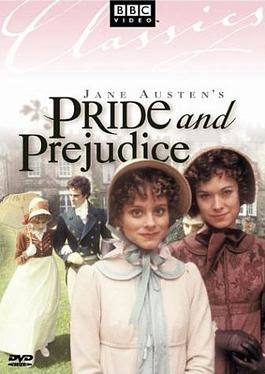
Monday, June 28, 2021

Glorious Old BBC Austen Adaptations

I failed to record the date for the original version of this post, but it was several years ago, at least. I've only updated this to reflect the most recent Emma adaptation, upcoming Persuasion adaptations, and to remove links now obsolete. I continue to celebrate these old, very close to canon adaptations. Enjoy!

I have long championed the old BBC Austen adaptations, produced in the 70s and 80s. I was so fortunate as to receive the pictured box set several years ago as a Christmas gift, and since I have watched these films time and time again. Now, if you require beautiful cinematography and have no tolerance for this style of old, made for TV literary adaptation, which admittedly tend to be long, move slowly, and are hampered by unfortunate production quality, then no amount of praise from me will help you find enjoyment in these movies. You will lose your patience. But for me, it is precisely such attributes that make these versions feel a little more true to Austen. There is a quietness to the old adaptations, incompatible with the glossy and dramatic versions made over the last quarter of a century, that better conveys the atmosphere of her books. Not that I don’t adore the newer movies – they’re (mostly) phenomenal – but these are excellent too, and should not be forgotten. In some cases, I have yet to see a version I prefer. So here is a brief intro to each film. When I’ve written them, I’ve included links to full reviews. 

My Review

I believe Sense and Sensibility translates to film particularly well, and all the versions I have ever seen of it are quite good. I’m not sure why this version was included in the box set instead of the 1971 version (it features Joanna David as a wonderful Elinor, familiar to Janeites from her portrayal of Mrs. Gardiner in Pride and Prejudice 1995, and a fabulous performance by British TV icon Patricia Routledge as Mrs. Jennings). Both versions leave out Margaret Dashwood entirely out of the script, which I do find irritating.

The 1981 adaptation stars Irene Richards as Elinor Dashwood (also Charlotte Collins in the 1980 Pride and Prejudice), Marianne is played by Tracey Childs, Bosco Hogan is Edward Ferrars, and Robert Swann is Colonel Brandon. Julia Chambers is fabulous as Lucy Steele, but my favorite performance by far is that of Amanda Boxer, who portrays Fanny Dashwood. Throughout the film, she is odiously smug and collected, and to see her let loose on Anne Steele (Pippa Sparkes) is hysterical. Often film makers forget that Austen is, first and foremost, a comic writer, and I really appreciate it when they pay homage to her love of absurdity and amusement in human folly. 

Pride & Prejudice, 1980

My Review

I think it is fair to claim that this is the most beloved film in the collection. Many Janeites continue to prefer this version of Pride and Prejudice to the more acclaimed, recent versions. I think that’s because Elizabeth Garvie is so good as Elizabeth Bennet, and David Rintoul, while a bit stiff, just looks perfect as Darcy. Also, because the story has been less, um, sensationalized (no wet shirts here), it's definitely the cosiest of the Pride and Prejudice adaptations available. Tessa Peake-Jones is my favorite Mary Bennet.

Mansfield Park, 1983

My Review

This is easily my preferred Mansfield Park, and that alone is enough to make it my favorite film in the boxset. There are only three versions of Mansfield Park, and both the more recent films make the fundamental mistake of trying to fix the novel. This is the only one that honestly attempts to capture the true story, and Sylvestra Le Touzal (who also played Mrs. Allen in the excellent 2007 version of Northanger Abbey) is the only actress to have portrayed the real Fanny Price on screen. She is supported by Nicholas Farrell as Edmund Bertram. Bernard Hepton is Sir Thomas (he was also Mr. Woodhouse in Andrew Davies’ 1996 Emma), Anna Massey is a fabulously awful Aunt Norris, and Angela Pleasence is spectacular as Lady Bertram. This one is "must see."


Emma, 1972


I really love this one, despite the fact that I think all four of the more recent versions of Emma are better. For whatever reason, I’ve consistently watched it more often than the other films in the boxset. Part of it, I think, is that like Sense and Sensibility, Emma works very well on film. Highlights of this version include Mollie Sugden (best known as Mrs. Slocombe on Are You Being Served?) as Mrs. Goddard, and my favorite Mr. Woodhouse, Donald Eccles, who is fabulously nervous. Emma is convincingly portrayed by Doran Godwin, and Mr. Knightley is very well captured by John Carson.
Mrs. Elton (Fiona Walker), like every other Mrs. Elton, is awesome. For some reason I do not fully comprehend, Austen's awful ladies translate really well to film.


Persuasion, 1971


This is my favorite Persuasion adaptation. It isn’t perfect, but unlike both more recent versions, it does not rely on Austen’s cancelled chapters of the story for plot. This really bothers me. It pains me there isn’t a better, yet still accurate, film adaptation of my favorite Austen novel, but I am cautiously hopeful that the upcoming Netflix version will not fall into this trap. In the meantime, when I want to watch Persuasion, this is my go to, simply because it causes the least frustration. Anne Elliot is played by Ann Firbanks and Bryan Marshall is Captain Wentworth, though it appears to be Robert Swann – Col. Brandon from Sense & Sensibility – on the DVD cover. Such quirks, I suppose, are part of the experience. 


Northanger Abbey, 1987

My Review

Easily the strangest Austen adaptation ever made, the 1986 version of Northanger Abbey doesn’t really fit with the other films in this boxset. It is by far the shortest (only 78 minutes), and it wildly diverges from the novel, playing up its gothic aspects. A source of both outrage and fascination for fans, it is something you should really see at least once, if for no other reason than to join the debate. Also, Northanger Abbey has only ever been made into a movie twice. For those long horrified by this version, the 2007 film is so magnificent that they might like to forget this one ever existed. I think that’s a mistake. Especially now that we have a much more accurate adaptation to cling to, I can appreciate this film for just being so darn bizarre. Catherine Morland is played by Katharine Schlesinger, Peter Firth is Mr. Tilney, but most memorable are the skin crawling duo of Cassie Stuart and Jonathan Coy as Isabella and John Thorpe. If you thought they were bad in the book, they are absolutely revolting here. The 80s-gone-18th century coiffures are marvelously awful. Actually, the whole film might be worth watching for the crazy head gear alone. It's so bad, it's good.

Have you seen and enjoyed (or hated) these films? I’d love to read your thoughts. Do share them.

Monday, June 21, 2021

Are you a Fanny or an Emma? Redeeming Austen's belittled heroines through partial and prejudiced personality quizes.

Back in 2016, while moderating an Emma read-along, I put together a highly biased quiz I called "Are you an Emma?" I was inspired by a desire to emphasize the character's good qualities, so often overlooked. Anyway, I stumbled upon it fairly randomly over the weekend and shared it in a Jane Austen chat group. Here it is:


Are You an Emma Quiz?

1. Do you live in a small town?

2. Do you take an active interest in your neighbors?

3. Have you ever volunteered at a soup kitchen?

4. Are you independently wealthy?

5. Has your mother passed away?

6. Are you more likely to have a few intimate friends rather than a wide acquaintance?

7. Would you feel slighted if you weren’t invited to a party thrown by a person you didn’t like?

8. Has a person you considered just a friend ever mistaken that friendship for a romance?

9. Are you artistic?

10. Have you ever given a friend a makeover?

11. Do you enjoy planning parties?

12. Are you more likely to trust your own opinion over that of others?

13. Have you ever stuck your foot in your mouth?

14. Are you imaginative?

15. Have you spent most of your life in the same place?

16. Have you ever been a caretaker?

17. Have you ever set a friend up on a date?

18. Are you able to admit it when you’re wrong?

19. Are you good at solving riddles?

20. Have you ever fallen in love with a friend?

21. Do you have hazel eyes?

22. Do you feel secure in your place in the world?

23. Have you ever been the butt of a practical joke?

24. Do you ever feel as if you are the parent and your parent is the child?

25. Have you ever had a crush on the boy/girl next door?

Uber Emma (17 – 25 yeses)

Nice to meet you, Miss Woodhouse! You’re the complete package. Your natural talents and help you thrive in this world, but that doesn’t mean you don’t blunder from time to time. When you do, kudos for learning from your mistakes and trying to make things right, but if you can keep that ego in check you’ll be less likely to find yourself in embarrassing situations. You have a sincere desire to make the world a better place, but sometimes you give up too easily. Others might resent your seeming perfection at times, but you do your best to deserve your blessings. Don’t let the haters hold you back.

Pseudo Emma (8 – 16 yeses)

You and Miss Woodhouse have a great deal in common, as you are both talented and clever, but your experiences have provided you with a broader perspective than can be attained within the confines of Highbury. Yours is a truly generous nature and your intimates can depend upon you to provide support in times of trouble, but you are reluctant to intervene in their lives. When the occasion calls for it you are an excellent manager. You have a long list of projects you’d like to complete … someday.

Not at all an Emma (0 – 7 yeses)

You and Miss Woodhouse might both human, but the similarities end there. You would never dream of meddling in the lives of those around you. You prefer to live in harmony with the world, and when troubles come you are flexible enough to roll with the punches. Aware of the power of words, you try to measure yours carefully before speaking, but this does not mean you shirk away from confrontation when it’s appropriate. Be confident in your instincts. You have much to teach the world if you will make your voice heard.


This exercise was a bit self-serving, as I myself am an Uber Emma, with 18 yeses, but I received excellent feedback, and one commenter suggested making a similar quiz for Mr. Darcy. Maybe I will do that, someday, but as his good qualities are already widely celebrated, my head flew instead to Miss Fanny Price. She is another character in need of empathy. So I did it! 


Are you a Fanny quiz?

1. Do you come from a big family?

2. Were you raised by anyone other than your parents?

3. Are you interested in astronomy?

4. Do you or have you ever had an Aunt Norris in your life?

5. Do you tire easily from physical exertion?

6. Were you ever dependent on wealthier relations?

7. Have you ever had "friend" who you really didn't like at all? 

8. Have you ever had a crush on a relation?

9. Do you prefer the company of your extended company to that of your immediate?

10. Are you often overlooked, even by those you care for most?

11. Are you sentimental?

12. Are you morally judgemental (be honest)?

13. Are you good at keeping secrets?

14. Do you have a strong sense of filial duty?

15. Do you feel misunderstood?

16. Do you find it difficult to advocate for yourself?

17. Are you invariably polite?

18. Do one or both of your parents favor other children over you?

19. Have you ever undergone a test of moral character and prevailed?

20. Are you smarter than your current/most recent partner?

21. Are you reluctant to perform in public?

22. Do you prefer the country to the city?

23. Can you enjoy displays of talent by people whom you either disapprove of or dislike?

24. Are you loyalties unwavering?

17-24 Total Fanny 

You are an asset to all those so fortunate as to be held in your regard, even if it might take a thump on the head for them to realize it. Your quiet nature shies from the spotlight, but others, even those who understand your value, might sometimes try to push you into it against your will, that the whole world might see and sing your praises. Others, jealous of your fine qualities, might try to harness them for their own ends or tarnish their shine. Do not allow it. Always remember that you are the best judge, and follow your instincts. Never compromise your formidable integrity, and forgive those of us who cannot live to your exacting standards. Those worth your time will see your example and (eventually) try to follow. 

9-16 Middling Fanny 

A balanced personality allows you to navigate the world with grace. Some might refer to you as zen. You are comfortable in a variety of environments and amongst diverse groupings of people, your open-mindedness freeing you from the limitations that hinder so many others. On the downside, you might sometimes acquiesce to that which you oughtn't in order to avoid conflict. Remember that part of being at one with the universe is also listening to your internal guide. It's okay to stand strong, even in the face of great opposition, when your heart and mind tell you it is the right thing to do.

1-8 Inverse Fanny

On the surface, you are the diametric opposite of Austen's most demure heroine. A more inclusive quiz might pin you as an Elizabeth Bennet, but let's be honest: don't we all have a bit of Fanny within? We have all experienced what it is like to be a scared and uncertain child. You have the advantage of having risen above such timidity, and you face the world with confidence in your own abilities. Your social skills are enviable, and others are naturally drawn to your vivacity. You'd far rather spend an evening actively engaged than gazing passively at the stars, but that doesn't mean you never pause to admire them. You are full of joie de vive. 


I'd love to get your feedback and learn my readers' results. I will, when I have a spare moment, make this pretty and postable, like the Emma quiz (below, click on it to enlarge). I add the graphic to this post when done. Please feel free to share, if you like. 

I, myself, have 11 yeses and am a middling Fanny.

Should I make more of these? Which characters would you like to see represented?


Monday, June 14, 2021

A Mixed-up Mashup: Take Two

Good morning, everyone, and welcome to a new week. Six years on, I'm still adjusting to calendars that begin the week with Monday, but whatever! Be it a full-on new week or just the beginning of your work week, may it be excellent for all those kind enough to stop by and join me in my meanderings.

I'm feeling very optimistic today, which is not an emotion I have experienced in abundance recently. My daughter turned ten last week, and we held her long postponed sleepover party on Saturday. I am almost as relieved to be on the other side of that event as I was to get my first COVID vaccine (ten days until the second!). It feels like life is really beginning again, and I hate to think that some reading this post aren't there yet. The pandemic has been so devastating to so many, and while my brain is finally out of crisis mode (those of us with preexisting PTSD will be spending years figuring out the mental fallout endured), I know this thing is still far from over. May we all be on the other side soon.

I am writing again! Not what I am supposed to be writing (not ready to plunge back into the deep waters that Tales of Less Pride and Prejudice has become quite yet), but writing, at least a little, and it feels so, so good! Without any previous intention of ever attempting to turn my Mixed-up Mashup into something coherent, I have returned to it, ten years later, and I think I see a path to actually making it a functional story. In it, characters from all of Austen's novels find themselves thrown together in most perplexing circumstances. I have removed the page containing the previous content from this blog, so I apologise to those who know not of what I speak, but I have started posting the new version at A Happy Assembly. Please join me there. I need all the feedback and encouragement I can get to sort through this mess. What happens when you stick Lady Catherine and Sir Walter in a room together? Chaos. Please help.

I began writing this story shortly after the birth of my daughter, when my days were primarily spent pushing a stroller around our beautiful neighbourhood in Wilmington, Delaware. The Rockford Park area is filled with a mishmash of gorgeous houses, in a variety of styles. My more humble abode lay in a townhouse behind the Delaware Museum of Art, having been built to house workers at nearby Bancroft Mills in the late 19th century, but there were mansions in my neighborhood. As I strolled past their impressive facades, I assigned each one the identity of a house featured in Austen's novels. Soon I was pointing out Delaford and Uppercross to my perfectly oblivious infant. I did indulge a variety of other fantasies as we walked, discovering a Lowood school (a ghastly place) and a Burrow, but as usual, Austen dominated. Inevitably, I started writing down and blogging the elaborate fantasy born of these musing.

I must pause to share an anecdote. When my daughter started preschool and we met the other parents in the class, it turned out that one of them lived in the house I had dubbed Longbourn. I figured this out the very first time I met the mother, and I must have confused her to no end when I announced this fact. Despite the real concern she must have had for my sanity, we were invited to the house on multiple occasions, and it was perfect: the sitting room exactly right to suit Lady Catherine's complaints. A beautiful house and a beautiful family.

Anyway, I stopped work on the story when I wrote myself into it and simply could not stomach writing a fictionalised version of myself. I was in the early throes of motherhood, after all, and far more interested in self-sacrifice than self-fixation. Perhaps the pandemic has cured me of that, which is why I can now tolerate the notion. I almost lost myself while quashing all my own needs beneath the enormous ones of my family. I think I'm okay with indulging a little ego now, as long as I don't let it get out of hand.

Another issue with this story is I used a major plot line from it in Being Mrs. Bennet, but I think I now have figured a way out to make that work. Maybe. The story feels like it has direction and momentum, which is already more than I ever imagined for it. I'm not sure if I will publish it or not. We'll have to wait and see how it lands.

I will conclude with another plea to come to A Happy Assembly and read along. The beginning of Rocky Horror Picture Show keeps running through my head: "I would like, if I may, to take you on a strange journey." It's just too perfect. Maybe it needs to be in the book, too. Yes, we're dealing with that strange of a book. If nothing else, it will be perfectly silly, and can't we all use a good laugh?

Monday, June 7, 2021

Touring Austen's Country Houses

This post was originally composed in September of 2017.

Touring Pemberley’s Interior (Sudbury Hall, Pride & Prejudice 1995)


The housekeeper came; a respectable-looking, elderly woman, much less fine, and more civil, than she had any notion of finding her. They followed her into the dining-parlour. It was a large, well-proportioned room, handsomely fitted up. Elizabeth, after slightly surveying it, went to a window to enjoy its prospect. The hill, crowned with wood, from which they had descended, receiving increased abruptness from the distance, was a beautiful object. Every disposition of the ground was good; and she looked on the whole scene — the river, the trees scattered on its banks, and the winding of the valley, as far as she could trace it — with delight. As they passed into other rooms, these objects were taking different positions; but from every window there were beauties to be seen. The rooms were lofty and handsome, and their furniture suitable to the fortune of their proprietor; but Elizabeth saw, with admiration of his taste, that it was neither gaudy nor uselessly fine; with less of splendor, and more real elegance, than the furniture of Rosings. - Pride and Prejudice

In Jane Austen’s time, it was an established matter of hospitality that great country houses could be petitioned by the public for access to their grounds and public rooms. Such tours served as a means of additional income for the housekeeper and groundsmen, who one can assume were inclined to accept or reject such requests not only in deference to the family’s convenience, but also based on the seeming affluence (and likelihood of tipping) of the applicant. Obviously, Elizabeth Bennet and the fashionable Gardiners are welcomed kindly to Pemberley, the same manner in which they were presumably greeted at the many other houses they are said to visit during their time in Derbyshire. It is during the tour that Elizabeth’s feelings towards Mr. Darcy begin to undergo a radical change. His good taste and the testimony of Mrs. Reynolds in his favor all act to increase her opinion of his character. Throughout Austen, a man’s home reflects who he is and what he values. She conducts us through three complete house tours in her six main novels: at Pemberley, Sotherton Court, and Northanger Abbey. Each illuminates the strengths and failures of their owners.

Pemberley's exterior (Lyme Park, 1995)
Pemberley is perhaps such an idealized place because Mr. Darcy, despite his crusty introduction, proves tobe such an ideal man. In his late-father’s favorite room, we see that Mr. Darcy has preserved it in his honor, even thought this means keeping a miniature of George Wickham, distressing to both him and his sister, on display. We also observe his affection for his sister, both in the new pianoforte he has purchased for her, and in the care taken in having the room she favors redecorated:
On reaching the spacious lobby above, they were shewn into a very pretty sitting-room, lately fitted up with greater elegance and lightness than the apartments below; and were informed that it was but just done to give pleasure to Miss Darcy, who had taken a liking to the room when last at Pemberley.
Upon the tour’s conclusion, Elizabeth has an entirely new notion of Mr. Darcy, as revealed when she seeks out and studies his portrait:
Colin Firth as Mr. Darcy
(Pride & Prejudice, 1995)
There was certainly at this moment, in Elizabeth’s mind, a more gentle sensation towards the original than she had ever felt in the height of their acquaintance. The commendation bestowed on him by Mrs. Reynolds was of no trifling nature. What praise is more valuable than the praise of an intelligent servant? As a brother, a landlord, a master, she considered how many people’s happiness were in his guardianship! — How much of pleasure or pain it was in his power to bestow! — How much of good or evil must be done by him! Every idea that had been brought forward by the housekeeper was favourable to his character, and as she stood before the canvas, on which he was represented, and fixed his eyes upon herself, she thought of his regard with a deeper sentiment of gratitude than it had ever raised before; she remembered its warmth, and softened its impropriety of expression.
What a very different notion we receive of Mr. Rushworth, when his mother conducts the guests from Mansfield Park about Sotherton Court! We already know him to be rather trifling. As Edmund Bertram succinctly puts it, “If this man had not twelve thousand a year, he would be a very stupid fellow.” We also can judge him by the fact that he is happy, maybe even relieved, to entirely turn over the task of improving his estate to a near stranger, Mr. Crawford. Certainly, Mr. Darcy would never treat the grounds of Pemberley in so cavalier a manner. It further diminishes Mr. Rushworth’s dignity that the man in whom he confides this trust is a rival for his betrothed’s hand, but these damning facts aside, let’s just examine what actually happens on the tour and how it reflects the man:
The whole party rose accordingly, and under Mrs. Rushworth’s guidance were shewn through a number of rooms, all lofty, and many large, and amply furnished in the taste of fifty years back, with shining floors, solid mahogany, rich damask, marble, gilding, and carving, each handsome in its way. Of pictures there were abundance, and some few good, but the larger part were family portraits, no longer anything to anybody but Mrs. Rushworth, who had been at great pains to learn all that the housekeeper could teach, and was now almost equally well qualified to shew the house. 
Two major points are here revealed. The first is that Mr. Rushworth entirely concedes the tour to hismother’s direction, much in the same way he does his life. As mistress of the house, it is fitting that Mrs. Rushworth lead the tour, but a more engaged landowner would surely have something substantive to contribute. Secondly, we learn that the house and furnishings were once the property of another family, who presumably sold it off lock, stock, and barrel after falling upon hard times. That the Rushworths have added no portraits of their own to the collection suggests they have no familial history of which to brag, suggesting humble origins, which further suggests their wealth was gained through trade. Austen is not so terribly elitist that a made fortune renders a family unworthy (Mr. Bingley and Mr. Weston are both prime examples of her egalitarianism), and Mr. Rushworth is obviously at least a few generations removed from the “taint” of trade, but within her contemporary context it does, nevertheless, further tarnish an already flawed character. The man and house are also diminished by its low situation, devoid of the fine prospects to be commanded from each of Pemberley’s windows:
Hugh Bonneville as Mr. Rushworth
(
Mansfield Park 1999)
The situation of the house excluded the possibility of much prospect from any of the rooms; and while Fanny and some of the others were attending Mrs. Rushworth, Henry Crawford was looking grave and shaking his head at the windows. Every room on the west front looked across a lawn to the beginning of the avenue immediately beyond tall iron palisades and gates.

Even Fanny price, who barely dares offer criticism elsewhere, can speak confidently about Sotherton's deficiencies 

Having visited many more rooms than could be supposed to be of any other use than to contribute to the window-tax, and find employment for housemaids, “Now,” said Mrs. Rushworth, “we are coming to the chapel, which properly we ought to enter from above, and look down upon; but as we are quite among friends, I will take you in this way, if you will excuse me.”

They entered. Fanny’s imagination had prepared her for something grander than a mere spacious, oblong room, fitted up for the purpose of devotion: with nothing more striking or more solemn than the profusion of mahogany, and the crimson velvet cushions appearing over the ledge of the family gallery above. “I am disappointed,” said she, in a low voice, to Edmund. “This is not my idea of a chapel.”
Like it's master, Sotherton is as opposite Pemberley’s perfections as it could be, both “gaudy” and “uselessly fine,” as made clear by the abundance of windows. Those are the adjectives used to juxtapose Pemberley’s “real elegance” to that of Rosings Park (see the complete quote at the top of this post), which, interestingly, is the only other house in all of Austen whose description invokes a reference to the window tax, a property tax determined by how many windows a house possessed. In Mansfield Park, Austen dismisses Sotherton’s many and prospectless windows as superfluous. In Pride and Prejudice, Mr. Collins displays an absurd pride in Rosings “by his enumeration of the windows in front of the house, and his relation of what the glazing altogether had originally cost Sir Lewis De Bourgh.” Like Mr. Collins and his benefactress, the Rushworths are superficial, frivolous characters.

 Stoneleigh Abbey, possibly the inspiration for Sotherton Court

Such pretentiousness seems the perfect introduction to Austen’s third house tour: Northanger Abbey, home of the insidious General Tilney. This is the most complete and detailed of the tours (and appropriately so, as the novel takes its name from the place), revealing loads about the General’s character. As Mrs. Rushworth’s dominant presence during the Sotherton tour reflects her relationship to her son, so does General Tilney’s usurpation of his daughter’s right to conduct her guest about the house and grounds demonstrates the total authority he seeks to yield over his children:
Something had been said the evening before of her being shewn over the house, and he now offered himself as her conductor; and though Catherine had hoped to explore it accompanied only by his daughter, it was a proposal of too much happiness in itself, under any circumstances, not to be gladly accepted.
Yet even Catherine Morland’s enthusiasm for an abbey is totally overwhelmed by the General’s determination to show off his possessions, and indeed, it is he who provides all the desired admiration he intends to excite:
They set forward; and, with a grandeur of air, a dignified step, which caught the eye, but could not shake the doubts of the well-read Catherine, he led the way across the hall, through the common drawing-room and one useless antechamber, into a room magnificent both in size and furniture — the real drawing-room, used only with company of consequence. — It was very noble — very grand — very charming! — was all that Catherine had to say, for her indiscriminating eye scarcely discerned the colour of the satin; and all minuteness of praise, all praise that had much meaning, was supplied by the General: the costliness or elegance of any room’s fitting-up could be nothing to her; she cared for no furniture of a more modern date than the fifteenth century. When the General had satisfied his own curiosity, in a close examination of every well-known ornament, they proceeded into the library, an apartment, in its way, of equal magnificence, exhibiting a collection of books, on which an humble man might have looked with pride.
Liam Cunningham as General Tilney
(
Northanger Abbey 2007)
As the tour proceeds, we see that unlike Mr. Rushworth, General Tilney has taken a managing hand in everything pertaining to his home. His pride in his work is so acute that he cannot perceive how little such details matter to his audience, and he is determined, with military precision, to account for every dimension and each improvement:
From the dining-room, of which, though already seen, and always to be seen at five o’clock, the General could not forgo the pleasure of pacing out the length, for the more certain information of Miss Morland, as to what she neither doubted nor cared for, they proceeded by quick communication to the kitchen — the ancient kitchen of the convent, rich in the massy walls and smoke of former days, and in the stoves and hot closets of the present. The General’s improving hand had not loitered here: every modern invention to facilitate the labour of the cooks had been adopted within this, their spacious theatre; and, when the genius of others had failed, his own had often produced the perfection wanted. His endowments of this spot alone might at any time have placed him high among the benefactors of the convent.
His persistence in flouting his family’s prosperity is so complete that General Tilney totally misses the fact that modern conveniences mean absolutely nothing to Catherine, who would far prefer it were the Abbey in some half-ruinous state, more in keeping with her notions of Gothic grandeur.
With the walls of the kitchen ended all the antiquity of the abbey; the fourth side of the quadrangle having, on account of its decaying state, been removed by the General’s father, and the present erected in its place. All that was venerable ceased here. The new building was not only new, but declared itself to be so; intended only for offices, and enclosed behind by stable-yards, no uniformity of architecture had been thought necessary. Catherine could have raved at the hand which had swept away what must have been beyond the value of all the rest, for the purposes of mere domestic economy; and would willingly have been spared the mortification of a walk through scenes so fallen, had the General allowed it; but if he had a vanity, it was in the arrangement of his offices; and as he was convinced that, to a mind like Miss Morland’s, a view of the accommodations and comforts, by which the labours of her inferiors were softened, must always be gratifying, he should make no apology for leading her on.
Image of a kitchen from 
The Housekeeper’s Instructor, 1791

As they entirely mistake the others' motivations in the broader plot of the novel, General Tilney and Catherine are equally as uncomprehending in the other's tastes. The former not only has no notion of what might please the latter, but has also formed an entirely faulty conceptions of what she values. Surely, after it’s suggested, Catherine can acknowledge that modern conveniences in the kitchen and offices greatly benefit the staff that must toil within them, but it does not decrease her sense of loss for what was swept away to make room for such accommodations:

The purposes for which a few shapeless pantries and a comfortless scullery were deemed sufficient at Fullerton, were here carried on in appropriate divisions, commodious and roomy. The number of servants continually appearing did not strike her less than the number of their offices. Wherever they went, some pattened girl stopped to curtsy, or some footman in dishabille sneaked off. Yet this was an Abbey! — How inexpressibly different in these domestic arrangements from such as she had read about — from abbeys and castles, in which, though certainly larger than Northanger, all the dirty work of the house was to be done by two pair of female hands at the utmost.
Let us stop to note what Catherine misses in her chagrin with the General’s improvements: the rather suspicious activities of the many maidservants and inappropriately attired footmen. The General may pay scrupulous attention to the accoutrements of his house, so much of which he claims is for the benefit of his servants, but the morality of his staff seems beyond his notice. It is in keeping with the way he presents a false picture to the world, concealing his true character: domineering, materialistic, and rapacious.
They returned to the hall, that the chief stair-case might be ascended, and the beauty of its wood, and ornaments of rich carving might be pointed out: having gained the top, they turned in an opposite direction from the gallery in which her room lay, and shortly entered one on the same plan, but superior in length and breadth. She was here shewn successively into three large bed-chambers, with their dressing-rooms, most completely and handsomely fitted up; everything that money and taste could do, to give comfort and elegance to apartments, had been bestowed on these; and, being furnished within the last five years, they were perfect in all that would be generally pleasing, and wanting in all that could give pleasure to Catherine. As they were surveying the last, the General, after slightly naming a few of the distinguished characters by whom they had at times been honoured, turned with a smiling countenance to Catherine, and ventured to hope that henceforward some of their earliest tenants might be “our friends from Fullerton.” She felt the unexpected compliment, and deeply regretted the impossibility of thinking well of a man so kindly disposed towards herself, and so full of civility to all her family.

The gallery was terminated by folding doors, which Miss Tilney, advancing, had thrown open, and passed through, and seemed on the point of doing the same by the first door to the left, in another long reach of gallery, when the General, coming forwards, called her hastily, and, as Catherine thought, rather angrily back, demanding whether she were going? — And what was there more to be seen? — Had not Miss Morland already seen all that could be worth her notice? — And did she not suppose her friend might be glad of some refreshment after so much exercise? Miss Tilney drew back directly, and the heavy doors were closed upon the mortified Catherine, who, having seen, in a momentary glance beyond them, a narrower passage, more numerous openings, and symptoms of a winding stair-case, believed herself at last within the reach of something worth her notice; and felt, as she unwillingly paced back the gallery, that she would rather be allowed to examine that end of the house than see all the finery of all the rest.
 
Northanger Abbey
(Lismore Castle, 
Northanger Abbey 2007)
Excessively gracious one moment and cold and forbidding the next, the General’s tour of the Abbey portends much of what we learn of him (and his eldest son) as the novel progresses. Like his home, he has gilded his exterior to hide the decay beneath. Even the innocent Catherine can see there is falsity behind such display, though she imagines him guilty of even worse than his real and rather commonplace sins. Her instincts were not wrong.

Many other country houses feature prominently in Austen’s novels and most provide an accurate reflection of their owners’ personalities. Prosperous Donwell Abbey is the embodiment of Mr. Knightley, the cold and proper atmosphere at Mansfield mirrors Sir Thomas' parenting style, and the forsaken Kellynch Hall symbolizes Sir Walter Elliot’s failures as a father and landowner. Yet it is in her three house tours that Austen really draws concise correlations between estates and their masters, capitalizing upon these scenes to provide complete character sketches of the gentlemen in question. It is a brilliant use of narrative, but I admit I am rather relieved the authoress can’t knock on my door and request to inspect the premises. One can only imagine what devastating conclusions she would draw! And on that note, I think I’ll go clean my bathrooms.

Thanks for reading!

Monday, May 31, 2021

Emma (2020)

This post contains spoilers and possibly controversial opinions. Proceed at your own risk.

I finally watched the 2020 Emma. Obviously, I’ve been wanting to watch it all year, but lacking buy in from the family (I kind of burned them out on streamed Austen musicals early in the pandemic), it took this long to follow through. My patience did save me five franks, as the cost of the film has reduced since its digital release, but I had to scramble all year to not read about it, that my impressions might remain untainted. 

For the most part, I loved it. It's funny, which I very much appreciate. It's also perfectly gorgeous. I could go on about the clothing for ages. That great coat Knightley wears at the very beginning ... wow! And those scenes where they show the characters dressing: no, they’re not canon, but they are manna for costume geeks. I could write an entire post about the clothing, but Karolina Å»ebrowska pretty much echoes all my thoughts, while providing a wonderful tutorial on the function of costumes in film:


I thought the cast was extremely strong, though few performances were enough to topple my previous preferences (find them here). Some were reminiscent of previous versions of the characters. Mr. Woodhouse (Bill Nighy) was portrayed with a nervous energy I found very interesting and highly akin to my favorite Mr. Woodhouse, Donald Eccles, from the 1972 version. Similarly, this Miss Bates (Miranda Hart) invoked strong memories of Sophie Thompson in 1996. The Eltons (Josh O'Conner and Tanya Reynolds) were perfectly abominable, as they should be.

Anya Taylor-Joy is a phenomenal actress and definitely makes the character of Emma Woodhouse her own. I personally prefer a more sympathetic portrayal, but that's probably because I take criticism of Miss Woodhouse rather personally, finding her as relatable as I do. I reserve the right to be partial and prejudiced on such subjects.

My prejudices were set against Johnny Flynn as Mr. Knightley, but he soon toppled them. I think his performance is probably my new favorite depiction of the character. Mia Goth also stood out as Harriet Smith (the only better I have seen is Dani Marcus in the streaming musical version, my review for which was sadly lost in the AA purge).


But even when I enjoy an adaptation, it is the things that I don’t like which tend to weigh on my mind. I suppose it is the curse of the Janeite. For example, am I the only one left wondering what happened to poor Mrs. Hughes, and when/how Mr. Knighltey stole Mrs. Reynolds away from Pemberley?

I really disliked the portrayal of John and Isabella Knightley (Oliver Chris and Chloe Pirrie) as so incredibly quarrelsome and unhappy. That is not how I read their relationship in the book, and the fact that none of their closest relatives seem at all concerned by their obvious distress is heartless, reflecting poorly on all of them. As indicated above, I think Emma is mostly portrayed pretty harshly until the very end of the film, when some quick work is done to redeem her. Prior to that, we only see only fleeting glimpses of her humanity. I don’t think this was necessary or appropriate. I need to back up a bit to explain why.

Knightley’s realization that he loves Emma the night of the ball at the Crown is amply supported by the text. I even rather enjoyed his romantic struggle being more developed, but I strongly feel Emma needs to remain oblivious to her own feelings for a while longer. If she already knows she loves him and has even that vaguest reason to suspect that Mr. Knightley returns that love, then she is in the position of once again manipulating Harriet. She is supposed to have already learned this lesson. Under such circumstances, Harriet’s anger upon discovering the "mixup" is justified, but it's out of keeping with the behavior the character. This assertive transformation feels more like Tai (Britney Murphy) from Clueless than either the cannon Harriet or the one portrayed thus far in the film. More importantly, her accusations rob Emma of the opportunity for the self-realization so detrimental to her development. Instead, our heroine is sent to pay penance to Mr. Martin (playing matchmaker still!) in order to redeem herself. Why bother with all of this? As said above, it feels unnecessary. The only explanation seems to be hatred for the character. Just because Austen predicted that most people wouldn't like Emma Woodhouse, that does not justify this endless butchering of her character. Austen herself very much liked Miss Woodhouse. I wish fans would make more of an attempt to see her virtues.

And while we're altering the storyline anyway, how about updating Austen's one blatantly racist scene? We don't often dwell in the Janeite community on how offensive her portrayal of a menacing Romani presence in the neighbourhood is, but considering the current atmosphere, oughtn't we? I believe the scene could be portrayed on film quite in keeping with cannon, without whitewashing Austen's legacy, and yet free from incessant repetitions of a discriminatory word (they use it more frequently in the film than in the novel) and the perpetuation of uncontextualized racism. I think it's important to call the filmmakers out on this point. Badly done!


Back on lighter ground, I think Johnny Flynn delivered the “I cannot make speeches” speech to perfection. That he then, instead of a reply, got a nosebleed was a bit bewildering. I burst out laughing. Yes, it was cinematically beautiful, and yes, I have now read a bevy of explanations for both the planned and spontaneous aspects of the moment, but it kind of ruined what should have been an amazingly romantic moment for me. First of all, it was jarring, but it also strikes me as strange that Mr. Knightley, the one who claims to not be able to summon the correct words, has complete agency over the entire love declaration while Emma is left wordless on the subject, her blood sufficient confirmation of her feelings. Oy. It's not exactly a liberating portrayal. When a film is written and directed by women, one hopes that the resulting product will be free from such stuff. Instead, this adaptation has in it a current of female v female vindictiveness running through it, a force which always undermines our struggle. One imagines the writer saw her school bully in the heroine. The resemblance might be striking, but I still don't think Austen would approve. It strikes me as a transgression of "the duty of woman by woman" (Emma, Ch. 27).

Like all Austen adaptations, I will watch this one many times, my feelings about it will develop and grow, and the experience will add a new layer to my reading of the novel. This is why all the adaptations are worthwhile watching, even those that make me have a tantrum (looking at you, MP ‘99). Gotta relish comparative literature! It’s always broadening. I'm aching with anticipation for not one but TWO upcoming Persuasion adaptations. Surely one will finally get it right? I won't hold my breath, but still, there is hope!

Monday, May 24, 2021

A Poem by and an Interview with My Daughter

Today is one of the many Catholic holidays that are national celebrations here in Switzerland yet totally off my radar. That's why it came as a surprise to me that no one has school or work today. So instead of finishing my post in progress, I'm going to incorporate my daughter into today's offering, leveraging blogging into a bonding activity. We'll soon learn if I'm brilliant or just desperate. This post will take the form of an interview, the subject being what it is like to grow up with a raging Jane Austen fan for a mother. She frequently composes poems, usually fast expressions of her feelings. This is what she jotted down when I asked her about Austen. It is entitled "I Don't Know."

I don't understand.

My thoughts just can't land.

I don't know.

My brain wobbles to and fro.

When I don't think,

My thoughts can't link,

And I do not understand.

Anne Hathaway in Becoming Jane, 2007.

Uh ... it's hard not to take this poem as a reflection on my own failures, but let's go to the source and learn more.

You're my daughter? 

    Um hm.

What is that like?

    Uh ... very interesting.

How so?

    Because you are very nuts?

Nuts?

    Yes. You're weird, wacky, and wonky, which is a good thing.

Does any of that craziness have anything to do with Jane Austen? Or am I crazy either way?

    You're crazy either way.

Have you read Jane Austen? 

    Jane Austen board books, when I was a baby.

Did you like them?

    When I was a baby.

Have you seen any of the film versions?

    You've made me watch them my whole life.

Tell me one you remember.

    Bride and Prejudice. That was hilarious. 

Do you remember any period adaptations?

    No.

Does that mean we should sit down and start watching them all again?  

    NOOOOOOOOO! They're very boring.

You know those words are like daggers in my heart, right?

    But they are. 

Do you think Jane Austen holds any interest for almost ten year olds?

    Maybe try again when I'm 13.

Why not?

    Because ten year olds are busy reading cool stuff, like Harry Potter and stuff.

What does your poem mean to you?

    It means I do not understand any of this. You just blab about it, and I do not understand any little bit of it.

Do you think that if you had read the books or watched the movies you would understand?

    Not very likely.

Do you think your mother has done a bad job of introducing you to Austen?

    Most likely.

Why?

    Because you like it. Everything is boring if you like it.

Maggie Smith in Becoming Jane, 2007

I like Harry Potter.

    Thanks a lot. You ruined it for me.

Are you a cantankerous child?

    Absolutely not.

Tell me one thing that you know about Jane Austen.

    She wrote in the early 19th century.

Good job. I guess I'm not a total failure. Can you tell me something interesting about the early 19th century?

    The clothes were interesting.

Why?

The clothes were very different than those from before or afterwards, which were big and look uncomfortable, but Empire dresses look comfortable. It makes me think of the clothing in the 1920s, because they were so different than the times before and after. I think that's cool.

Anything else you want to say to my readers?

    I prefer fantasy.

But you love to read, right?

    Yeah.

And that's the most important thing, right?

    Yes.

So I'm not a complete a screw up, right?

    No. Because you're my mommy. 

Aw. Anything else?

    Goodbye.

Bye, Eliza.

It's been an interesting experiment. Until next week, thanks for reading.


Sunday, May 16, 2021

"Henry and Eliza" in honor of Eliza Doolittle Day

Forgive me if I take this occasion to celebrate a few different Elizas than just Miss Bennet, for Thursday is Eliza Doolittle Day.

For those unfamiliar with this often overlooked holiday, it is a reference to the musical My Fair Lady, based on George Bernard Shaw’s play Pygmalion, which in turn is based on a beautiful myth recounted in Ovid’s Metamorphosis. Pygmalion is a sculptor who falls in love with his own creation. After praying to Venus to help him find a real woman as perfect as the statue, it comes to life, and they basically live happily ever after. Shaw’s version is tad bit more complex. Professor Henry Higgins, played by Rex Harrison in the movie, is a massive phonetics geek. There’s really no better way to put it. For fun he records accents, and it is when eavesdropping one rainy night outside of Covent Gardens that he meets Eliza Doolittle, a cockney flower girl. Eliza is played by Audrey Hepburn in the film, magnificently, I believe, but it is not her voice during the songs – that’s a rather sad tale for both Audrey, Marni Nixon, who sang the numbers, and Julie Andrews, who originated the role on Broadway opposite Harrison. Anyway, Higgins makes a wager with his buddy that with six months of lessons, he can pass Eliza, “this guttersnipe,” off as “a duchess at an embassy ball.” I do not want to reveal the entire story just in case, dear reader, you have perchance never seen this remarkable film. If not, please do so! It’s far too good to miss. In the meantime, here’s the scene in which the 20th of May is codified for all time as ‘Liza Doolittle Day by an imaginary King Edward VII. It takes place early in Eliza’s lessons, and she has spent the last several days strapped to a machine that monitors her breathing while pronouncing the letter A over and over and over again, so she’s feeling rebellious. If you are using Chrome on a cellphone, be aware the video link might not appear. Try switching to the web version. Enjoy:


 And now back to Austen.

Have you ever read Henry and Eliza: a short, wildly farcical story she wrote sometime between the ages of 12 and 15? I discussed it in detail a few years back (you can read the post here), so I will not offer additional commentary at this time. Instead, for your delectation and in honor of the holiday, I will transcribe it here, spelling idiosyncrasies and all, from my well-loved Oxford World’s Classics edition of Catherine and Other Writings. For those unfamiliar with Austen’s juvenilia, be warned: young Jane had a keen sense of the absurd. She was also wickedly funny. The names Henry and Eliza are taken from her brother and cousin, who would someday marry. As you will see, the story is really Eliza’s. Henry’s part in it is rather short-lived.

Henry and Eliza

a novel

Is humbly dedicated to Miss Cooper by her obedient Humble Servant

The Author

==========

As Sir George and Lady Harcourt were superintending the Labours of their Haymakers, rewarding the industry of some by smiles of approbation, and punishing the idleness of others, by a cudgel, they perceived lying closely concealed beneath the thick foliage of a Haycock, a beautifull little Girl not more than 3 months old.

Touched with the enchanting Graces of her face and delighted with the infantine tho’ sprightly answers she returned to their many questions, they resolved to take her home and, having no Children of their own, to educate her with care and cost.

Being good People themselves, their first and principal Care was to incite in her a Love of Virtue and a Hatred of Vice, in which they so well succeeded (Eliza having a natural turn that way herself) that when she grew up, she was the delight of all who knew her.

Beloved by Lady Harcourt, adored by Sir George and admired by all the World, she lived in a continued course of uninterrupted Happiness, till she had attained her eighteenth year, when happening one day to be detected in stealing a banknote of 50£, she was turned out of doors by her inhuman Benefactors. Such a transition to one who did not possess so noble and exalted a mind as Eliza, would have been Death, but she, happy in the conscious knowledge of her own Excellence, amused herself, as she sate beneath a tree with making and singing the following Lines.

==========

Song.

==========

Though misfortunes my footsteps may ever attend
I hope I shall never have need of a Freind
as an innocent Heart I will ever preserve
and will never from Virtue’s dear boundaries swerve.

==========

Having amused herself some hours, with this song and her own pleasing reflections, she arose and took the road to M., a small market town, of which place her most intimate freind kept the Red Lion.

To this freind she immediately went, to whom having recounted her late misfortune, she communicated her wish of getting into some family in the capacity of Humble Companion.

Mrs Wilson, who was the most amiable creature on earth, was no sooner acquainted with her Desire, than she sat down in the Bar and wrote the following Letter to the Dutchess of F., the woman whom of all others, she most Esteemed.

==========

‘To the Dutchess of F.’

==========

Receive into your Family, at my request a young woman of unexceptionable Character, who is so good as to choose your Society in preference to going to Service. Hasten, and take her from the arms of your

Sarah Wilson

The Dutchess, whose freindship for Mrs Wilson would have carried her any lengths, was overjoyed at such an opportunity of obliging her and accordingly sate out immediately on the receipt of her letter for the red Lion, which she reached the same Evening. The Dutchess of F. was about 45 and a half; Her passions were strong, her freindships firm and her Enmities, unconquerable. She was a widow and had only one Daughter who was on the point of marriage with a young Man of considerable fortune.

The Dutchess no sooner beheld our Heroine than throwing her arms around her neck, she declared herself so much pleased with her, that she was resolved they never more should part. Eliza was delighted with such a protestation of freindship, and after taking a most affecting leave of her dear Mrs Wilson, accompanied her grace the next morning to her seat in Surry.

With every expression of regard did the Dutchess introduce her to Lady Harriet, who was so much pleased with her appearance that she besought her, to consider her as her Sister, which Eliza with the greatest Condescension promised to do.

Mr Cecil, the Lover of Lady Harriet, being often with the family was often with Eliza. A mutual Love took place and Cecil having declared his first, prevailed on Eliza to consent to a private union, which was easy to be effected, as the Dutchess’s chaplain being very much in love with Eliza himself, would they were certain do anything to oblige her.

The Dutchess and Lady Harriet being engaged one evening to an assembly, they took the opportunity of their absence and were united by the enamoured Chaplain.

When the Ladies returned, their amazement was great at finding instead of Eliza the following Note.

‘Madam

We are married and gone.

Henry & Eliza Cecil.’

Her Grace as soon as she had read the letter, which sufficiently explained the whole affair, flew into the most violent passion and after having spent an agreable half hour, in calling them by all the shocking Names her rage could suggest to her, sent out after them 300 armed Men, with orders not to return without their Bodies, dead or alive; intending that if they should be brought to her in the latter condition to have them put to Death in some torturelike manner, after a few years Confinement.

In the mean time Cecil and Eliza continued their flight to the Continent, which they judged to be more secure than their native Land, from the dreadfull effects of the Dutchess’s vengeance, which they had so much reason to apprehend.

In France they remained 3 years, during which time they became the parents of two Boys, and at the end of it Eliza became a widow without any thing to support either her or her Children. They had lived since their Marriage at the rate of 18,000£ a year, of which Mr Cecil’s estate being rather less than the twentieth part, they had been able to save but a trifle, having lived to the utmost extent of their Income.

Eliza, being perfectly conscious of the derangement in their affairs, immediately on her Husband’s death set sail for England, in a man of War of 55 Guns, which they had built in their more prosperous Days. But no sooner had she stepped on Shore at Dover, with a Child in each hand, than she was seized by the officers of the Dutchess, and conducted by them to a snug little Newgate of their Lady’s which she had erected for the reception of her own private Prisoners.

No sooner had Eliza entered her Dungeon than the first thought which occurred to her, was how to get out of it again.

She went to the Door; but it was locked. She looked at the Window; but it was barred with iron; disappointed in both her expectations, she dispaired of effecting her Escape, when she fortunately perceived in a Corner of her Cell, a small saw and Ladder of ropes. With the saw she instantly went to work and in a few weeks had displaced every Bar but one to which she fastened the Ladder.

A difficulty then occurred which for some time, she knew not how to obviate. Her Children were too small to get down the Ladder by themselves, nor would it be possible for her to take them in her arms, when she did. At last she determined to fling down all her Cloathes, of which she had a large Quantity, and then having given them strict Charge not to hurt themselves, threw her Children after them. She herself with ease discended by the Ladder, at the bottom of which she had the pleasure of finding her little boys in perfect Health and fast asleep.

Her wardrobe she now saw a fatal necessity of selling, both for the preservation of her Children and herself. With tears in her eyes, she parted with these last reliques of her former Glory, and with the money she got for them, bought others more usefull, some playthings for Her Boys and a gold Watch for herself.

But scarcely was she provided with the above-mentioned necessaries, than she began to find herself rather hungry, and had reason to think, by their biting off two of her fingers, that her Children were much in the same situation.

To remedy these unavoidable misfortunes, she determined to return to her old freinds, Sir George and Lady Harcourt, whose generosity she had so often experienced and hoped to experience as often again.

She had about 40 miles to travel before she could reach their hospitable Mansion, of which having walked 30 without stopping, she found herself at the Entrance of a Town, where often in happier times, she had accompanied Sir George and Lady Harcourt to regale themselves with a cold collation at one of the Inns.

The reflections that her adventures since the last time she had partaken of these happy Junketings, afforded her, occupied her mind, for some time, as she sate on the steps at the door of a Gentleman’s house. As soon as these reflections were ended, she arose and determined to take her station at the very inn, she remembered with so much delight, from the Company of which, as they went in and out, she hoped to receive some Charitable Gratuity.

She had but just taken her post at the Innyard before a Carriage drove out of it, and on turning the Corner at which she was stationed, stopped to give the Postilion an opportunity of admiring the beauty of the prospect. Eliza then advanced to the carriage and was going to request their Charity, when on fixing her Eyes on the Lady, within it, she exclaimed,

‘Lady Harcourt!’

To which the lady replied,

‘Eliza!’

‘Yes Madam it is the wretched Eliza herself.’

Sir George, who was also in the Carriage, but too much amazed to speek, was proceeding to demand an explanation from Eliza of the Situation she was then in, when Lady Harcourt in transports of Joy, exclaimed.

‘Sir George, Sir George, she is not only Eliza our adopted Daughter, but our real Child.’

‘Our real Child! What, Lady Harcourt, do you mean? You know you never even was with child. Explain yourself, I beseech you.’

‘You must remember Sir George, that when you sailed for America, you left me breeding.’

‘I do, I do, go on, dear Polly.’

‘Four months after you were gone, I was delivered of this Girl, but dreading your just resentment at her not proving the Boy you wished, I took her to a Haycock and laid her down. A few weeks afterwards, you returned, and fortunately for me, made no enquiries on the subject. Satisfied within myself of the wellfare of my Child, I soon forgot I had one, insomuch that when, we shortly after found her in the very Haycock, I had placed her, I had no more idea of her being my own, than you had, and nothing I will venture to say would have recalled the circumstance to my remembrance, but my thus accidentally hearing her voice, which now strikes me as being the very counterpart of my own Child’s.’

‘The rational and convincing Account you have given of the whole affair,’ said Sir George, ‘leaves no doubt of her being our Daughter and as such I freely forgive the robbery she was guilty of.’

A mutual Reconciliation then took place, and Eliza, ascending the Carriage with her two Children returned to that home from which she had been absent nearly four years.

No sooner was she reinstated in her accustomed power at Harcourt Hall, than she raised an Army, with which she entirely demolished the Dutchess’s Newgate, snug as it was, and by that act, gained the Blessings of thousands, and the Applause of her own Heart.

==========

Finis

==========

Did you enjoy the story, or are you horrified? Both reactions are valid. I think it’s hilarious. It has long been one of my favorites from Austen’s juvenilia, my strong love for which I elaborated upon a few years back for Pride and Possibilities. Do check it out, and have a very happy Eliza Doolittle Day! It is a particularly special day in my house: do you know why? Try to guess my daughter’s name 😉. She doesn't get to do absolutely nothing on her namesake's day, but we do try to make a point of her doing little. It's great fun.